PASSENGERS left stranded due to flight delays or cancellations as a result of the airline staff being on strike are entitled to compensation, the European Court of Justice has ruled.
With Air France and Lufthansa having staged industrial action recently, hundreds – if not thousands – of travellers will have missed their planes and, although in most cases, will have been placed on another the same or the next day or given a refund if requested, they are still able to claim damages, according to the Court.
Carriers cannot legally cite 'circumstances outside their control' as a reason not to pay up – even if the strike itself is illegal.
“The risks arising from the social consequences of a company restructure are part of the inherent and normal activity of an airline,” the verdict, which sets a precedent and reinforces existing EU law, states.
In other words, flight companies must expect an unsolved labour dispute may result in a strike, and they are considered to be in control of this, particularly as workers in EU member States have the right to go on strike if the correct procedures are followed.
The ECJ verdict comes in response to a strike in September 2016 affecting Germany's second-largest airline after Lufthansa – TUIFly – where staff were told out of the blue that the company had planned a 'restructure'.
A protest lasting a whole week saw 89% of technical staff and 62% of cabin crew call in sick – compared with the firm's average sick-leave rate of around 10% - leaving passengers grounded or suffering significant delays.
In accordance with existing EU air-travel law, passengers delayed for three hours or more or whose flights have been cancelled with less than two weeks' notice, or less than one week if alternative transport is provided, may claim a set figure of €250 for journeys of less than 1,500 kilometres, which would cover flights between Spain and the UK; €40 for trips of between 1,501 and 3,000 kilometres, and €600 for travel covering 3,001 kilometres or more.
Where alternative transport is provided with more than a week's notice, airlines must be able to guarantee passengers will leave their point of origin no more than two hours after the scheduled flight time, and will arrive at their destination not more than four hours later than initially stated.
Where alternative transport allows passengers to leave less than an hour later than their original flight time and reach their destination a maximum of two hours later than scheduled, notice of flight cancellation can be given less than seven days before take-off.
If any of these timescales are not complied with, the standard compensation sums automatically apply.
According to consumer advice centre AirHelp, passengers have up to three years after their cancellation or delay to make a claim.
They should first apply to the airline itself and, if this is not successful, passengers travelling from Spain when they are affected should make a claim against the State Air Security Agency (AESA).
If a cancellation affects a connecting flight, causing the passenger to miss the plane for the next leg of the trip, the customer has the right to either request a return flight to his or her departure point, or for the airline to arrange transport to their final destination as planned – either via alternative travel methods such as coach or train if possible, or via another airline.
'Circumstances beyond the control' of the airline which exempt the company from compensation do not include technical problems, delays created by the carrier – such as the plane missing its slot because of taking too long to board – nor 'normal' weather conditions or employee strikes.
But the carrier can refuse to pay compensation where extreme weather grounds planes, such as a hurricane; where the cancellation is caused by a security issue at the airport, or where air-traffic controllers are on strike.
In the latter case, which affected Spain in December 2010 and forced the country's air space to close, flight companies were not expected to pay compensation because it was not their own staff on strike and not caused by their own actions, however legitimate.
In some cases, airlines may provide compensation as a goodwill gesture.
Where a cancellation results in the airline offering travel the following day, the company is obliged to pay the passenger's hotel fees, including food; travel offered the same day should be accompanied with food and drink vouchers at least.
Customers who opt for a refund instead must receive their money within seven days of claiming.
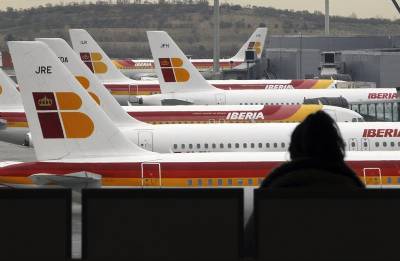
One of Spain's leading consumer protection agencies, the OCU, says a claim was made against national airline Iberia in 2012 after a pilot strike, which the company refused to pay.
The case went to court and, as has been the case 'almost unanimously' in Spain in employee strike situations, the judge ruled in favour of the passengers.
Another strike, among Lufthansa staff in 2014, also led to a court requiring the carrier to compensate affected passengers, says the OCU.
AirHelp legal department head Christian Nielsen says the ECJ ruling applies to previous strikes, meaning airlines are likely to see 'a flood of claims' coming in.
Nielsen says courts have generally, until now, upheld passengers' claims on the basis that the onus is on the airline to prove that it has taken all reasonable steps to prevent flight cancellation if they are to legally escape compensation payments.