MARKETING researchers Kantar Worldpanel have released their 2018 'brand footprint ranking', revealing the top 10 grocery products bought by customers in Spain.
Of these, six are Spanish brands, two French, one Mexican and one from the United States – although the jury has long been out whether this, too, was originally created in Spain.
It may come as no surprise that the number one brand appearing in Spanish residents' grocery baskets is Coca-Cola, given that it is the most famous on the planet – it boasts 137.6 million 'consumer reach points' (CRPs), defined as how many times an item is purchased, irrespective of how many people buy it and at what frequency.
At any one time, 76.1% of households in Spain will have at least one product manufactured by Coca-Cola in its fridge or cupboard.
Typically associated with its known commercial origins in the USA, a brewery in the inland Valencia-province village of Aielo de Malferit claims to have invented the formula in 1885, and has the handwritten recipe on its premises.
In fact, Coca-Cola is the most-purchased brand on the planet, followed by Colgate, for toothpaste, and Maggi for soups.
El Pozo ham and processed meat, packaged in Murcia, is the second-most popular grocery brand in Spain, reaching 130.9 million consumers and found in 78.5% of households nationwide.
Campofrío Food Group's processed meat products and pizza – and, where available, its new vegetarian and vegan meat substitutes – are present in 74% of Spanish homes and 'reached' by 104.8 million consumers, making it the third-most popular brand in national shopping baskets.
Although it would be expected that most shoppers in Spain would choose supermarket own-brand milk because of the much lower price, the dairy label Asturiana is the fourth-most purchased in the country, reaching 88.9 million consumers and finding its way into 54.6% of homes nationally.
Pro-biotic Activia yoghurts are the fifth-most purchased grocery item in Spain, being found in 36.2% of homes and bought 64.8 million times by Spanish consumers.
The sixth-most purchased brand is the pasta produced by Spanish manufacturers Gallo which, after over 70 years in business, reaches 63.5 million consumers and can be found in the cupboards of 63.9% of homes in Spain.
In seventh place, Murcia-based juice company Don Simón, famous for its freshly-squeezed Valencia orange juice, has 56.5 million consumer reach points and bought by 52% of households in Spain.
French multinational Danone has been a firm fixture in Spain for decades, and its own-branded yoghurts appear on the shopping lists of 44.6% of Spanish residents – this household name has over 56.4 million consumer reach points, and is the eighth-most purchased brand among Spaniards – even though its sister label, Activia, is higher up the list.
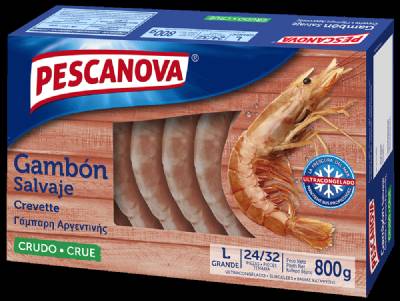
Fish and seafood label Pescanova, from the north-western region of Galicia, is present in 24 countries and is the most powerful in Europe with 55.5 million CRPs and found in 63.9% of households in Spain, putting it in 9th place.
Mexican bread company Bimbo – the largest of its kind in the world with 52.5 million CRPs – is found in 51.8% of Spanish homes, and closes the top 10.
Of the top 50 most popular brands in Spain, 94% are on sale in the country's three largest supermarket chains, Mercadona, Carrefour and Día.