
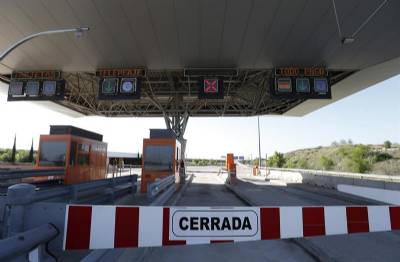
THE State officially took over running the AP-41 Madrid-Toledo motorway at midnight tonight (Thursday), which joins the AP-7 Alicante ringroad and Cartagena (Murcia) to Vera (Almería), plus the M-12 Madrid airport link road and four of the capital’s ‘radial’ or outer suburban highways, the R-2, R-3, R-4 and R-5.
All of these were run by toll firms and declared bankrupt, with the AP-7, M-12 and radial roads passing into State hands in January.
But they will not be toll-free, as the government has to find a way to pay for their maintenance.
It was announced in January that all these motorways would be free of charge to use from midnight to 06.00 and, from 06.01 in the morning until 23.59 at night, their cost would be cut by around 30%.
The deal for taking over running of the AP-41 was not signed until a fortnight ago, and comes into effect tomorrow (Friday).
Although Spain’s president Pedro Sánchez recently announced a snap election, to be held on Sunday, April 28, it is not thought that any possible change of government will affect the ongoing quest to ‘buy back’ toll motorways when their franchises expire, since the current socialist-led cabinet has continued with plans to do so started by the right-wing PP, which was in power from November 2011 to June 2018.
All being well, New Year’s Eve this year will be the last time users of the whole of the AP-7, including the Castellón-Tarragona stretch and the section from Silla (Valencia province) to San Juan (Alicante province) will have to pay tolls.
Campaigns run by town halls affected by the AP-7 tolls – where the only other main road covering the same route runs through their town centres – have been getting louder recently, and local council websites in some areas have even included a countdown to the day the AP-7 becomes free of charge.
The full stretch from Silla to San Juan, which takes about two-and-a-half hours to drive, costs €22 in tolls, which nearly doubles what the journey costs in petrol.