Forty years since first local elections: How have things changed?
Forty years since first local elections: How have things changed?
IT IS OFTEN hard to comprehend how a modern, progressive country such as Spain was almost a third-world nation in the grip of a fascist dictatorship just 45 years ago - and democracy at local level is even younger.
Two months away from the municipal elections - which all EU citizens on the census, including Brits, Brexit or no Brexit, can vote in - it may not seem any great privilege, being able to drop your ballot paper in a box in an attempt to choose the party you think is most likely to follow through with their pledges on more parking spaces, lower property taxes, and recycling bins closer than a 15-minute walk away.
But this week saw Spain marking its 40th anniversary of the first democratic local elections, the first time residents were allowed to vote for their local government.
Until as recently as 1979, few adults in Spain had ever voted at all - they had never had a voice.
Back then, on April 3 that year, just 7,870 local councils held elections and the electorate totalled only 26.59 million - this year, on May 26, a total of 8,132 mayors will put their jobs up for public scrutiny.
Despite their new-found voices, a total of 37.5% of the electorate opted not to cast their ballots, meaning just 16.6 million across Spain did - but unlike in more recent local elections, blank votes, a form of protest, were such a tiny minority as to make barely a dent on the results: 5,388, or 0.03%.
A job for life?
Mayors across Spain generally hope to renew their term of office, but deep down, the majority are realistic enough to know that they will struggle to hold onto their seats for a third legislature - meaning they consider it a success if they are in the same job for eight years.
But in around 30 local councils nationwide, the same mayor has been in office since the very first democratic vote.
And even they are relatively new to the job: in a tiny handful of towns, the same mayor has been in the hotseat since Franco was alive and Spain was still under a dictatorship.
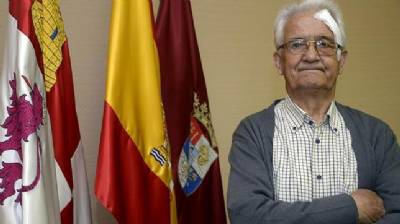
José Luis Seguí has been mayor of Almudaina (Alicante province, second picture) since 1972, but is still beaten hands-down by Ricardo Díez Pascual (first picture), who has been governing Castillejo de Mesleón (Segovia province, Castilla y León) non-stop since 1964 - and plans to run again this year, at the age of 89.
If Díez Pascual wins the 2019 elections and completes his term, he will have been mayor for 59 consecutive years, and if Seguí does so, he will have been governing his village for 51 years.
This rare situation tends to happen in very small villages where everyone knows each other and the mayor is probably friends with every resident - Castillejo de Mesleón has just 130 inhabitants, and Torroella de Fluviá (Girona province), whose mayor Pere Moradell was the first to gain power through a democratic vote in 1979, is home to 700 people.
Nine villages who have had the same mayor since the first-ever elections are in Castilla y León, another four are in Castilla-La Mancha, three each in the provinces of Zaragoza (Aragón), Alicante (Comunidad Valenciana) and Ourense (Galicia), two each are in Cantabria and in the Greater Madrid region, and one each in the provinces of Cáceres (Extremadura), Sevilla (Andalucía) and A Coruña (Galicia).
In Sevilla, the 'perpetual' leader is Juan Manuel Sánchez Gordillo, now with the party United Left and gunning for the top spot once again in Marinaleda.
Only one mayor who had never lost an election since the very first - the leader of Enériz (Navarra) - left his post voluntarily; having won the most recent elections in 2015, he stood down shortly afterwards.
Girl power
Four decades ago, the elections led to a total of 104 women becoming mayor; at the time, this was quite ground-breaking, since gender equality was not exactly commonplace during Franco's time and would not be for a long time to come.
By 2007, 'girls in power' had multiplied twelve-fold, to 1,232, and on the eve of the 2019 elections, 1,630 women are mayors.
After the first-ever local elections, women made up just 1% of all mayors, but were scattered across the country with at least one in every region except in La Rioja and Asturias.
Now, 20% of mayors are women - still only a fifth of the total - although they include the leaders of Spain's largest cities, both run by factions of left-wing independents Podemos: Manuela Carmena, of Ahora Madrid, and Ada Colau of En Comú Podem, who run Madrid and Barcelona respectively.
Women make up more than a third, but still way short of half of all councillors in Spain - 22,443 in total, or 38%.
Some of the female mayors, even today, made history with their appointments by being the first women to lead their municipalities: one of these was interviewed recently in the Spanish Federation of Municipalities and Provinces' (FEMP) monthly newsletter, Hermas Concepción Méndez (third picture), a school teacher who combined her job as first lady mayor of Villa de Mazo on the Canarian island of La Palma with taking class.
Hermas said she put up with various disparaging nicknames and epithets, and hers was far from a relaxing job, given that she faced an all-male opposition who 'said no to everything' and that she continued to teach at the local primary school in the mornings and then worked afternoons and evenings at the town hall.
Mayors are getting older
On the day of the first local elections, one in 10 new mayors was aged under 30 - the youngest in the country, in the province of Zaragoza, was just 20, and the youngest female mayor in Spain was aged 22 - and 27% of the total was aged between 30 and 40.
The vast majority were livestock or arable farmers or fishermen by profession, and female councillors and the first lady mayors were most likely to be housewives.
Fast forward four decades, and six in 10 mayors are aged between 40 and 60, nearly one in five are aged over 60 and only 2.4% are under 30.
As for professions among mayors, the most-seen are either teachers and lecturers or industry and construction workers or business-owners, whilst only 15% are in farming, one in 10 is retired, and only 2.3% are full-time home-makers. Of these, 126 are female, and three are house-husbands.
Is Spain more right- or left-wing 40 years on?
After the previous local elections in 2015, the 'big two' - the left-wing PSOE and the right-wing PP - dominated, as has generally been the case, with 25% and 27% of the votes respectively. Four decades earlier, the PSOE's results were similar, with 28% of the votes. The most-voted party was the central Democratic Union (UCD), which described itself as centrist to centre-right, and was founded in 1977 by Spain's first president following the Transition to democracy, Adolfo Suárez; this year, his son, Adolfo Suárez Illana, is running for the PP.
The Communist Party of Spain, a breakaway group from the PSOE and which has now been absorbed by United Left, won 13% of the votes in 1979, whilst the Basque Nationalist Party (PNV) took 2.1% of the votes and the centre-right Catalunya nationalists, Convergence and Union (CiU) took 3.08%. A total of 10% of the votes went to independent parties.
Shifting forward to the eve of the third decade of the 21st century, independent parties are gathering more strength; Podemos, which ran for the last general elections in coalition with United Left, made its first grand entrance onto the scene in 2014 when it won five seats in European Parliament, having started out as a social protest force run by a 35-year-old university professor from a garage in Madrid; centre-right Ciudadanos began as a regional party in Catalunya, and ran for national elections for the first time in 2015. These are now Spain's third- and fourth-largest political outfits.
Podemos limited its candidature for the municipal elections in 2015, preferring to focus on the regional elections, meaning it instantly lost the foreign resident vote as only Spanish nationals can vote in regional elections.
Ciudadanos, however, emerged as the third-largest force in the 2015 local elections with 6.55% of the votes, ahead of CiU - whose results were similar to 1979, at 2.99%, with just 1,000 more councillors than fellow regional nationalist party, the Catalunya Left Republicans (ERC) with 2.29% of the votes.
Polls this year so far have shown that, in the national election planned for April 28, PSOE is very slightly in the lead, but not expected to win enough seats to govern in majority; in fact, no single party emerges the majority victor, meaning all groups may be forced to swallow their pride, set aside their differences, and talk with each other to form coalitions.
For the local elections, almost anything could happen, since most regions have their own independent parties which can swing either to the left or right, albeit more left-wards, based upon the 2015 elections.
Some concern is growing about the fact that the far-right has appeared on the scene for the first time since the end of Franco's reign, in the shape of Vox, an independent outfit which is anti-immigration and wants to scrap many equality laws, is in favour of 'honourable citizens' being allowed to own guns for 'self-defence', banning abortion, and shutting the door on regulating euthanasia or assisted suicide.
Vox gained 12 seats out of 110 in the Andalucía regional elections last year, but recent surveys have shown that 54% of residents in Spain say they would never give them their vote, meaning their influence is not expected to be great.