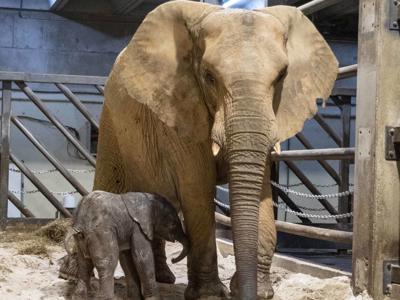
Into the wild: 'Baby safari' at the BioParc
ELEPHANTS being born in the middle of Spain's third-largest city is not something that happens every day. In fact, until this month, it had never happened before.
Sign in/Register
Looking for the Professionals/Advertiser Login?
By Signing up you are agreeing with our Terms and Privacy Policy.Forgot your password?
Feedback is welcome


They have all been rescued by, or handed in to, the Adopta Un Perro Abandonado ('Adopt an Abandoned Dog', or AUPA) association, which holds a 'pooch parade' every year in the city to raise awareness of their animals' plight.
“Anyone who comes along on Sunday, May 19 will find a family-friendly, festive atmosphere overflowing with animal love,” says AUPA.
Potential adopters, or anyone who owns or is thinking about owning a pet, can get advice from the organisers at the show and get to know the dogs and stroke them.
Among those who will definitely be on stage are Melchor, a two-year-old who loves people; Maxi, a 15-month-old fun and playful pitbull; Gaia, nine months old and very happy and affectionate; and Nesto, a pensioner of nine years old who was found dumped in an appalling condition and horribly malnourished, but who is very calm, obedient and affectionate, having never lost his faith in the human race and calmly grateful for being rescued.
“We have dogs of every size, breed and age who have encountered the cruellest side of human nature and are now looking for a second chance to prove to us that they really are our best friends,” AUPA says.
“But adopting a dog should always be a premeditated decision, never a whim or an emotional or irresponsible action – taking on an animal is an enormous responsibility.
“Dogs are not consumer goods, nor perishable material; they're living beings who need care and attention for the rest of their lives.”
AUPA will advise future 'parents' on the type of dog who would be suitable for them if they are not sure – for example, an older human of reduced mobility is better suited to an older, calmer and more obedient animal of a breed which does not need much activity, whilst anyone seeking a puppy of a few months old needs to be experienced and have full awareness of their needs, as well as being prepared for them to be full of life, unable to sit still for five minutes and requiring training.
Rates of pet abandoning have dropped dramatically in the last decade – by around 20,000 cases – although still, as at the end of 2017, a total of 138,307 dogs and cats were dumped or had to be rescued because they were severely neglected.
It is a commonly-held myth that people in Spain 'do not treat their animals well', but this is in fact a fallacy: an estimated 50% of homes have at least one pet, and anecdotal evidence shows that those who do have them are totally devoted to them and treat them like their children.
Well over half of Spaniards interviewed wish they could work part-time to spend more time with their pets, and at least three-quarters believe 'pet-care leave' should be a basic right for employees.
Veterinary care in Spain is much cheaper than in the UK – one of the reasons why pet insurance has never really taken off, because the premiums would cost more than the treatment – and vets will often treat animals for free if customers find them on the street and bring them in, whilst many shelters have agreed discounts on sterilising dogs and cats with local vets to encourage those who adopt them to do so.
A vet in Oliva (Valencia province) told thinkSPAIN: “We think it's cruel to charge high fees for treating, vaccinating or sterilising pets. It's not about making a huge profit. If people can't afford our fees, they won't have their animals treated, will they? And that's not fair on the animals.”
The photograph shows one of the adorable four-legged pals seeking new parents at the Affinity Foundation rescue centre.
ELEPHANTS being born in the middle of Spain's third-largest city is not something that happens every day. In fact, until this month, it had never happened before.

RAIL board RENFE has made two announcements this week: One, that pet-parents may be able to take their dogs on trains if a pilot study works out as hoped, and two, that the long-distance ALVIA routes to and within the...

A FUN, splashy and cute coastal sport has come to Europe for the first time ever and is being held right now in Asturias – dog-surfing is very deep-rooted in California, USA, and Australia holds regular championship...

PET PARENTS who get a new fluffy friend from Fuengirola's local shelter will not have to pay for vaccines, microchips, sterilising or compulsory paperwork – even if they take them home months before these are due.