• Property for Sale
  • To Rent
  • Holidays
  • Directory
  • Articles
  • Jobs
    • € EUR
    • Professionals/Advertiser Login
    • Advertise your Property on thinkSPAIN
    • Sell your property with an estate agent
    • Add your Business to the Directory
    • Advertising with thinkSPAIN
    • List a job vacancy on thinkSPAIN
    • By Signing up you are agreeing with our Terms and Privacy Policy.

      Looking for the Professionals/Advertiser Login?
      or

      Don't have an account?  

      • Follow us:

By Signing up you are agreeing with our Terms and Privacy Policy.

Looking for the Professionals/Advertiser Login?
or

Don't have an account?  

Sign up

By Signing up you are agreeing with our Terms and Privacy Policy.
or

Already have a thinkSPAIN account?

Sign in/Register

By Signing up you are agreeing with our Terms and Privacy Policy.
or

Don't have an account?

Forgot your password?

thinkSPAIN Logo

Sustainable mobility in Spain: Bilbao is best; Valencia and Barcelona close behind


Sustainable mobility in Spain: Bilbao is best; Valencia and Barcelona close behind

thinkSPAIN Team 22/05/2019

Sustainable mobility in Spain: Bilbao is best; Valencia and Barcelona close behind
THE BASQUE port city of Bilbao is the 'most sustainable' in Spain in terms of mobility – or has made the greatest efforts in providing clean transport facilities, according to Canadian environmental charity Greenpeace.

Factors such as pedestrianised areas, pollution and noise, town planning, transparency, and management and provision of trains, buses, taxis and cycle lanes, among other yardsticks, were taken into account.

One of Bilbao's greatest environmental positives is the fact that nearly two-thirds, or 64% of travel around the city is on foot, although public transport is efficient enough that the standard one-car, one-person system can largely be avoided, keeping pollution to a minimum.

And speed limits have been dramatically reduced in 87% of Bilbao's streets, reducing noise, air contamination, and risk to pedestrians.

Out of 10, Greenpeace gives Bilbao (pictured) 6.9, and said it would give it a higher grade if it promoted cycling more, whilst warning the city council to keep on top of pollution levels and ensure they do not rise.

Another point in Bilbao's favour is its 'women-friendly' public transport system: taxis required by local bye-law to wait and ensure female passengers are safely indoors before departing, and bus stops set up closer together so women do not have to walk so far to get to their homes or work after alighting.

This remains 'a task in the in-tray' of other cities in Spain, but is gradually improving, Greenpeace says.

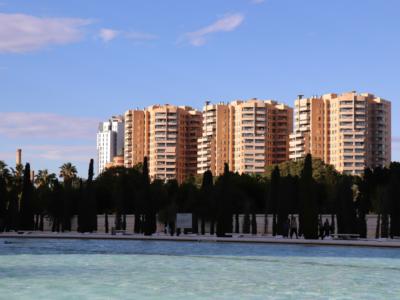
Valencia is second-most sustainable in mobility terms, with Greenpeace's having given Spain's third-largest metropolitan area a 6.6 out of 10, largely thanks to concerted efforts made by its local authority in the last three years.

The east-coast city has built over 150 kilometres of cycle paths, over half of all travel is on foot, and speed limits in the central hub have been cut to 30 kilometres per hour to make walking safer.

Restrictions on driving speed have been 'met with major and inexplicable resistance', Greenpeace says, although this does not appear to have affected the overall plan and, since the 30-kilometre limit was introduced, Valencia has become a much safer and more comfortable city to walk around.

Criticisms, or constructive advice, Greenpeace has for Valencia is that the council needs to 'watch out for the consequences of widening pavements, due to high tourism volume', and of the 'excess of pavement cafés'; also, for public transport, tariffs need to be streamlined, and works on extending the metro network need to be finished.

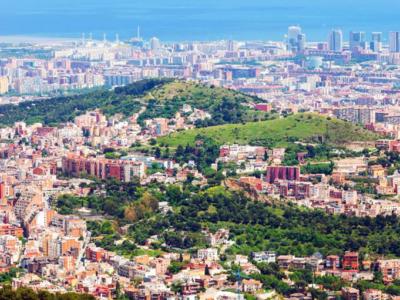
Barcelona gets a 6.5 and, despite being 'one of the densest metropolitan areas in Europe' and Spain's second-largest city, Greenpeace has praised its efforts: the 'perpendicular bus network', its 'superblock' building structure – several apartment blocks within the same compound, connected by traffic-free enclosed resident-only roads – and extensive cycle lane grid are 'exemplary', although the charity warns that the Catalunya capital's noise and air-pollution levels remain 'unacceptable'.

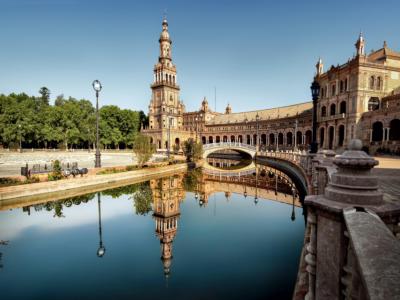
Sevilla and Madrid each earned a 5.9 out of 10, with praise for their 'valiant efforts' at reducing air pollution, but with calls to cut city-centre traffic.

Madrid's controversial car ban in the heart of the capital has won it encouragement from Greenpeace, as has its heavy reliance on public transport and the fact that this is very feasible for most travel, and the council's having taken air-pollution warnings seriously, but criticisms include the fact that its public on-street bike-hire system has 'ground to a halt' and the compulsory 'Multi-Card' pass for use on buses, trains and the metro is 'difficult to understand'.

Zaragoza (Aragón) and Málaga earn 5.5 and 5.2 out of 10 respectively, plus a pat on the back for 'progress in the right direction', although their failure to achieve a higher grade was because 'more concrete measures are needed'.

Greenpeace gives positive feedback on 'the new face' of many of Zaragoza's city-centre streets, which have been renovated and vastly improved, but is calling for better transport links between the central hub and neighbourhoods farther out of town.

Cities which fall just short of the 'pass mark' for sustainable mobility are Murcia (4.8), Pamplona (Navarra) and Palma de Mallorca (4.6 each), and those which fare worst of all in Spain are Santiago de Compostela (Galicia), at 4.4 out of 10 and Albacete (Castilla-La Mancha) at 3.7.

For Murcia, Pamplona and Palma, movement by car is the majority form of transport, and in most cases, the only feasible way to get about, Greenpeace says.

And for Santiago and Albacete, car use is 'out of proportion' to that of public transport – 40% compared with 12%, according to Greenpeace.

The organisation criticises those who oppose moves like restricting cars in favour of collective transport, creation of cycle lanes, or the 'Madrid Central' pedestrianised zone devised by mayoress Manuela Carmena, insisting that this resistance is 'an archaic attitude' which is 'reminiscent of policies from the 1960s'.

Improvements in sustainable mobility brought in have been most praised in Barcelona, Bilbao, Madrid, Palma, Valencia and Málaga, and Greenpeace says measures which need to increase in these and other cities include 'women-friendly transport', 'micro-mobility' – such as electronic skateboards – and 'regulating on-demand transport', such as car-sharing, taxis, Uber and Cabify.


Related Topics

  • Transport

You may also be interested in ...

  • Property for sale in Bilbao
  • Property for rent in Bilbao
  • Businesses & Services in Bilbao

Advertisement

  1. Spain
  2. Basque Country
  3. Vizcaya
  4. Bilbao
  5. Sustainable mobility in Spain: Bilbao is best; Valencia and Barcelona close behind