Ikea upcycles Spain's sea plastic: Here's how you can, too
Ikea upcycles Spain's sea plastic: Here's how you can, too
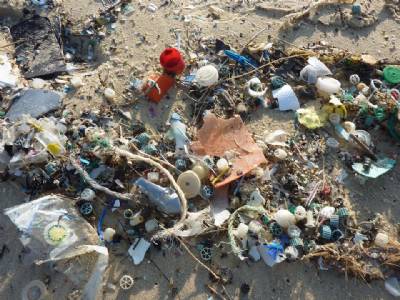
WE KNOW the statistics, we've seen the pictures, we've signed the petitions and pressured the supermarkets – but the plastic waste problem persists, and it seems it's bigger than any of us.
Bringing our own bags to shops – or hoarding carriers in the cupboard under the sink – asking for water in glasses in bars instead of bottles, opting for products wrapped in paper rather than plastic, and many more great intentions are making a dent on the issue, but only a tiny one. Charges for carrier bags have reduced their consumption, EU rules banning certain disposable plastics will help even more, but the sad fact remains that it costs less to make new plastic than it does to recycle, so there's little incentive for firms who use it to cut down, even when customers lay it on thick and threaten to go elsewhere.
But every little helps, and hopefully, the grim prognosis about how there will be more plastic in the sea than fish by the year 2050 will fail to be realised.
Corporate decisions are crucial to this aim, and one of the most novel to come out of Spain – and Sweden – is that of buying up waste to make into new products to sell in store.
Budget furniture chain Ikea has engaged the help of 1,500 fishermen in Spain and a Comunidad Valenciana-based interior designer, Inma Bermúdez. The former are paid to collect plastic waste from the sea and deliver it to the Ikea factories in Alicante and Valencia, and Inma turns it into brilliant household items that you couldn't help snapping up on a shopping trip even if it wasn't for the impending environmental disaster of this non-biodegradable rubbish floating around in our oceans and rivers.
Tablecloths, cushion covers, handbags, marine themes, simple and modern designs with geometric shapes – circles, squares, triangles – are all part of the new Musselbomma range due out next February in Spain and Italy, and all created from refuse fished from Spain's shores.
Eventually, the plastic waste interior decorations will work their way around the rest of the world, to every country where Ikea has a presence.
The main material used is Polyethylene Terephthalate (PETE or PET plastic, or PET Polymer), the chemical name for polyester, which is the most common type – transparent, lightweight and hard-wearing, it is used for packaging, drinks bottles, carrier bags and even clothes. And for every kilo of it fished out of the sea, another nine kilos of other waste – including other types of plastic, plus metal, glass and rubber – are caught up in nets, according to the Seaqual association of fishermen involved in the Ikea project.
And sea rubbish could be the manufacturing material of the future, says Caroline Reid, head of sustainable development in offers and supplies at Ikea – the more companies use it in creating products, the more is removed from the sea, and it is hoped that eventually, demand for the material will outstrip the supply in the world's oceans.
Ikea joined the NextWave scheme in October, which involves corporations, charities and scientists collecting up plastic from the sea and using it to create consumer products.
And as well as focusing on ocean waste as its main raw material, Ikea plans to scrap all single-use plastics from its product range by next year, a move that is already under way in all its stores worldwide.
Their ultimate aim, says Ms Reid, is for plastic and plastic waste to become a circular economy by the year 2030.
That said, if you can't wait until next year to plunder Ikea's and Inma Bermúdez's excellent selection of decorations and practical household goods, and your own plastic waste volume is starting to swell your cupboards and leave you spending your life walking to the nearest 'yellow bank', you could make up your own collection of home furnishings and implements using what we used to just dump in the nearest rubbish bin without a thought.
What to make with plastic bottles
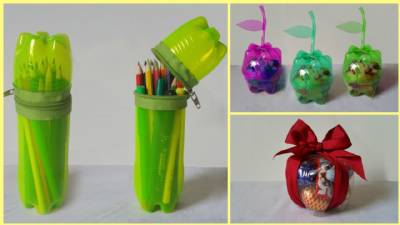
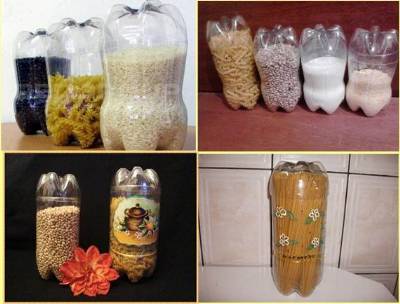
Spray-paint them, draw a snout on the cap, cut a slot in the top and stick ears and eyes made from cardboard or plastic onto them for a fun piggy bank. (You can also do the same with a butter box – wrap it in wood-print fablon, stick a photo to the front and paste on press-studs for buttons to create a retro-TV set money box). Perforate the bottles in several places with a fork, pop the garden hose in the mouth and stick it well with duct tape, and you have a ready-made, low-cost garden sprinkler.Using the base of one bottle as an overlapping lid and the shaft of another, kitchen storage jars – for rice, lentils, spices and so on – are well-sealed and keep ants out. Or superglue a zip between them, paint the bottles and you have a funky pencil case.
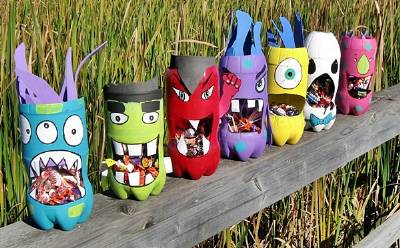
You can also hang bottles upside-down by piercing holes in the base and in the cap, fill them with water and use them for drip irrigation for plants – or punch holes in the lid and use as a simple watering can. Cut the tops off and stick the base to a board, decorate them as you please, and you have an upcycled magazine rack – just roll up your reading material and slot it in like a scroll. String bottles together top and bottom like 'ladders', cutting the sides off first, and fill with soil, and you'll have a trendy hanging garden – perfect for flats or houses without any land that you want to brighten up with greenery and colours. Chop off the tops, cut a mouth with teeth in the bottle, paint it with funny or scary faces and stuff the 'mouth' full of sweets for fun kids' party decorations (fifth photograph). They can be easily made into DIY bird-feeders or pet-feeders, or if you're feeling ambitious and creative, make a giant mosaïc from coloured bottle tops, flowers from the top third of the bottle, or even a greenhouse – buy or make the frame and slot bottles together or hang them on threads. Cut bleach bottles into 'poop scoops'. Make a 'hanging basket' by cutting a bottle almost in half and then slicing a handle in one side that fits over a plug, so you can pop your mobile phone in it whilst it's on charge. The very bases of bottles, three or four threaded onto a metal or wooden rod, make surprisingly elegant jewellery-holders, or you can decorate them and use them as tapas bowls for nuts and olives when you have guests. In fact, they can be turned into holders for almost anything with a bit of imagination.
A cheap form of energy-free air-conditioning, used frequently in hot, third-world countries, can be made using plastic drinks bottles: get a board the exact size of your window so you can slot it in, drill or cut plenty of holes in them just big enough to slot the mouths of bottles through – having cut off the bottle base first – drill large holes in the caps and screw them on to keep the bottles in place, and cover your window with the finished result. It sounds unlikely, but the temperature will drop considerably and the air drifting into it will be cooler.
Big thanks to The Better India and ace writer Mandar Pandhare for these excellent suggestions and photographs.
What to make with plastic carrier bags
Buy cushion covers and stuff them full of plastic bags, as many as you can squidge into them. Then you can leave them on your terrace chairs and it doesn't matter if it rains – they're waterproof, so you only need to unload the stuffing, wash the covers and repack if they get dirty or wet. Use one or two bags about the same size as the cushion to stuff the others in, then you won't make a mess when you take them out to wash the covers. Staple it closed to keep even more rainwater out. Cut bags into strips and plait them, then weave them into baskets or bags for longer-lasting shopping carriers. If the strips are thin enough, you can even knit or crochet with them to make purses, handbags or waterproof doormats. Cover them with paper and iron them to make them fuse together, and get coffee coasters and table mats.
What to do if you're just not that creative
Most of these ideas are fairly simple, but if you really just can't be bothered, re-use as much as possible (refill bottles from the tap – the water is perfectly safe to drink in most parts of Spain – or use them to water plants with; reuse carrier bags each time you shop; use Lacasitos tubes – the Spanish equivalent of Smarties, which also come in white chocolate or caramel flavours – as a tampon-holder, then you won't embarrass yourself if your handbag upends in the office; use carrier bags upside-down on hangers to protect your skirts and tops inside the wardrobe; use microwaveable rice pots as jelly moulds or for custard; sew pockets into your beach towels and line them with plastic bags to store your phone, keys and cash in, so even if the tide comes in and soaks your towel, the contents will be safe...the list is endless) and, with offcuts and reused packaging that eventually falls apart, recycle it.
Practically all types of consumer plastic – along with cans, tins and milk or juice cartons – are recycled in the 'yellow bins' throughout towns in Spain, right down to crisp packets, clear plastic film from fruit and veg, biscuit wrappers, sweet wrappers, and all those things that most local authorities in the UK expect you to put in the conventional rubbish. Bung it all in the yellow bin, and send it on its way to a new life – maybe in the form of something you buy later from Ikea.
Blister packs from medication should not go in the yellow bin, however – deposit these in the SIGRE banks, designed for surplus, out-of-date and leftover medication as well as medicine packaging – then these will be professionally cleaned at the SIGRE laboratories to rid them of any chemicals which could be toxic, before they are sent down the same yellow-bin route.
If you don't have enough yellow bins in your town, don't forget that your local council is probably still in talks trying to form itself following the municipal elections on May 26. Now is a good time to lobby the party with the most votes and tell them to put this vital environmental facility at the top of their list.
Photographs 3, 4 and 5: Mandar Pandhare, The Better India