
Air travel's 'green' future: Why food-waste fuel is a long-haul project
Debate over banning short-distance flights takes off, but the cons outweigh the pros
Sign in/Register
Looking for the Professionals/Advertiser Login?
By Signing up you are agreeing with our Terms and Privacy Policy.Forgot your password?
Feedback is welcome


Kids as young as seven or eight held home-made banners aloft, sang songs of their own creation, and gave their views on the failure of previous generations to halt global warming.
Teenagers and pre-teens interviewed on TV channels all over the planet pointed out that those who were failing to take action now on climate change – the world's adults – would not have to live with the fall-out: it is them, and their children, who would suffer for their elders' lack of forward planning.
Their 'climate strike' was organised by the Fridays For Future movement, founded by Swedish schoolgirl Greta Thunberg who, at 16, is probably the world's youngest major activist and whose presence in the media alone is helping to raise awareness of this environmental emergency.
High-IQ sixth-former Greta, a vegan who calls her Asperger's her 'super-power', demonstrated last August outside national Parliament in Stockholm and started arranging school strikes every Friday, addressed the UN Climate Change Conference in 2018, and went on to give talks at major climate summits and to be featured on the cover of Time magazine in May this year, as well as being selected as one of the 15 influential women to appear on the cover of Vogue by its guest editor Meghan Markle, Duchess of Sussex.
And yesterday (Saturday), two days before the main United Nations Climate Emergency Summit, a Youth Summit was held with teenage activists representing every member country.
Together, they will debate, discuss and propose solutions to the climate emergency, which they will present to national leaders on Monday (September 23) and ask them to implement these plans 'urgently'.
Patricia demands action
Spain's representative is Patricia Ramos (first picture), a 19-year-old undergraduate studying medicine and music who was picked from over 7,000 candidates nationwide to travel to New York for the Summit.
Before setting off, she said she was keen to meet Greta, whom she describes as 'a source of inspiration for everyone'.
Patricia was selected through the organisation Plan Internacional, which she has been working with as a volunteer and youth committee member from the age of 14, participating in activities focused on empowering young girls and on children's rights.
During Monday's Summit, Patricia plans to hand in a petition to Spain's acting president Pedro Sánchez, addressed to his government and to the European Union, demanding that both parties forge a 'global commitment' to taking steps to fight climate change which 'primarily take children into account'.
“This international commitment includes various measures, such as fulfilling the terms of the Paris Agreement, reducing greenhouse gas emissions, and for girls and women, children and teenagers to become involved in seeking solutions to the climate emergency,” Patricia says.
The petition calls for a specific plan to halt climate change in third-world countries, with an extra emphasis on its effects on young girls.
Climate change is linked to childhood marriage and gender inequality
Patricia, through her work with the Plan Internacional committee, is very aware of the link between global warming, children's safety and, in particular, the health and wellbeing of young girls.
In an interview prior to her trip to the Big Apple, the Madrid-born student revealed shocking side-effects of climate change that would not have occurred to most of us, but which are very real, indirect consequences of the failure to act to save the planet.
She saw the early signs of these consequences during a Plan Internacional field trip to Paraguay – a land-locked South American country half-in and half-out of the tropics which, like many of its neighbours, suffers greatly from huge extremes of rich and poor.
“In Paraguay, and in countries less developed than there, little girls have fewer recognised rights,” Patricia reveals.
Firstly, it is the girls who are expected to collect and carry water home in parts of the world where there is no on-tap supply and, if there is a drought, they have to walk much farther to find a source – greater physical hard work, greater risk to their lives, and more time involved, meaning less time to go to school and, finally, reaching adulthood with little or no formal education.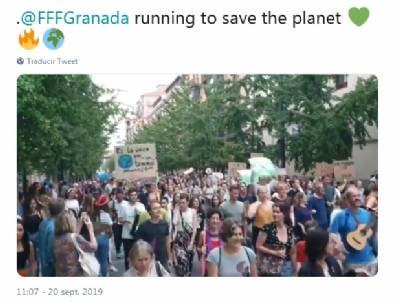
Secondly, in many developing countries, girls are considered a burden, and families consider it to be in their interests to marry them off so they have fewer mouths to feed; where climate change causes crops to fail, reducing food supply and income, girls are more likely to be forced into marriage and at an increasingly younger age.
“The scarcity of resources weighs heavily on the family unit, so one of the solutions is marriages of convenience,” Patricia reveals.
Greater equality between young people of both sexes, and between young people and adults, is something Patricia has long campaigned for at a high-profile level, including speaking before party representatives and spokespersons in national and regional Parliament and presenting research results to them.
She proposed a procedure for the Greater Madrid region to detect cases of female genital mutilation (FGM), focused on healthcare professionals, with steps for them to follow if they suspected it, circumstances under which they should notify the police, how to spot it, and other guidelines.
Patricia also handed in a research report last year to Madrid's former mayoress Manuela Carmena in a bid to reduce and outlaw verbal sexual harassment of girls and women in the street – the Free to Be project, similar to the now-world famous 'Everyday Sexism' website, collated testimonials from women and schoolgirls and included a detailed map of the city showing where they felt the most, or the least, safe walking alone or with company.
Effects of climate change
The world's poorest will be the worst-hit by global temperatures rising, and 'climate refugees' are likely to become more numerous over the course of this century. Displacement, crop failure, famine and lack of water, greater vulnerability to disease, loss of livestock, and homes destroyed by extreme weather conditions could worsen in future decades, according to Action Aid.
More than 1.3 billion people, or about a sixth of the Earth's population - equating to 70% of those in poverty - rely entirely on natural resources for food and income, and these natural resources are now starting to suffer.
Already, an estimated 26 million people a year become 'climate refugees', forced to move on because they cannot feed themselves from the land, have no water supplies, or lose everything to natural disasters.
Extremes of weather are a direct consequence of climate change, as well as the poles, icebergs and glaciers melting, creating rising sea levels which flow inland via rivers and irrigation sources, increasing salt levels in the water which could threaten crops that the third world depends upon - and which the first world would sorely miss. Imagine life without chocolate, tea or coffee, for example - this could well be the result of climate-related crop failure.
Intense rainfall or intense drought, cyclones, hurricanes, heatwaves and forest fires and even exceptional cold snaps in some places are an unavoidable result of climate change.
Action Aid, as one of the many global charities working with those most vulnerable to the impact of climate change, has been working on damage-limitation methods such as building villages high above flood levels, training women and children how to recognise and act ahead of cyclones and storms, digging fresh water canals and giving farmers salt-tolerant crop seeds.
Cold and wealthy countries, too
A Cambridge University study has found that the global economy would shrink by between 7% and 10% by the end of this century if the average temperature rises by 4ºC, which is the minimum increase if companies, industry and political authorities continue the way they are headed now and ignore the Paris Agreement – and this could also affect the wealthiest countries, which are, in general, colder than the poorest countries.
Whilst one school of thought in some of the far-northern nations is that global warming could actually benefit them, the Cambridge research shows this is not the case: extreme weather, hot or cold, drought or flood, and gale-force winds could affect transport, could stop people getting to school or work – the latter leading to shutdowns on the high street, in the health and emergency services, and in the retail supply chain.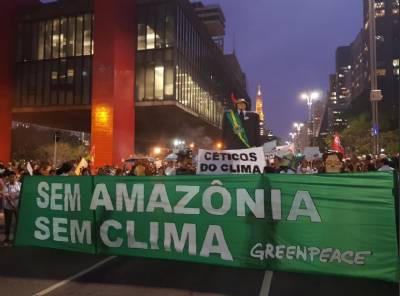
If the UK continues to rely on conventional fuel sources, when extreme weather prevents mining for these, household and transport fuel becomes more scarce and goes up in price; in excessively-cold or extra-hot climates, additional heating or air-conditioning is needed, meaning a higher cost to households and businesses; tourism could also be affected, with today's sun-seeking northern Europeans having no need to travel to the Mediterranean to catch a tan, and ski resorts struggling to stay open with no snow and having to generate their own from machines.
A reduction in groceries made from ingredients that come from crops vulnerable to extremes of weather could hit supermarket profits, and consequently, jobs.
Excessive summer heat and record winter cold directly affect health, of course, and changes in temperature will come much more quickly than the human body can learn to acclimatise to it.
Record freezing spells are caused by global warming – yes, really
Why would we suffer dangerously-cold winters as a result of the earth's temperature rising, though? Well, despite high-profile climate-change deniers claiming arctic temperatures, life-threatening deep freezes and dense blizzards mean global warming is a snowflakey millennial invention, they're literally staring at the thing they're denying in the face. Because freak wintery weather – like freak summery weather – is actually sparked by this very warming process.
Large masses of icy winds circulate over the Arctic and Antarctic – these are known as a polar vortex – and in times of atmospheric stability, stay right where they are. But rapidly-rising land temperatures in regions closest to the poles, such as Europe, Russia, the USA and Canada, the southern tip of the Americas, Australia and New Zealand, cause heat to travel pole-wards. This hot air collides with the polar vortex, breaking it up and scattering it to the immediate north or south, leading to Arctic and Antarctic air masses floating across countries above and below the tropics.
This break-up of polar winds and collision with hot air causes instability in the atmosphere, leading to high winds and storm-like conditions, and rising sea levels means more water evaporating into the atmosphere and more intense rainfall in the nearest areas of land.
Although the planet has been gradually warming for centuries – in prehistoric times, for example, the climate in Spain was closer to that of the north of Scotland today – temperature rises have rapidly accelerated recently due to human behaviour. Wealthier countries in particular are responsible for producing unsustainably-high levels of carbon dioxide, which traps warm air within the atmosphere, exacerbating the problem.
That's why reducing our carbon footprint is vital – and planting more trees, since trees literally 'eat' carbon dioxide and 'spit out' oxygen; hence the Amazon, the largest tree-mass on earth, provides at least 20% of the oxygen we breathe in.
Carbon dioxide is also one of the greatest air-pollutants, and air pollution is the direct cause of death of over seven million people on earth every year, or one in every 1,000 inhabitants.
Simple steps such as using LED lightbulbs, an extra quilt instead of extra heating, walking or cycling where you can instead of driving, and buying locally-produced goods rather than those which need transporting over long distances can help slow down the process of global warming and safeguard the future for the next generation.
Photograph 1: Patricia Ramos, taken by the Plan Internacional organisation
Photograph 2: Granada runs to save the planet (Greenpeace on Twitter)
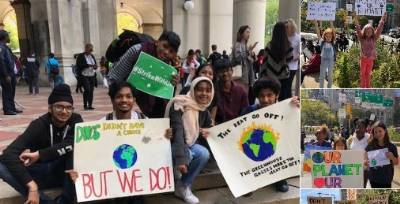
Photograph 3: Children in New York join Friday's Climate Strike
Photograph 4: Greenpeace demonstration on Friday along the Avenida Paulista in São Paulo, Brazil calls for protection for the Amazon
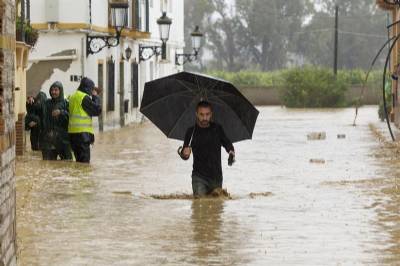
Photograph 5: Flash floods, more frequently and more severe, are a likely consequence of global warming
Debate over banning short-distance flights takes off, but the cons outweigh the pros

BATTERIES from mobile phones, laptops and even cars are among those that must be recyclable within the next four years in accordance with a new European Union regulation, as explained by Spain's minister for...

ELECTRICITY could become cheaper to use at more convenient hours in a hypothetical about-turn for household bills – and that's thanks to solar power.

YET again and for the 36th year running, Spain holds the record for the highest number of blue-flagged beaches in the world, with its east-coast region of the Comunidad Valenciana having more than any other.