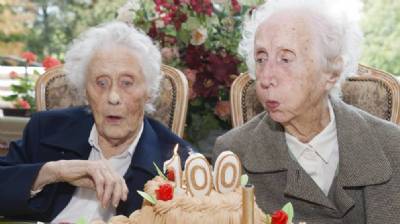
SPANISH health experts have explained what to do if you want to live to be 100 – or more, perhaps – although they warn that a lot of the secret to success in this mission is in the genes.
But mental health is one of the most crucial aspects that people need to crack to live a long life, they all concur.
Laura Llorente, nutritionist from the Aleris Centre, says diet is a 'fundamental factor' in longevity in humans, since by eating properly, the 'tendency to suffer illnesses will be much lower' than in those with bad eating habits.
“Diets should be healthy, complete and varied,” Llorente explains.
“It's really important to eat plenty of fruit and vegetables, increase your consumption of beans and pulses, stop eating processed products and limit refined sugar.”
Physical activity is also essential, although this does not have to be in the shape of vigorous exercise - “just stop living a sedentary lifestyle and get more active,” she says.
Simple changes such as taking stairs instead of lifts and walking or cycling, where possible, instead of driving can help.
“More 'social' products, such as alcohol, should, if you can't give them up, at least be limited to the absolute minimum,” Laura Llorente advises.
Whilst nutrition and genetics key in attempting to break the 100-year barrier, other crucial points include our environment, says Dr Pedro Gil, geriatrician at the Hospital Clínico San Carlos.
“Habits in life and environmental factors are linked to survival. If we have a similar genetic makeup to primates and yet these don't live as long as humans, there must be other issues to take into account.
“A healthy diet is as important as social interaction, as is reducing stress and worry. Stress is the biggest enemy of a long life.”
Experts all agree about the importance of caring for oneself emotional and psychologically when trying to live for a long time.
Also, “toxic habits, like smoking, alcohol and a sedentary existence, shorten life,” Dr Gil says.
“There are always people who say their relatives lived a very long life despite smoking like chimneys and drinking like fish, but these are what we call 'the resistant ones'. They're the exceptions that prove the rule.
“Life is like a metro ticket, and harmful habits reduce the length of your journey.
“But studying our elderly population is really important. Lots of countries around us carry out research into case studies of people older than 100, but Spain does not.”
This is in spite of Spain's having the fourth-longest life expectancy on earth and the highest in Europe, at around 83 years old.
By the year 2050, Spain's life expectancy is forecast to be the highest on earth at over 90.
Genes are, of course, one of the main indicators of how long we will live, although humans can also act to protect their DNA from damage that causes ageing from a young age.
Geneticist Dr Dolores Saavedra says when the telomeres, the 'extremities' or 'limbs' of a chromosome, become damaged, they shorten, which is what provokes ageing, so the key is to keep them as long as possible and limit damage to them.
Melatonin, a hormone produced naturally by daylight and night-time darkness and which controls the sleep-wake cycles, can be taken as a supplement and also protects the telomeres from damage and shortening.
Taking it after age 50 helps, says Dr Saavedra.
“A baby has a very active genetic cycle, but as we get older, this becomes slower, we lose muscle mass, gain body fat and our cell division ability drops dramatically.”
But she says there is no other way of 'adjusting' human DNA to ensure a long life.
Shortening telomeres are caused by toxic factors such as poor diet, alcohol and smoking, which is why these and other elements harmful to the body cause ageing – and the impact of this premature ageing of the organism is what leads to greater vulnerability to disease.