Final year to change pesetas for euros: Over €1.6bn in old money still 'out there'
Final year to change pesetas for euros: Over €1.6bn in old money still 'out there'
ANYONE who still has some of the €1.61 billion in pesetas in coins and notes in their homes needs to change them into euros before the end of this year – or they will be stuck with them, the Bank of Spain recalls.
Notes minted after 1939 – the final year of the Civil War in which dictator General Franco came into power, a reign ended by his death in 1975 – can automatically be changed by the Bank of Spain, the only entity able to do so.
Any notes issued between 1936 and 1939 inclusive can also be exchanged, but Bank of Spain experts need to analyse them first, so it will not be an instant process.
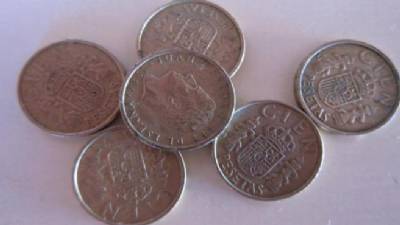
As for coins, only those which were still in circulation as at New Year's Day 2002 can be exchanged.
Coins that can be changed for euros include collectors' and limited edition commemorative versions.
This said, the Bank of Spain recommends anyone who still owns peseta coins and notes show them to a collector first, since certain editions can be worth tens or even hundreds of euros.
They do not even need to be historic or antique – some peseta coins from as recently as 1995 can attract upwards of €100, and certain coins from the mid to late 1940s have fetched between €10,500 and €36,000 on auction sites.
This is clearly not the case with all peseta coins, only with certain ones that are considered highly-collectible, but as the description of these is long and often includes surprisingly ordinary-looking versions, it is always worth consulting a collector.
You can find out whether any of your pre-euro loose change could be worth more than their actual denomination in our story here.
Of course, it is unlikely all, or even the majority of the €1.61bn in pesetas still in circulation will be exchanged before the end of 2020 – many are held in boxes, purses and attics, in quantities worth barely a couple of cents, by holidaymakers who visited Spain during the 66 years between the 1936 versions and the last ones minted before the currency changed to euros, as souvenirs.
Spain adopted the euro at the beginning of 2002, although initially it ran parallel with the peseta.
In the first year, many small businesses had problems giving customers change, even for smaller notes, because the physical currency available nationwide was limited.
Although there were widespread complaints of price inflation – as traders would often change their 100-peseta labels for €1.00 tags, effectively increasing buyer costs by around a third – Spanish authorities, businesses and the general public adapted very well and very quickly to using the common currency of the European Union.