Brexit will not affect roaming charges, and other reassurances for Brits in Spain
Brexit will not affect roaming charges, and other reassurances for Brits in Spain
SPAIN is determined to turn Brexit into an 'opportunity', and many experts believe the country could find its position in Europe strengthened as a result of the departure of one of its key economies – which can only be positive for people living in Spain, even if they are British nationals.
The Costa Blanca hoteliers' association, HOSBEC, says it is 'not too worried' about the UK's leaving the European Union, believing it will not stop tourists heading to the area.
HOSBEC chairman Toni Mayor says: “In spite of it all, thing's aren't too bad; bookings are at normal levels and, in some cases, even higher than last year.
“Ours is an established and strong destination and our network of hotels has been moving with the times and assuring customer loyalty.”
Mayor admits he 'does not like' UK prime minister Boris Johnson, but does not believe Brexit will create a 'psychological impact' on consumers.
Active marketing by the island council, or Cabildo, in Tenerife has, it hopes, helped secure the British tourist market in the Canaries – a two-and-a-half-month campaign running from November to mid-January reached nearly 13 million Brits, and around 10 million visitors from the UK booked via adverts for Tenerife on websites, almost two million through video advertising and nearly a million through publicity on Facebook and Instagram.
All conversations with private and public entities in the UK have shown that Tenerife is, in British people's view, a 'friendly and open destination' which will 'carry on welcoming them as it always has', according to the Cabildo.
As for travelling in the opposite direction, three in four Spaniards who regularly visit the UK say they will continue to do so with the same frequency.
Effects of Brexit according to State institutions
One of the questions Brits in Spain and the UK and Spaniards in Britain have been asking for a while is whether Brexit will mean an end to the country's participation in the Euromillions lottery.
Spain's State Lottery Society (SELAE) stresses that the Euromillions is not linked to EU membership and that anyone based in the UK can still play it, and in the case of British nationals living in Spain or any other country where this draw operates, citizenship does not affect eligibility: if you're living in Spain, for instance, you can still play even if you are Moroccan or from Latin America, says the SELAE.
The only part that may change is the taxation régime on winnings, although again, if a lottery player is tax-resident in Spain, it will be Spanish fiscal rules which apply.
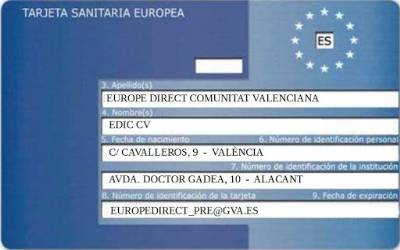
Another, more crucial, aspect of being a Brit in Spain – being able to use a Spanish-issued European Health Card (Tarjeta Sanitaria Europea, or TSE) – is also unconnected to nationality. Anyone who is 'in the system', meaning they are working, legally self-employed and paying Social Security, or in a 'simulated situation of registration' such as being in receipt of a Spanish State pension, maternity leave, sick pay, dole pay or any other contributory State benefits, needs to have a TSE to be eligible for emergency medical cover if they travel to another EU country. Although, during the transition period of Brexit, nothing is expected to change, a TSE will not work in the UK from next January.
But a British national in Spain who holds a TSE can still use this when travelling elsewhere in the EU – according to health authorities when questioned, nationality is irrelevant, since, for example, Canadians, Peruvians and Algerians are still eligible for TSE cover when on trips to the other EU-26.
Sports
Sports at top professional level could be affected severely – any possible fall in the value of the pound sterling will affect TV contracts; also, Article 19 of the FIFA's Transfer Statute says football players under 18 but at least 16 can only be moved around with the European Economic Area (EEA), meaning transfers such as those of Cesc Fàbregas and Héctor Bellerín, in their day, would not be able to happen again.
The FA has been battling with the Premier League for some years now, since the former wants to restrict non-British player numbers unless they have been playing for a UK team for at least three years before age 21, and the latter refuses to apply these restrictions. Spanish players could be affected if they were, indeed, put in place.
New immigration laws after the transition period could affect the ability of professional football and also the Formula 1 circuit when taking on European employees, and could cause admin headaches for European teams based in Britain, such as Toro Rosso, or even tyre supplier Pirelli, which is based in Slough, Berkshire.
For tennis, given that the ATP is based in London, no impact is predicted, except for possible lower prizes if the sterling value falls, which could put some stars off – although Wimbledon and Queens will carry on as normal.
MotoGP is not expected to suffer any negative effects, either – the main teams, such as Ducati, Aprilia, KTM, Honda, Yamaha and Suzuki are already based outside the UK and, in the case of the latter three, outside the EU.
Problems could occur with equestrian sports, however. Whilst these have long been global in nature – British and European riders compete in Australia and the USA, and riders from every continent take part in events in Europe, including Britain – the European showjumping circuit, for example, is heavily based in France and, since 2012, in Oliva Nova on Spain's east coast. Until now, popping across to France or Spain for shows has been no more difficult than travelling between UK counties, since horses on the professional circuit are required to have passports and proof of up-to-date vaccinations.
But pet travel regulations – which include horses – are set to change at the end of the transition period, and British riders may find it costs them more to compete on the continent, and vice versa for European competitors. Whether they wish to, or can, take on these additional expenses is not guaranteed, given that even the crème of equestrian sports tend to operate on a very tight budget.
Views of regional governments
Different regions in Spain have different attitudes to Brexit and how it may, or may not, affect them – Basque regional president, or lehendakari, Íñigo Urkullu has urged Spanish president Pedro Sánchez to turn Brexit into a 'challenge' and an 'opportunity', a view mirrored by the Association of Family Businesses in Castilla-La Mancha (AEFCLM). Its chairman Juan Ignacio de Mesa has pointed out that 'risks are present', but that Spain may be able to corner a larger slice of the EU market if Britain is absent or its presence reduced, and is optimistic about these possibilities.
President of Aragón, Javier Lambán, says the land-locked north-eastern region is unlikely to be affected much by Brexit – most of its tourists are Spanish, to a smaller extent European, and the vast majority of Brits who visit the region are resident in Spain anyway.
But he believes that the UK 'will regret' its decision to leave the EU.
Gibraltar
The British enclave to the south of mainland Spain feels itself to be between a rock and a hard place with Brexit – in 2002, Gibraltarians voted overwhelmingly to stay British and do not want to become part of Spain, but in the Brexit referendum, 96% voted to remain.
Crossing the border between Spain and Gibraltar is more likely to affect Spaniards than Brits – huge numbers of residents in the province of Cádiz commute daily to the Rock for work.
Gibraltarian First Minister Fabián Picardo has assured Spaniards 'will not lose their jobs because of Brexit' and that no obstacles will be put in place at the border, as Gibraltar will 'guarantee' this.
“There are human ties here, too, and I'm not in favour of anything hindering cross-border travel, which should be reciprocal and frictionless,” Picardo says.
“Gibraltar never fails in its international commitments, especially in terms of workers' rights,” he stresses.
“Spain is a member of the EU and is our neighbour. We're going to look to the future in a positive manner.”
Travelling to the UK from Spain
Holiday site Rumbo says 77% of Spaniards surveyed will still travel to the UK with the same frequency as before, although 29% are concerned about being caught out with any changes.
During the transition period, there are unlikely to be any, although Rumbo advises any Spaniard wishing to travel to the UK to check Spain's foreign office website. After the transition, Spaniards will need to make sure they have a valid passport, since it is likely their national ID cards, or DNIs, will not be accepted for travel.
Those taking their pets from Spain to the UK should check with their vet at least four months before they intend to travel; also, they should check with their credit card and phone companies.
Roaming
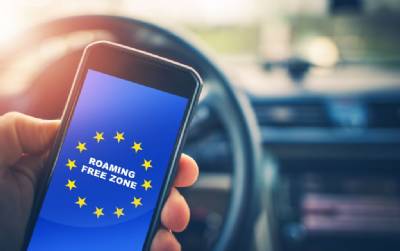
The EU axed mobile phone roaming charges for all travel within member States back in June 2017 – although this does not apply for long-term stays, as it could encourage consumers to set up mobile phone contracts in the cheapest countries and then use them in another, their country of residence. Call and text message charges are generally higher when these are made or sent between member States – such as ringing France from Germany – but the additional fee for simply having a phone switched on and using one's data in a different EU member State no longer applies.
This has proven a breath of fresh air for Brits living in Spain when they return home for visits, and for UK tourists when on holiday in Spain, and leaving the EU automatically means it will be under threat.
But Spanish telecomms companies have already mostly said they do not intend to reapply roaming charges for their customers on UK visits.
“The issue will need to be decided by the UK government, but a priori, we have no plans to start charging again as we want our customers to continue receiving the service they need and expect,” says national communications giant Telefónica.
Telefónica has started working with the British government to ensure lack of roaming charges is included in any deal reached between Britain and the EU.
Orange, Vodafone and MásMóvil have all said they do not want to bring back roaming charges for customers visiting the UK, and are hoping to reach deals with British network providers to ensure they do not have to.
Another issue altogether is whether tariffs phone companies charge each other when their customers are abroad will change.
From June 15, 2017, when roaming charge within the EU were dropped, call costs were capped at 32 cents a minute and text messages at one cent, plus IVA at 21%.
Data use charges dropped progressively, starting at €7.70 per GB, falling to €6 per GB from January 1, 2018, then €4.50 from New Year's Day 2019 and, from a month ago, to €3.50.
Next year, from January 1, they will reduce even further, to €3 per GB, then from the start of 2022, to €2.50.
It is not yet clear whether these price caps will continue for customers who use their Spanish mobiles in Britain after the transition period.
According to a European Commission report published in November, mobile phone use by customers outside their member State of residence multiplied tenfold after June 15, 2017, and the roaming-free system has been working 'very well', according to the then Commissioner for Economy and Digital Society, Mariya Gabriel.
Either way, roaming charges have not suddenly appeared overnight since Friday, and this, along with practically every other aspect of the UK's previous membership of the EU, will continue until at least New Year's Day 2021.
Living in the EU
“During the transition period, you and your family members will be able to continue to live, work and study in the EU as you did before January 31, 2020,” says the British Foreign and Commonwealth Office.
“The rules on travelling to the EU will remain the same during this period. You can move to a different country in the EU in the same way as you could before January 31, 2020.”
It says that in accordance with the Withdrawal Agreement, any British national already lawfully living in an EU member State prior to the end of the transition period – New Year's Eve 2020 – will be entitled to remain there with 'broadly the same entitlements to work, study and access public services and benefits' as before yesterday.
Anyone moving from the UK to an EU country will also be covered in this way, provided they do so before the end of 2020.
The FCO says UK nationals living in Spain must apply to register as a resident before the end of the transition period if they intend to remain in the country for more than three months of the year, and the requirements for doing so will not change for British citizens during 2020.
“If you are living in Spain or move there permanently before December 31, 2020, you'll have life-long healthcare rights in Spain as you do now, provided you remain resident,” says the FCO.
“You must register for healthcare as a resident in Spain.”
It also reminds British nationals in Spain that, if they are resident, they must change their UK driving licences for a Spanish one – even if it has not expired; previously, a UK photocard licence was valid until the expiry date on the front (not the back), when it would need to be exchanged for a Spanish licence.
Where the photocard part of a UK licence has already expired or the licence has been lost or stolen, the holder needs to apply to the DVLA – which can be done online – for a 'certificate of entitlement to drive'.
If you replace your licence via a gestor, they will apply on your behalf.
Traffic administration authorities will not fine you if you attempt to change your UK licence and it is already out of date, although if Spanish police catch you driving with an expired licence, British or Spanish, you are likely to be heavily fined.
As yet, much uncertainty, especially about finer details, surrounds Brexit, particularly for Brits living in EU countries – but Spain, both when the right-wing PP was in power until June 2018 and now the left-wing PSOE-Podemos coalition is in government, has pledged to ensure its British residents, tourists and holiday home owners have as easy a life as possible after Brexit.