
SPAIN'S National Research Council (CSIC) has announced a new book series seeking to debunk widely-held myths through scientific answers – including whether bread really makes you put on weight.
Sign in/Register
Looking for the Professionals/Advertiser Login?
By Signing up you are agreeing with our Terms and Privacy Policy.Forgot your password?
Feedback is welcome

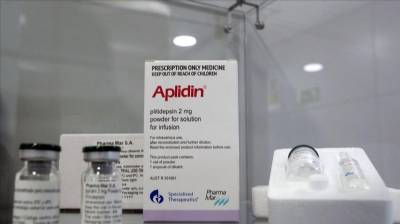
Still in the final phase of clinical trials, Aplidin has been used to treat 24 participating patients in Spain so far, and researchers say the viral load 'dropped drastically' after the first week in practically all of them.
Patients who had been admitted to 13 hospitals because of the severity of the virus were, in '80% to 90% of cases', able to go home within 14 days, and a third of the total – 37% - were discharged after just one week.
“The evolution [of the virus, treated with Aplidin] has been magnificent,” says Dr José Barberán, specialist in infectious and contagious diseases at HM Hospital Montepríncipe.
“None of the patients treated has died, and practically all of them have been able to go home.”
Aplidin is an anti-tumour medication based on the molecule known as plitidepsine which, scientists have found, reduces the C-Reactive Protein (PCR) in adult patients with Covid-19 where their symptoms are bad enough that they need to be hospitalised.
It was originally designed to halt tumour growth and spread, but is proving to be capable of doing the same with the virus.
Patients were split into three groups of eight, and each group given a different dose – of 1.5mg, 2mg and 2.5mg – per day for the first three days, the initial phase of the condition, which is when the virus multiplies the most within the system.
Their viral load was then tested, firstly upon starting the treatment, then on days four, seven, 15 and 30.
It had fallen considerably between days four and seven – by up to 50% in most cases – and by 70% at day 15 in those who still had any at all.
Over 90% of patients included in the trials started out with 'medium to high' viral loads.
Nobody was discharged in less than a week, since Covid procedures dictate that any patient admitted has to stay in hospital for a minimum of seven days.
Falling viral loads were also associated with a general improvement, clinically, and with the pneumonia that had resulted in some of the patients disappearing, as well as a reduction in inflammation.
By day 30, none of the patients treated with Aplidin had developed any Covid symptoms.
The doses given are 'very safe', say researchers – cancer patients who take Aplidin receive 'vastly higher amounts', and about 1,300 of these have been studied in past Aplidin trials.
“You have to choose the patient carefully, and choose them quickly,” explains Dr Pedro Landete, pneumologist at Madrid's La Princesa hospital.
“The viral multiplication in these patients fell drastically, especially when they were treated at the earliest stages of the illness.”
If the results of the final phase of the trials are as hoped for, it could be that the use of Aplidin will complement existing treatment, such as the corticoid drug Dexametasone, which has proven to be effective in the second week of the disease when inflammation starts to occur, caused by the patient's own immune system responding in an out-of-control fashion to the virus.
The trials are sponsored by the Spanish bio-pharmaceutical firm PharmaMar, whose clinical director José Jimeno says he is in talks with the relevant authorities about extending them to a wider group of patients.
If all goes to plan, Aplidin is hoped to be authorised very quickly for general use in Covid patients by the Spanish Medications and Healthcare Products Agency (AEMPS), which is responsible for signing off drugs for specific purposes before they are able to hit the market or be employed in hospitals.
PharmaMar is also in parallel talks with the USA's Food and Drugs Agency (FDA), the North American country's equivalent to the AEMPS, to enable the trials to extend across the pond.
At present, the trials are taking place in 13 hospitals across the Greater Madrid region, Castilla-La Mancha and Catalunya – three of the regions which have been among the worst affected by Covid-19.
Unfortunately, some side effects are inevitable, but although unpleasant, they are not dangerous – most of the patients who experienced adverse reactions suffered nausea, vomiting or both.
But researchers are expecting that the drug may even prevent some of the longer-term effects of Covid-19 typically suffered some weeks or even months after the patient is cured.
SPAIN'S National Research Council (CSIC) has announced a new book series seeking to debunk widely-held myths through scientific answers – including whether bread really makes you put on weight.
NEW legislation aiming to protect the public from telephone scams and cold-calling is under construction, and will attempt to attack it at source by tightening up on commercial use of customers' personal data.
OUTER space and the Bronze Age do not sit well in the same sentence – they may both have existed at the same time, but anyone based on Earth back then would not have known much, or anything, about what lies beyond.
A FIRM annual fixture for fans of the latest technology, the Barcelona-based Mobile World Congress (MWC) never fails to blow visitors' minds with creations they didn't know they needed. And these cutting-edge...