
Euribor could drop to 2.5% next year as Spain drives economic growth in bloc
INTEREST rates in the Eurozone could fall to 2.5% next year, having closed August 2024 on 3.75%, according to latest research.
Sign in/Register
Looking for the Professionals/Advertiser Login?
By Signing up you are agreeing with our Terms and Privacy Policy.Forgot your password?
Feedback is welcome

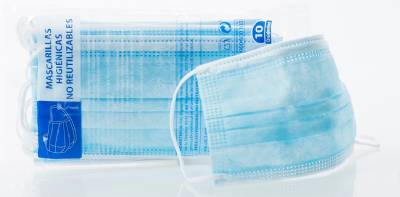
Members of the public had heavily criticised national authorities over the fact that IVA on masks in Spain is among the highest levels in Europe – and with disposable hygiene masks only being effective for four hours at a time, the cost for the average household was becoming prohibitive.
People with full-time jobs that require them to be on the premises need a minimum of two a day to stay safe just for the time they are at work, not even including lunch hours or supermarket visits out of hours, and children at school also need at least two a day, since normal classroom hours are from around 09.00 to 14.00 or from 09.00 to 17.00 with a two-hour lunch break – and most are involved in after-school activities until their parents get home from work.
With packs of 10 typically costing €6 each, a family of four can easily get through one packet a day, meaning up to €186 a month on top of their usual expenses – difficult enough for even average-to-high earners, but completely impossible for those on the lowest incomes.
Although disposable masks survive a machine-wash at 60ºC and a tumble-dryer cycle, no tests have been carried out to see whether they still offer adequate protection afterwards.
Spain's 21% IVA on masks and maximum price each of 96 cents – introduced early in the pandemic when they were like gold dust and unscrupulous sellers were taking advantage by charging astronomical amounts – and its standard €6-for-10 price tag came in for even more criticism after a man who had bought his from Portugal told the national media that the standard cost in the neighbouring country was €1.74 for a pack of 20.
Fortunately, Spain's government took this on board, as did retailers – supermarket chains across the country have since slashed their 10-pack prices in half, to €3.
And from next Tuesday (November 17), IVA on these will be reduced from the 21% maximum to the 4% minimum.
Treasury minister María Jesús Montero insists that her department had intended to do so for a long time, but that for Eurozone countries, IVA rates and products which fall within its various 'bands' are partly controlled by the European Union, to streamline financial contributions and monetary policy within the common currency area, and to prevent 'unfair competition' between member States.
She says Brussels had to give the green light to reducing IVA on masks in Spain, although plans were already in place to reduce the base price, net of IVA, if the EU did not agree to the tax cut.
Now IVA has been reduced on masks, Sra Montero says her ministry's next task will be to review the per-mask price limit of 96 cents.
As other members of Spain's left-wing coalition government have pointed out since it came into power at the beginning of the year, Sra Montero stressed that her cabinet did not always get it right, but that it tries hard to be 'sensitive' and 'attentive to people's problems', to 'listen' and accept legitimate criticism, but 'also to be responsible'.
“We took the [IVA reduction] decision yesterday [Tuesday, November 10] as soon as the European Commission confirmed to us that it would not open disciplinary proceedings against our country for failing to comply with EU rules by doing so,” she says.
“We had to wait until we had written confirmation that Spain would not be fined for it.”
Disciplinary proceedings for breaking EU law can be expensive, and Spain did not want to be hit with a multi-million fine at a time when, due to the pandemic, public funds are more necessary than ever for spending on healthcare and keeping the economy afloat – and a fine could be drastically more than the estimated €1.57 billion the State will lose by cutting value-added tax on masks.
“This government will be watching closely to make sure that the IVA reduction translates into a lower price to the end consumer, and not to increased profit margins for companies,” she adds.
The IVA reduction only applies to masks on sale to the general public – it had already been eliminated altogether months ago on those used by professionals in the health and care industries.
For those who want to reduce their monthly expenses even further, though, buying reusable masks that survive dozens of washes works out considerably cheaper, kinder to the environment – since disposable ones cannot be recycled due to the health risk – and just as effective.
DIY stores are now selling FFP2 and similar-standard masks – the ones that have always been on sale for use with electrically-powered tools are FFP1, which still offer a fairly high level of protection – and Eroski supermarket sells MO masks, which deactivate the virus on contact and continue to do so for up to 50 washes, and which are also available online for €10.
INTEREST rates in the Eurozone could fall to 2.5% next year, having closed August 2024 on 3.75%, according to latest research.

TWO of Spain's largest high-street banks are reported to be in merger talks, potentially resulting in the joint entity being the second-biggest in the country in terms of share capital.

THE average Spanish resident will spend between €500 and €1,500 on their holidays this year, with three in 10 set to increase their budget from last year and 16% reducing it.

SPAIN'S State post office has launched a new solution for passing travellers who do not want to lug their suitcases around: Lockers for bags are now provided, with prices depending upon weight.