'Post-Covid' property market: Temporary price fall and changing buyer criteria predicted
'Post-Covid' property market: Temporary price fall and changing buyer criteria predicted
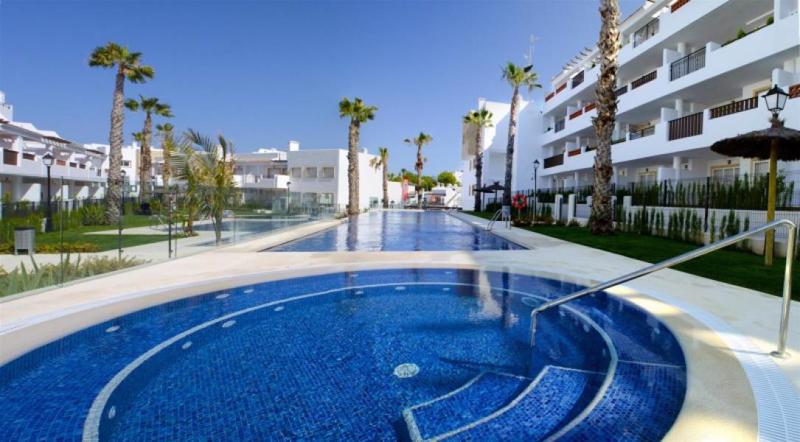
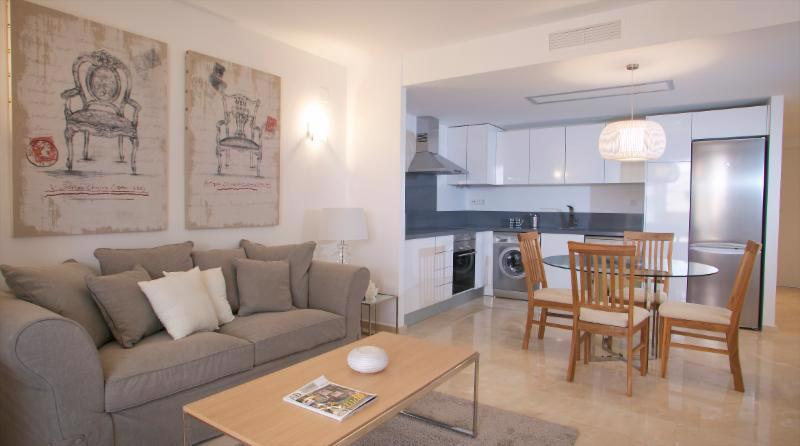
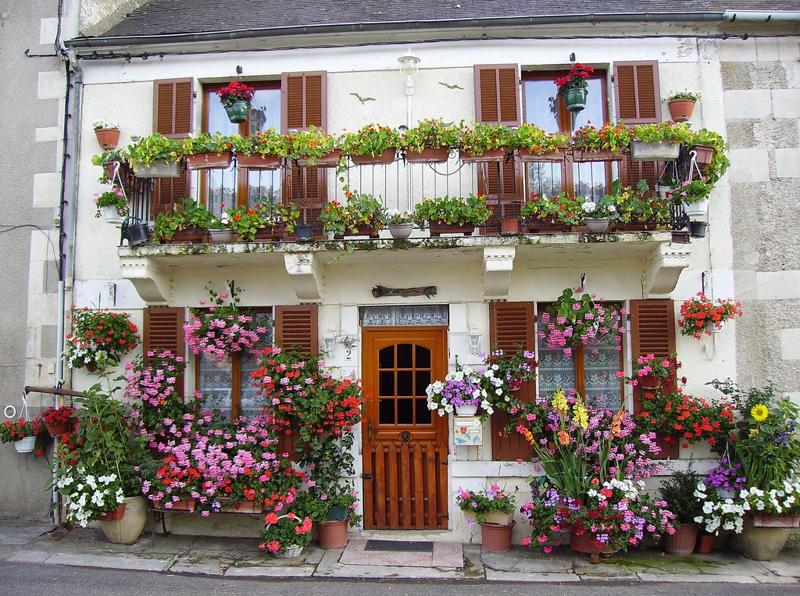
Your dream home could be more affordable in 2021 (photo: OCU)
NEXT year could be a good time to buy a property in Spain and have some cash left over in your budget – predictions are that 2021 will bring a reduction in prices of around 7%, rising to 10% in large cities such as Valencia, Málaga, Sevilla, Barcelona and Madrid.
Sellers may want to hang onto their properties for a bit longer as a result, unless they are planning to move to another area or have decided to find somewhere smaller and cheaper if their line of work is in a business that has been badly affected by the pandemic – as a result, a reduction in national demand is likely to see supply increase and prices fall.
“Even though public spending is helping to contain business closures and redundancies [the extension of the furlough scheme is part of this strategy], these efforts are currently proving insufficient to recover levels of economic activity seen prior to the health crisis in Spain, and we'll take around another two or three years to get back to those while restrictions and confinements continue and a large part of the population will not have been vaccinated yet,” says property market analyst Ferran Font.
The European Commission, despite forecasting 2020 will end with Spain's GDP having shrunk by 12.4%, does not expect this to be a long-term situation: Next year, it will grow by 5.4% and in 2022, by a further 4.8%; based upon the assumption that Europe's estimations will be, necessarily, conservative, it seems likely Spain will be back to normal economic health by 2023 at the latest and will be gradually improving on its present circumstances starting from a few weeks' time.
The rent market has been shrinking in the largest cities, according to Font, including the five mentioned above, but the monthly costs for tenants in Spain's biggest metropolitan areas have, arguably, been too high for the last few years, meaning anyone who is able to undercut average prices in these areas should not have difficulties in finding paying occupants.
Font does not expect the GDP for 2020 to have fallen quite as drastically as the European Commission says, since he believes some of the reduction will spill over into 2021 and it will begin to grow again as more and more of the population is immunised against the SARS-CoV-2 virus.
He expects the full year of 2020 to have seen house prices fall by around 2%, and for 2021, they will drop by between 5% and 7%.
But new builds and 'second-hand properties of excellent quality and in sought-after areas' will be more likely to hang onto their value, Font believes, and home values overall could begin to recover to pre-2020 levels by the end of 2022.
This year has seen a significant fall in sales and purchases of properties – not just because of workers temporarily laid off and businesses closing for part of the year or finding their activities still restricted by curfews, limits on numbers, and collective psychology with much of society still reluctant to return to old habits, but also because lockdown and its gradual scaling-back operations, lasting from mid-March to high summer, meant property viewings were impossible.
Although lockdown made a higher-than-usual percentage of the population suddenly realise they wanted to live somewhere else – somewhere more rural, more coastal, without immediate neighbours, or a home with outside space – property viewings were off-limits for the best part of four months as only 'essential' trips outside the home were permitted.
This meant sales and purchases of residential property contracted by an unprecedented 53.7% in May; the fact that the remaining 46.3% still went ahead was largely because of sales transactions that had started before March.
By September, the accumulated annual fall was 22.1%, showing that activity in the industry had picked up considerably in summer.
Font predicts a year-on-year reduction in purchases and sales of around 20% for 2020 as a whole, with around 400,000 homes changing hands.
This, though, will rise as the economy strengthens – and as the economic downturn has been caused by a medical situation rather than by governments or industries being financially-strapped, recovery is expected to be very quick once the pandemic is under control.
A conservative estimate for 2021 will see sales and purchases rise by 5% on today's volume, Font believes, although as Covid immunisation increases, restrictions will start to end, businesses can get back to normal and buyers' confidence will be restored, meaning sales volumes should start to pick up.
Mortgage reticence 'need not bring tightening of loan terms'
Fears of redundancy, at least in the early months of the pandemic, led to new mortgage loans reducing dramatically in number – around 27.6% fewer were granted as at May, with an accumulated annual decrease of 7.6% by September – and Font predicts that by the end of 2020, the number of new mortgage contracts will have fallen year on year by around half the figure of house purchase falls.
This translates to roughly 320,000 to 330,000 new home loans in total for 2020, with the assumption being that around half of all homes bought were in cash, or without credit.
For 2021, mortgages being signed will, clearly, be 'linked to the macro-economy', Font says, meaning no reduction in credit offered, nor any tightening-up of criteria for granting it, is expected, but potential buyers will start out the year more cautiously than they did the beginning of 2020.
Reduction in new builds
As for new builds, the High Council of the College of Architects (CSCAE) calculates that around 14% fewer permits were granted between January and September this year, although some developers reported a year-on-year fall of around 30%.
Font says it is 'very probable' that new-build projects will have seen an annual fall of 15% to 20% by the end of this year, but that 2021 will 'not bring any major change in trends'.
Rent prices need to come down, but resulting demand will work to landlords' advantage
Rental prices are expected to have fallen nationally by around 1% to 2% this year, rising to 10% in major cities, and with no immediate change expected due to public pressure to make rents affordable for the average worker, especially young adults, and a law in Catalunya capping prices likely to find its way to other regions.
This could work to landlords' advantage, though, Font believes; if rent becomes affordable, demand will rocket, and the burgeoning 'build-to-rent' trend is likely to take off.
Quality of life over location: Buyers in the 'post-Covid era'
And the pandemic will certainly have changed the face of the property market, recalls Font: Now, the emphasis will be less on location, since the sudden, enforced introduction of working from home means office staff no longer need to look for a home to buy within comfortable commuting distance of their companies.
This could mean a rise in demand for properties out in the provinces and even in the depths of the country, as people seek out a home they actually want to live in, not just one that is convenient for their job.
They are likely to prioritise open-air spaces – gardens, terraces and pools they can enjoy without having to leave their premises – and more spacious indoor areas, more 'tailored' or 'personalised' properties, with the emphasis on quality of home life.
The result is that buyers may start to spread out into the provinces and to remoter areas, where they can get much more for their money.
Also, new builds are likely to focus more and more on energy efficiency, especially where European funding is involved, since 'green' properties may be a prerequisite for cash help – and this could affect existing properties, where renovation grants are given subject to plans including ways of making them need less fuel for heating and lighting, Font concludes.