Behind the scenes at the Tomatina: What goes on at Spain's messiest festival
Behind the scenes at the Tomatina: What goes on at Spain's messiest festival
BACK in combat after a three-year hiatus, the world's biggest food fight has had thousands painting the town red.
It's either your worst nightmare or the best fun you can have with your clothes on – clothes you'll never be able to wear again – the greatest stress-reliever outside of a luxury spa and the most carefree of abandonments you can achieve sober; but rather like paintballing and flour fights, nobody is 'on the fence' or 'lukewarm' about the Tomatina. It's either near the top of your bucket list, or it's something you'd move to another continent to avoid.
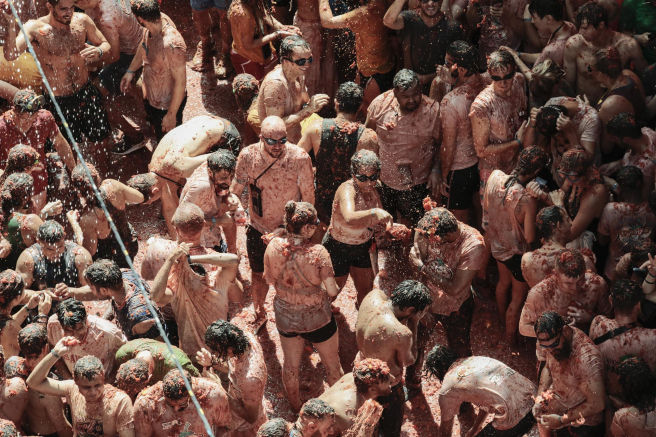
The 2022 Tomatina was eagerly awaited, having been called off since the 2019 edition due to the pandemic. The above picture appears to be near the start of this year's fruit fight, given that participants' clothes seem relatively clean and the tomatoes intact…
Always on the last Wednesday in August, and only on that day, the otherwise sleepy, unremarkable town of Buñol, about 20 kilometres west of Valencia city off the A-3 Madrid motorway, becomes the place where half the planet wants to be (or already is), and the other half just thinks is a bit silly. After all, it's the only town on earth which is famous for crowds hurling 130 tonnes of over-ripe tomatoes at each other purely for entertainment.
For the other 364-and-a-quarter days of the year, Buñol, with its excellent and close transport links to Spain's third-largest city, its attractive mountain scenery, quaintly-traditional central streets and outer urbanisations with swimming pools and cosmopolitan communities, does not typically draw in tourists by the crowd, other than passing day-trippers. Yet on Tomatina day, it's all over TV screens in Japan, the USA and Australia, whilst would-be telly-watchers from those countries are not even at home to see the coverage, because they're actually in Buñol.
Panorama of the town, taken by the tourism board for the district or shire, La Hoya de Buñol. It's quaint, picturesque, well connected and with beautiful countryside, but the reason for Buñol's massive tourist influx every year is just to throw fruit at each other in the street (photo: Turismolahoya.bunol.es)
It just looks like unsupervised, messy mayhem, a health and safety nightmare, a criminal waste of food, accidents waiting to happen and adults acting like children until it all ends in tears.
But the Tomatina is, in fact, extremely tightly controlled, with stringent rules, set procedures detailed in several world languages, strict hygiene, and environmental consciousness, as well as being big business the local economy and wider industries depend upon.
The Tomatina is the perfect example of why you should never judge anyone or anything by their immediate outward image.
Red numbers
For fans of figure-crunching, the Tomatina always offers juicy statistics that prove it's more than just a local patron saint fiesta nobody outside the village knows about unless they're passing and hear the fireworks.
As a start, the town's year-round population is around 10,000, and in a lean year – such as the first post-pandemic Tomatina – that number swells by 80% on one day.
Buñol Castle, in the heart of the town. This picture is actually of the inside of the fortress - houses were built in it back in the 11th and 12th centuries, when it was first constructed, as was standard practice at the time, but unlike other Mediaeval castles in Spain, the one in Buñol still has residential homes embedded into its walls (photo: Mike1979Russia/Wikimedia Commons)
It's been known to treble or quadruple, but for safety reasons, Buñol council was eventually forced to limit crowd sizes, with only 15,000 places reserved for non-residents, which means having to buy a ticket – albeit the fee is nominal and barely covers expenses.
This year, about 7,000 townspeople took part in the tomato fight – in previous years, this has been as high as 8,500 or more, so it's a real community-cohesion exercise – but were outnumbered by tourists. Around 8,000 people travelled to Buñol for the salad-throwing festival, with more visitors from other parts of Spain than ever before.
Foreign tourists were nearly all from elsewhere in Europe, even though a huge percentage of them in the previous 74 editions have come, literally, from the ends of the earth. As well as Australia, Japan and the USA, as mentioned before – and whose tourists are Tomatina faithfuls – they come from India, Canada, South Korea, Latin American countries (México, Bolivia and Argentina, particularly), New Zealand, and just about as far away as you can imagine from Buñol without actually stepping into outer space.
A natural bathing pool in the Turche Cave in Buñol's rural outskirts - one of many, so you can book a day trip from the town to explore them and take a dip (photo: YouTube)
Covid restrictions remain in place in some non-European countries, though, making travel abroad harder and leading to a massive reduction in long-haul visitors this time around, but Buñol local authorities anticipate an international comeback in 2023 and are already preparing for it.
Buñol council normally reserves a few thousand resident-only tickets, but given the global furore the Tomatina causes, many locals taking part this year say they have not been able to get one for 'several years', making the more 'homely' 75th edition their most exciting ever.
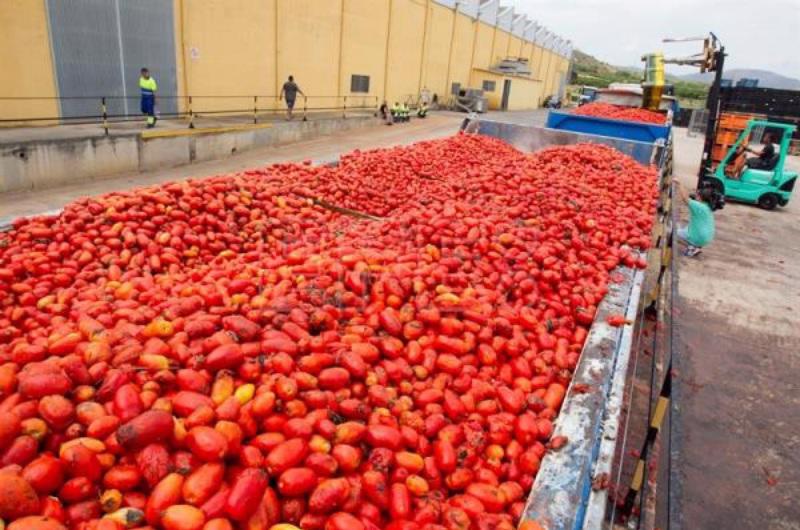
Six lorries, containing a total of 130 tonnes of tomatoes, are unloaded for the 15,000 to hurl at each other.
If you have trouble picturing this, then a kilo of tomatoes is normally between about seven and 10, a tonne is 1,000 kilos, and six lorryloads hitting the street effectively means they turn into rivers of ketchup.
Over 500 Local Police, Guardia Civil and Civil Protection officers are on duty.
Rotten tomatoes, rules and recommendations
Bars and restaurants anywhere near the Tomatina arena are forbidden from using glass or china crockery for the 12 hours before the fiesta, in case of breakages which go undetected and cause injuries during the scuffle.
Splat! Castles and cave pools are all very well, but this is what really brings in the tourists for Buñol
Residents are banned from parking within a wide range of the 'tomato ring', due to potential damage to vehicles by flying fruit.
Only tomatoes may be thrown, nothing else; all tomatoes must be hand-squashed before throwing, as hurling solid fruit can cause injury and is against the rules.
No grabbing people's T-shirts or other clothing, or ripping them, and keep well away from the lorries stuffed full with tomatoes – people on foot must give way to them when they are in motion.
Chucking tomatoes outside the fenced-off zone is prohibited.
Visitors heading for the Tomatina arena for the 2022 salad fight. It hasn't started yet, but when it does, there'll be rivers of ketchup flowing through the streets
At 11.00 on the dot, a firecracker goes off to mark the start of the food-fighting session – and if you don't wait for the signal, you're likely to be swiftly removed from the arena and denied re-entry.
An hour's worth of slinging salad follows, but during this time, you are not allowed to throw tomatoes directly at people's faces or heads.
When the second firecracker goes off at exactly noon, the action stops immediately, and any un-thrown tomatoes dropped to the ground.
Participants are strongly advised to wear goggles, and either old clothes they are never planning on wearing again, or swimwear which will not stain or suffer serious erosion from the acid in the tomatoes.
Mid-combat, it's just starting to get messy
Wearing some sort of helmet is not compulsory, due to the 'no-throwing-tomatoes-at-heads' rule, but previous editions have seen participants making their own from hollowed-out watermelon halves.
Those taking part are heartily recommended not to wear any unnecessary accessories or jewellery, or to carry any personal effects on them, due to the high risk of their getting lost or damaged.
Market stall brawl: How it all started
Most fiestas in Spain are not, in fact, traditions that date back centuries – the majority were 'invented' in the 20th or late 19th century, or have evolved into their present form in living memory.
And the Tomatina is only 77 years old.
A local pageant with a small-scale parade through Buñol main square was taking place on the last Wednesday in August 1945, and a group of youths tried to push through the crowds to get a better view.
In doing so, they inadvertently knocked down a passerby, who took it badly and began ranting at them.
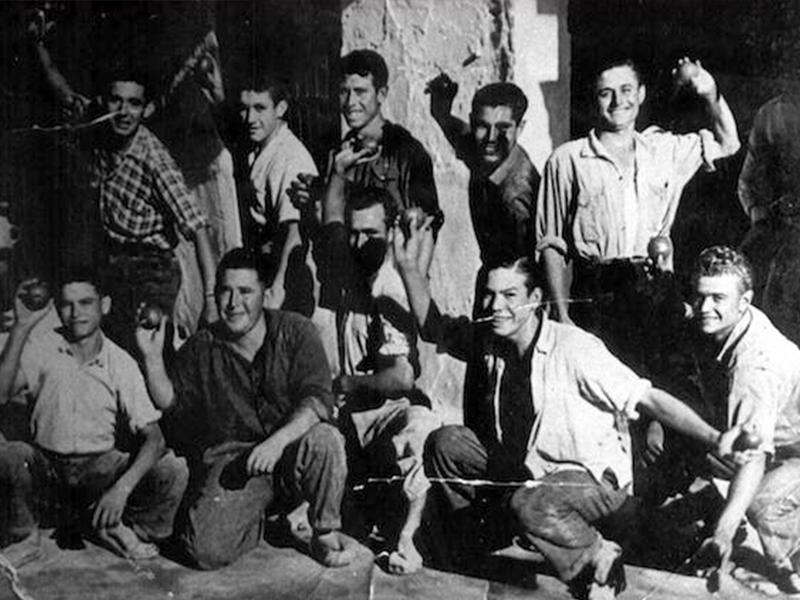
One of the earliest Tomatina festivals, probably in the 1950s. The tomatoes are still intact at this point, but those shirts aren't going to stay white for long (this photo and the next from Tomatina.es, the official Tomatina tour company)
The discussion became more and more heated, and the mown-down pedestrian began to get a bit violent with everyone and everything in his path, taking out his anger on whatever inanimate objects lay in front of him.
A fruit and veg stall became one of the unlucky victims, as the furious man started chucking tomatoes at the lads who had bumped into him.
They retaliated in kind, and soon, the whole festival crowd was at it.
Just for a laugh, the same youths decided to do likewise on the same day the following year, to mark the 'anniversary' of the day they took a battering from the contents of a neighbour's allotment.
It started to become a public tradition, although the council banned it a few years later.
Naturally, the prohibition made locals even more determined to 'celebrate' their annual tomato fight, so participants multiplied in number the minute they were told 'no'.
Children who might be starring in a 1970s' or 1980s' washing-powder advert…if there was any chance that even the most powerful detergent would get those red splatters out of their clothes. And we can tell they're tomato-coloured stains, despite the black and white footage
A sterner warning came in 1957, which the people of Buñol decided they ought to heed for their own good – so they made a giant papier mâché tomato and held a full-scale community funeral for it, complete with marching bands.
And then they went and had a tomato fight anyway.
Nobody really knew anything about it beyond Buñol until the now-deceased reporter Javier Basilio wrote a feature on it for the national press in 1983, after which word of the messy, pulpy combat started to spread outside Spain's borders.
What started as a daft local tradition now has loyal followers from every continent, and from all over Spain. Turning Instagram red for a day, the obligatory selfie whilst lying in a pool of tomato soup is at the top of millions of people's bucket lists…although for millions of others, it's their idea of sheer purgatory. Nobody's ‘neither here nor there’ about the Tomatina - it's a straight contest between loving it or hating it
The Tomatina in its present guise – with a late-night open-air disco in the square the evening after the soggy red battle – has been an International Tourism Interest Festival since 2002, making it an intangible cultural asset.
It would not qualify for UNESCO Intangible Heritage status, though, since its 'official' structure is too new, but this may change in decades to come once it can legitimately be said to have been passed down through the generations.
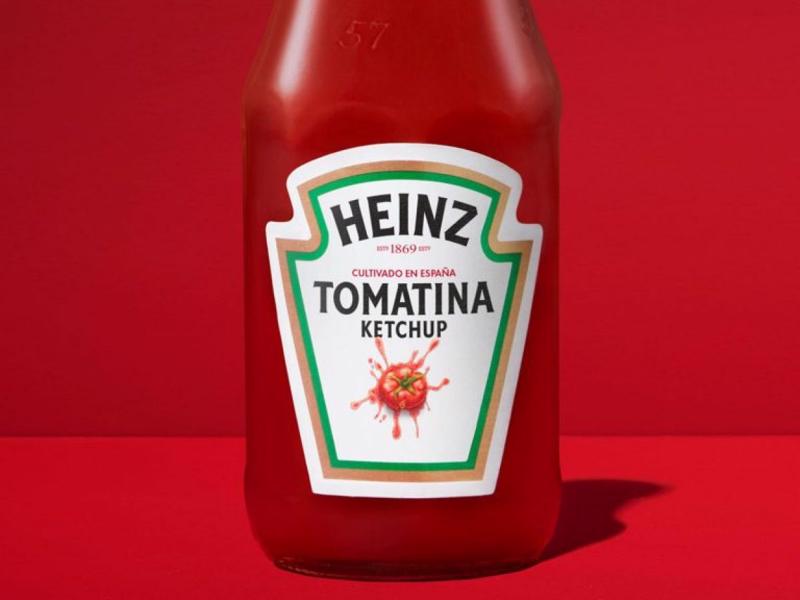
Nowadays, this sticky, mucky festival has become such an icon in Spain and beyond that, when the pandemic forced its second consecutive cancellation in 2021, Heinz released a limited-edition Tomatina ketchup.
“The Tomatina has been cancelled,” read last summer's tomato sauce advert.
“But we've found the solution: Turning our tomatoes into ketchup.”
Organised chaos: “It's the safest fiesta in existence”
It's far from a free-for-all splattering session. The Tomatina is micro-managed to the tiniest detail, creating work for the organising team year-round.
Indeed, Buñol actually has its own 'Tomatina councillor' seat in the town hall.
Every year, months in advance, local authorities, police, Civil Protection squad leaders, volunteers and festival associations hold conferences to dissect all aspects of the previous Tomatina and figure out whether any of it did not work.
It might look like lawless mayhem, but security and planning is extreme. Buñol even has a ‘Tomatina councillor’ seat on its local government (photo: Buñol town hall)
Seamless, almost military coordination, a complex rulebook with everyone's feedback, and hours of preparation from before sunrise on the big day are all happening behind the scenes.
Wheelie-bins and recycling banks are moved to a distance, to avoid human collision, spillage, or the temptation for anyone to start pilfering them for things to throw that aren't tomatoes.
Information boards detailing the rules, signposts everywhere to point to where the open-air shower blocks are – they're going to be used by 15,000 people starting from 12.01 midday, so orderly queues and security are essential – road blocks and diversions are set up with police stationed to manage the traffic, emergency exit corridors from the tomato stadium are created and tested, fences go up, health and safety officers oversee and sign off the entire mise en scène.
Visitors, upon arrival in Buñol, are directed on foot along specific road routes or 'safe corridors', and are given verbal advice and regulation reminders as they pass the entrance.
One of the numerous signs explaining the rules and procedures visitors need to follow. But to lighten it up (just how seriously can you take a fruit fight, anyway?!) cute and smiley cartoon tomatoes are ‘employed’ to deliver the crucial messages (photo from the Tomatina's official website, LaTomatina.Info)
Council maintenance staff will have been on the streets since around 06.00 that morning, giving them a thorough clean and full surface inspection – not one single cigarette butt or crisp packet will be left, and you could practically eat your tomato soup for brunch off the tarmac.
Odd though it might sound to buff and polish streets that are going to turn into a gushing tide of liquidised vegetables a few hours later, this is all essential for safety reasons: If you end up face-down or on your hands and knees in a tomato-y swimming pool, minute shards of glass from broken bottles, or fragments of torn drinks cans, could cause painful injury and infection.
Security, health and safety measures are watertight, with an average of 500 police, firefighters, paramedics and other emergency workers on duty - even the Guardia Civil explosives squad. This picture, by the national government's ministry for territorial planning (Mptfp.gob.es), shows one of a series of strategy meetings held in the months leading up to each Tomatina festival
By 10.00, volunteers involved in distributing the tomatoes are assigned to the lorries they will be helping with, and given their instructions; the HGV drivers themselves will have been briefed on very precise rules about how and where to manoeuvre and park, whilst a whole team of helpers acts as a human fence around all sides to protect the public and force them to keep their distance from the vehicles.
The Guardia Civil's explosives squad, TEDAX, are among the massive security team, together with paramedics, the crime squad and even the 'environmental police', SEPRONA, and the mountain rescue brigade.
Helicopters patrol the air-space to prevent invasion by unauthorised drones and to monitor the crowd from above, ready to report on any injuries or emergencies that may not be visible by authorities on foot around the edges.
How many fiestas in Spain actually involve shutting the air-space above them, when Royalty and international heads of State are not on the guest list?
The Civil Protection squad, always on the scene whenever there's a catastrophe, are on stand-by and patrolling the streets throughout the Tomatina (photo: @LaTomatinaInfo on Twitter)
After the hour-long tomato fight, participants are led away in an ordered manner through the evacuation corridors.
Local residents, even if they do not get covered in pulped salad, are actively involved in the festival, especially if they live close by – they hand out bottled water to goo-covered tourists, return personal effects they have been given to look after for the duration, and even allow people into their homes to use the toilet and dress the odd cut or bruise from their bathroom first aid kits.
Next, firefighters, council workers and volunteers among the public, armed with hoses, water pumps and brooms, start the cleaning operation immediately.
Meanwhile, thick plastic sheets will have been draped down the fronts of houses in the firing line to protect them from tomato stains; these are then rinsed and peeled off, leaving the rendering red-splodge-free.
The local community gets involved in dealing with the aftermath, including the massive clean-up operation
Mayoress of Buñol, Juncal Carrascosa, says all this means the Tomatina is 'the safest fiesta in existence'.
Even more so for women, since a series of so-called 'Purple Points' were set up this year, or a safe refuge for anyone suffering sexual harassment, or worse, to run to.
Each of the lorries had 'an easily-identifiable person' on hand as a 'Purple Point' representative, meaning that wherever you are in the crowd, you would have a helper a few steps away.
Environmental concerns: Reassurance over 'food waste'
Society has evolved in terms of sustainability awareness very rapidly in recent years, and what might once have been seen as harmless fun is now likely to be frowned upon if it involves toxic or planet-warming emissions, non-biodegradable residue, or general waste of natural resources.
The first concerns raised about the Tomatina came from Nigeria in 2015, when a plague of crop-devouring insects destroyed 80% of the African nation's tomato plants, sending prices of these otherwise-prolific fruit through the roof and out of reach to all but the very wealthy.
Citrimed lorries in La Llosa, Castellón province, filled with poor-quality, inedible tomatoes that melt in your hand and not in your mouth. Instead of leaving them to rot and making a huge loss, they are sold to a town whose tourists like to throw them at each other
Seeing TV footage of tourists in Valencia chucking away 130 tonnes of a food staple they were desperate for reportedly left members of the public in tears.
The following year, criticism came from within Spain's borders: Now that the country was finally leaving behind a long recession, but locked in a low-wage, high-turnover and high-tax economy, with once-middle class residents having to resort to food banks to fill their stomachs and over a fifth of the country living in relative poverty, wasting so much good, wholesome produce did not sit well with them.
Public complaints from the national food-bank federation prompted Buñol to clarify how the Tomatina worked.
Plum tomatoes, planted in April and harvested over spring and summer, are used, but only those which are unsuitable for human consumption.
They might be shrivelled, bruised, or too squashy – producers say they would be the tomatoes that squidged into a gunky mess in your hand when you pulled them off the plant, would taste horrible and not be very healthy at all if eaten, even cooked.
Heinz's 2021 advert when Covid put paid to the Tomatina for the second year. Farmers do not just earn a living from their produce that you eat - in the Valencia region, what you can't eat can be chucked at your mates and still make an income for their growers
All these come from farms in and around La Llosa in the province of Castellón, and the suppliers, Citrimed, say that if they were not bought by Buñol to use in the Tomatina, they would simply be left to rot on the ground or be cleared up and dumped in landfill.
Bruised and gooey tomatoes, whilst unappetising and a potential source of upset stomachs if eaten, are perfect for hand-to-fruit combat, as they are soft and splattery.
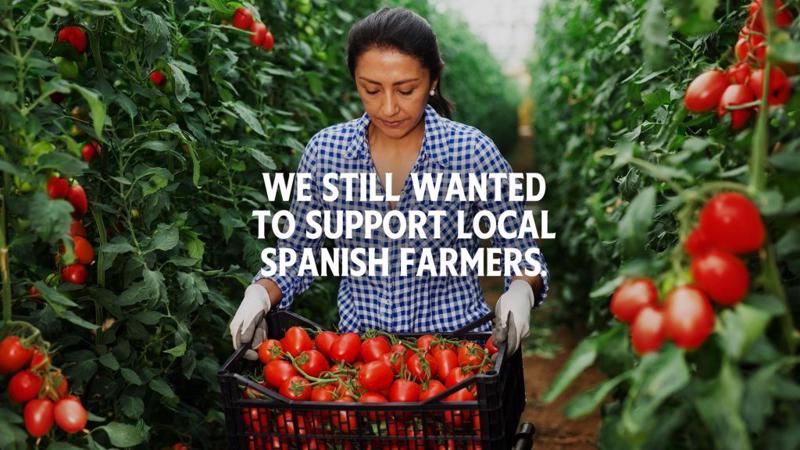
To compensate for farmers' losses through a second Tomatina-less year, Heinz Spain made a concerted effort to source home-grown tomatoes only for its ketchup, which it named after the festival in a limited-edition release - as shown here, on its advert
The sheer quantity of tomatoes grown which cannot be sold as food mean the Castellón farmers would struggle to cover their costs if these were merely disposed of – so the Tomatina keeps their livelihood safe and their fields flush with vines.
Also, tomatoes grow easily, quickly and abundantly in the Mediterranean climate and in similarly humid atmospheres close to coasts with low rainfall – even the least red-fingered gardener can cultivate a healthy batch without trying. If you don't believe us, bury one in a flower pot, fling some water on it when the soil gets bone-dry, and tell us what happens.
It's also a little-known fact that back when trains with buffet cars emptied their passenger toilets on the tracks, tomatoes were seen growing spontaneously between the railings.
Photo footage from parts of the UK taken by rail workers in 2014 and even later proved this, and it is attributed to on-board packet sandwiches with sliced tomatoes in them: The seeds survive the journey through the digestive system intact, taking up root when the toilets flush out onto the soil.
Proof of how robust and prolific tomato plants are. Left (by Dave Sallery of North Wales Coast Railway Noticeboard) shows ‘feral’ tomatoes growing on train tracks in Westbury, Wiltshire, south-west UK, in 2019; right (taken by RMT British rail board union members) captures a wild tomato plant on the line in Rochford, Essex, east UK, in 2014. The pictures were published in the BBC and other national media to highlight hygiene issues with lavatories on very old trains
So, if any type of vegetable had to be 'wasted', tomatoes would be the ideal candidate.
Spain's new anti-food waste law, launched in October, would have meant the Tomatina became illegal if the fruit used was edible.
It may, however, mean the way the resulting juice is disposed of changes over time: Instead of being washed down the drains, the council may be required to treat it as 'organic waste', used to make compost for the agricultural industries.
At least if you end up in this position during the Tomatina, you can rest assured you're not ankle-deep in wasted food produce…or railway-line tomatoes
Water used to hose down the streets is, also, of the agricultural type, not suitable for human consumption – typically waste water treated and fully purified in sewage plants, meaning it is completely clean, but not of sufficient quality to be directed back into the mains supply.