GREATER practical and financial help for parents is on the cards now that a new 'family law' has passed its second reading in the Council of Ministers, with extended maternity and paternity pay, protected time off for childcare, tax rebates, and a revised definition of households eligible for extra support.
Originally set up by equality minister Ione Belarra in 2023, the legislation is among many others that had to be shelved due to the general elections in July, but looks set to come into force later this year.
Minister for social rights Pablo Bustinduy hopes to bring the new framework into effect as soon as possible, with additional features still under debate expected to be added on in due course.
These features likely to be included at a later date cover maternity and paternity leave being extended from their current 16 weeks to 20 weeks, and for at least four weeks of the present eight a parent can take off work for childcare to be fully paid.
More flexible and modern definition of 'families'
In line with European Union requirements, Spain's new 'family law' redefines the concept of the parent-child unit to ensure greater social and legal protection for those that do not follow the traditional notion of a married heterosexual couple with biological children in common.
The text extends to adoption, stepchildren, guardianship, fostering, children or their primary carers with registered disabilities, same-sex parents, and unmarried cohabiting parents.
The definition of ‘family unit’ has been modernised to make it fit for purpose, and now includes same-sex parents (photo: Freepik)
It will allow, for example, unmarried couples who live together to take advantage of the 15-day unpaid leave entitlement for general childcare, whilst working mothers will get up to five days' paid time off per year in addition.
This time off is for everyday care needs, not for cases where a child is ill and needs a parent at home or to be with them in hospital – the latter is extra, with up to eight weeks a year permitted, with Spain's government intending to make at least four of those weeks on full or substantial part pay.
The latter is the result of an EU Directive, which is required to be incorporated into national law by August 2024.
Meanwhile, working mothers are allowed to take up to four extra days off a year without pay for situations classed as force majeur, such as a child's illness or accident.
'Large families' reframed
Until now, to qualify as a 'large family' – which brings additional tax breaks and benefits – a couple would need to have at least three dependend children, which is increasingly rare in a country whose birth rate has been in free-fall for decades.
Instead, this category will be named 'families with greater childcare support needs', and cover single parents with two children, or with one child if the youngster has a disability.
Currently, Spain has over two million one-parent family units, and in 81% of cases, the sole caregiver is a woman.
‘Large families’ are now classed as ‘families with greater childcare support needs’, and involve fewer household members to qualify (photo: Freepik)
Single-parent households even with just one child will be given similar 'greater support needs' status, allowing additional financial and practical benefits in terms of housing, transport, employment, cultural activities, education, and other key areas.
Among these are guaranteed access to up to 16 weeks' free nursery school for children aged two and under, although more and more town councils in Spain are offering nursery care or school places for two-year-olds as a matter of course. Once children living in Spain are three years old, they normally start primary school in reception classes.
The former definition of 'large families' covered two-parent households with at least two children where one of them, or one of the adults, had a registered disability level of a minimum of 65% - this will now drop to 33%, which remains the lowest level of disability for which an accredited individual is able to access any type of State assistance.
A new 'special category' of 'greater childcare support needs' has been created, for families with four or more children, or three or more in the case of a multiple birth or low-income households.
Also, for the first time, parents with enough children to qualify for 'greater childcare support needs' categories can hold up to two different status types within this bracket – even where the parents are not a couple, or were previously married or cohabiting but have separated or divorced.
Bustinduy's department estimates that parent-child units currently qualifying as 'large families' total over 800,000, and that over 300,000 are made up of one parent with two or more dependent children.
'Large family' status currently allows the parent or parents to apply for a one-off discount on their monthly Social Security, or national insurance contributions of up to €1,000, plus a €1,200 income tax deduction – using the Agencia Tributaria's Modelo (Form) 143 – which can be up to €2,400 for those in the 'special' category.
'Universal' child benefits
At present, the majority of parents are entitled to up to €100 a month from the State per child aged up to three years inclusive, although it comes in the form of a tax reduction, meaning it is offset against tax liabilities in the annual declaration that almost all adults are required to file every spring.
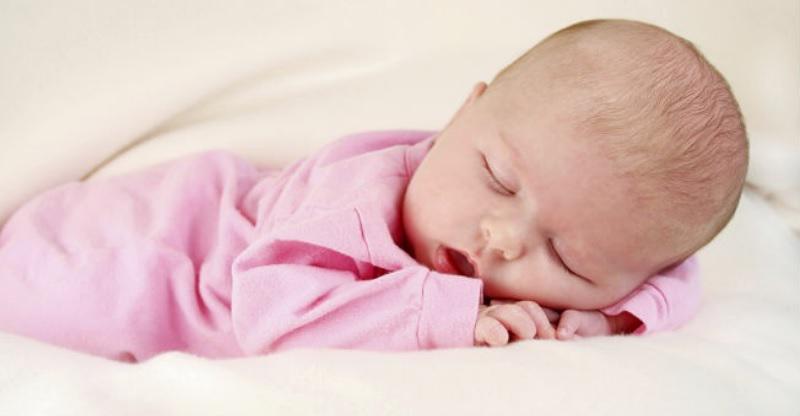
Newborns and children up to age three attract a €100-a-month tax rebate for their parents, but Spain wants to increase this to six years old and, eventually, 18 (photo: Pxhere)
Bustinduy's ministry wants to 'work towards' extending this entitlement for children aged up to and including six years old, with a 'view' to increasing it to 18 years old in the future.
The eventual aim is for the €100 a month per child to become 'universal', paid in the form of a direct income if requested, and provided right up until the child becomes a legal adult 'in line with most other countries in the EU', Bustinduy has announced.
Working parents can offset nursery school fees against their annual income tax liabilities up to a limit of €1,000 per year, independently of the €100 a month per child.
A one-off annual tax deduction, depending upon the number of children per household, has been agreed from 2024, with figures of €115 for the under-threes, €80.50 for those aged three to six, and €57.50 for children aged four to 18.
Children of any age under 18 with a registered disability attract income tax breaks of between €83.33 a month for the 33% minimum to €470.60 for 65% and above, and up to €705.80 for disability grades of 75% or more.
First 1,000 days
The new legislation obliges the national government to develop a framework 'to support families during the first 1,000 days of a child's life', Bustinduy explains.
This system will start with measures such as evaluating risk during pregnancy, a 'progressive increase' in State school places for children from birth to age three, and a catalogue of a 'minimum series of financial benefits' available for parents in all Spain's autonomously-governed regions.