


€ 135,000
Townhouse for sale in Boal, Asturias
- 300 m2
- 3
- 2
- 350 m2
Description
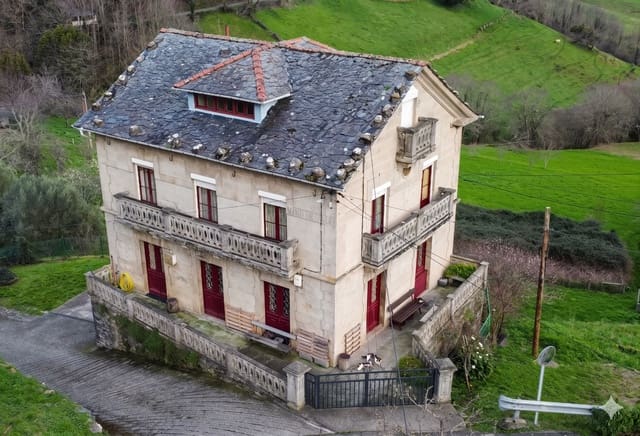
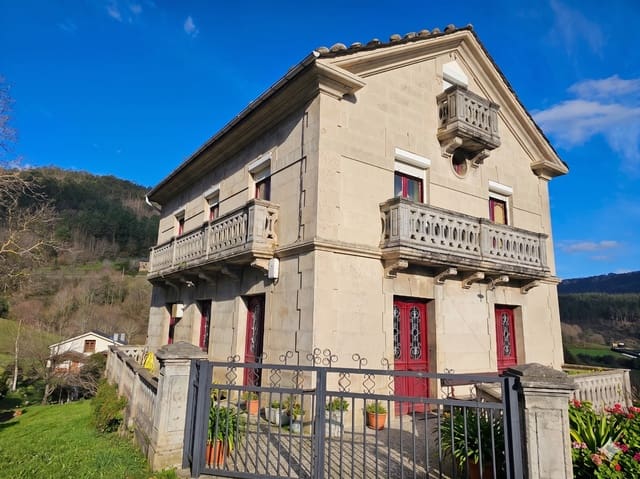
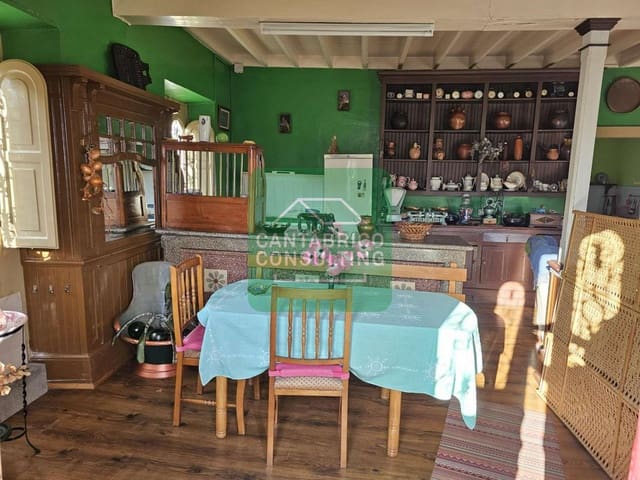
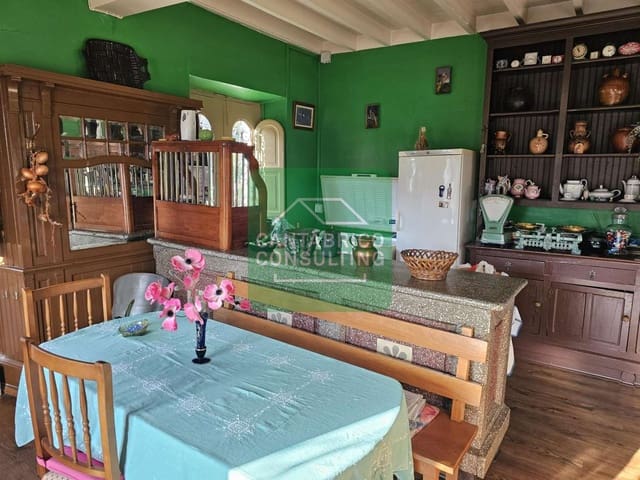
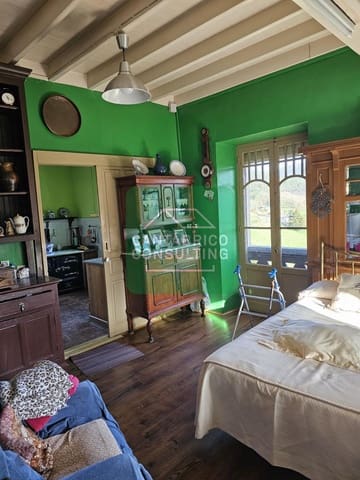
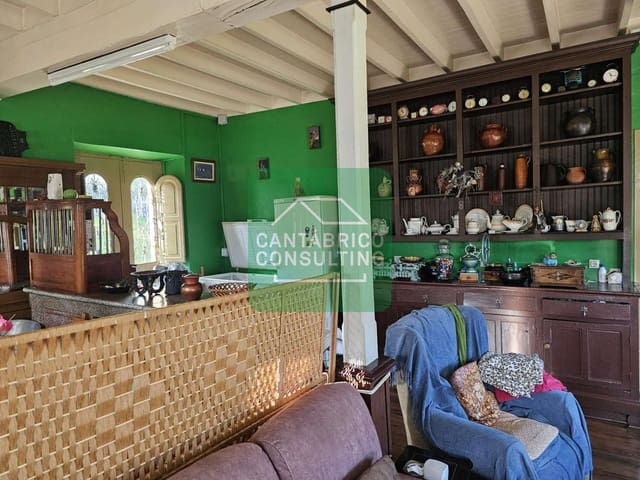
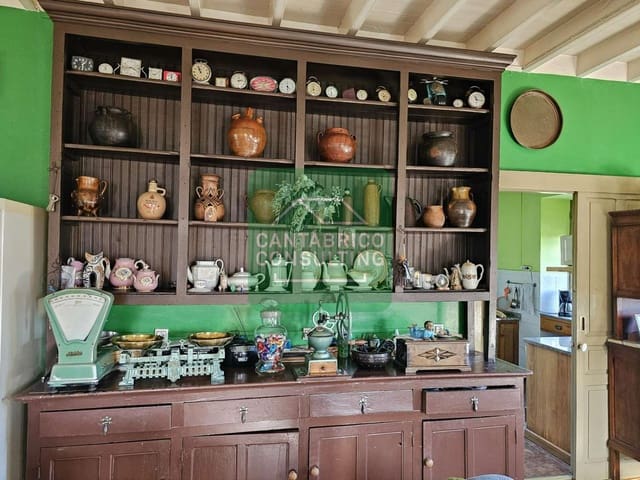
Nestled among the green meadows of Asturias, in Doiras, Boal, western Asturias, this property offers panoramic 360º views over all the region’s charm. This property of great traditional significance is built of stone and is in very acceptable condition considering its age. It is fully habitable and almost entirely furnished with made-to-measure period-style furniture, custom-designed and crafted from traditional materials.
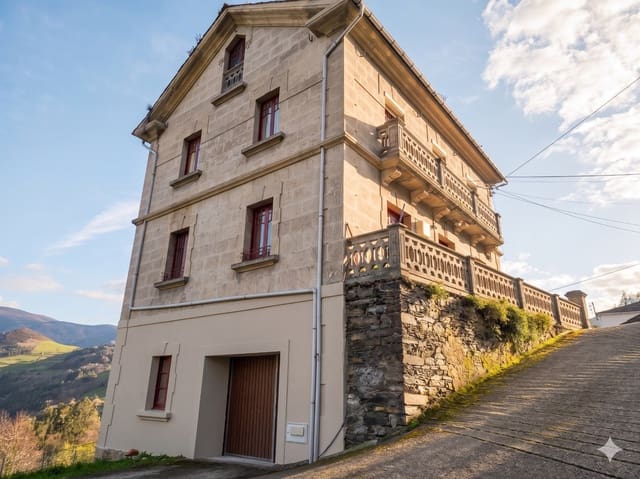
The home enjoys excellent natural light in every room and area. It comprises four floors, with 99 m² of built area: a semi-basement used as a garage, with a bathroom and storage room, and the first and second floors. The attic has 70 m² of built area. These three upper floors are living space.
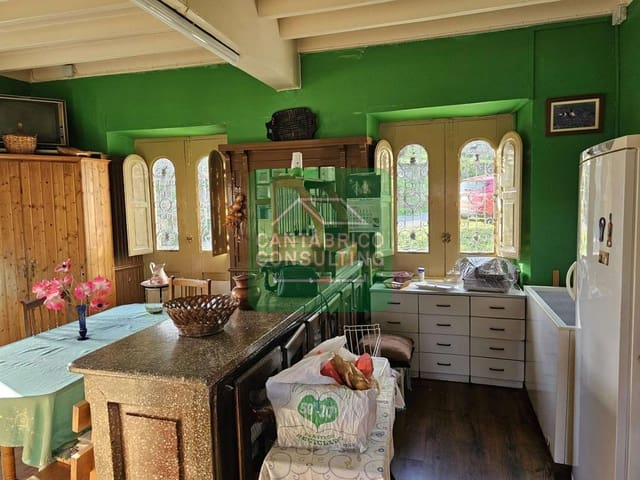
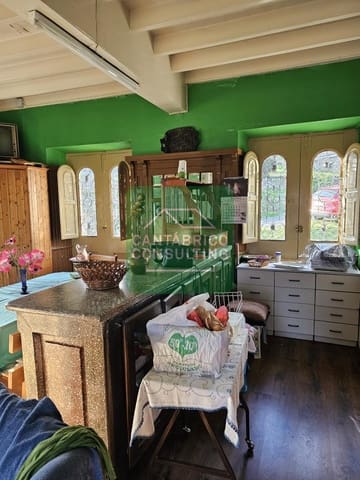
The home has an entrance hall, a spacious main rustic living-dining room, fully furnished with made-to-measure pieces, and a traditional double kitchen, fully equipped with period materials and an oven and stove, as well as fitted cupboards and pantries. There are also three bedrooms, a second living room, two bathrooms and a habitable attic. Although the property is in good condition, its age means it requires repairs and updating.
The house comes with its own enclosed plot and direct access. It is very close to the town of Boal, where all services are available, and has connections to Navia and all the beaches and coastal towns. A place steeped in history and tradition, with all the charm of the Asturian paradise. A notable feature along the River Navia is the Doiras dam and reservoir.
Historical facts about Boal
Etymologically, the name Boal comes from the Late Latin term «boalar», meaning communal land set aside for grazing livestock. This was a natural feature of the area and the site where the parish’s first church was built, dedicated to St James the Apostle.
1. Prehistory and ancient history
The earliest surviving cultural remains date to the prehistoric period, specifically the Late Neolithic, in the 3rd millennium BC. They consist of a series of burial mounds, or individual tombs, belonging to the livestock-raising communities that inhabited the region. They are found mainly at higher elevations, almost always above 800 metres. They are concentrated in two areas: one begins in the south-west of the municipality and runs north-east to the boundary with the municipality of Coaña, where, among other sites, the remains of the burial mounds of Chao das Gavitas, Santín, Trapella, Caho das Llagúas and Peña de Xugos are found; the other lies on the south-eastern edge and includes the Cornías dolmen, the Campo Maún burial mound and others.
The only Bronze Age archaeological site is the «Cova del Demo» rock art complex, exceptional among Cantabrian cave paintings for its red mineral-pigment figures, which are schematic in style.
2. Middle Ages
The first written references to the area date from the late 11th and early 12th centuries, in records kept by the ecclesiastical institutions of the time, specifically the «Libro Registro» of Corias Monastery and the «Libro de los Testamentos» of Oviedo Cathedral.
3. Early modern period
The key development took place at the beginning of this historical period: the process by which the parishes were disentailed and sold, followed by the establishment of the Municipality of Boal. This process began with the agreement between Philip II and Pope Gregory XIII in April 1574, authorising the transfer of Church lands.
19th century
At the beginning of the century, Boal was affected by the events of the Peninsular War. The town was invaded on 19 March 1809 by the soldiers of Maurice Mathieu, who caused damage, looting and deaths. These fatalities are clearly documented in the Boal Parish Archive and brought the total number of deaths from all causes that year to 111, compared with 62 the year before.
20th century
There is no doubt that the demographic and economic crises recorded in the late 19th century found an outlet in overseas emigration. Emigration began early for a municipality in Boal’s geographical location: in 1859, records already mention five young men who emigrated to Cuba at the age of 14 or 15. The main wave of emigration began after 1880 and consisted primarily of young men bound for Cuba, although women also emigrated to Buenos Aires.
Features
- Townhouse
- Bedrooms: 3
- Bathrooms: 2
- Build Size: 300 m2
- Plot: 350 m2
- Storeys: 3
- Energy Efficiency Rating: In Progress