8 min read
For decades, international buyers looking at southern Spain have reflexively turned their attention to the Costa del Sol or the Costa Blanca. However, nestled between the heavily developed resorts of Málaga and the arid, striking landscapes of Almería, lies a stretch of coastline that remains one of Andalusia's best-kept secrets.
If you are moving to Spain and want authentic Andalusian charm without the overwhelming tourist crowds, buying property on the Costa Tropical might be your perfect compromise.
Where is the Costa Tropical?
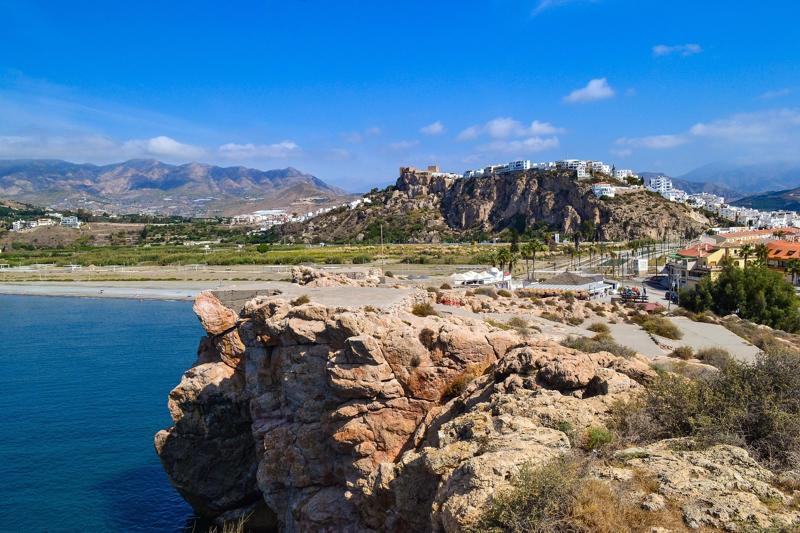
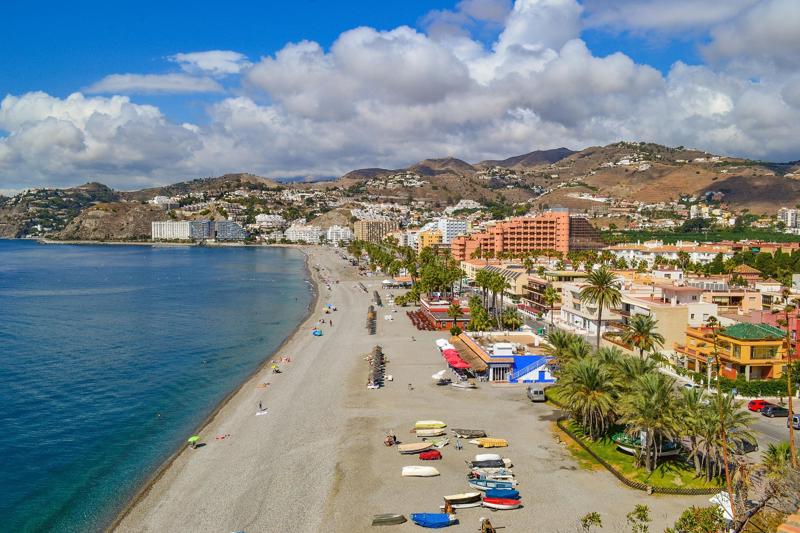
The Costa Tropical is located in the province of Granada, in the autonomous community of Andalusia. It covers roughly 73 kilometres of rugged, beautiful coastline. Geographically, it sits directly east of the Costa del Sol (starting just after the town of Nerja) and west of the Costa de Almería.
Its name comes from its unique microclimate. Protected from the cold northerly winds by the soaring peaks of the Sierra Nevada mountains and warmed by North African breezes, this region enjoys over 320 days of sunshine a year. It is the only place in Europe with a subtropical climate capable of commercially growing mangoes, avocados, papayas, and cherimoyas.
Is Costa Tropical a good place to live?
For many expats, the answer is a resounding yes, provided you are looking for a specific type of lifestyle.
Unlike the sprawling, manicured golf resorts and high-rise developments found further west, the Costa Tropical offers a more traditional Spanish rhythm of life. It is highly suited for buyers who value dramatic scenery, historic architecture, and integration into a working Spanish community.
- The expat community: The international community here is established but dispersed. You will find a healthy mix of British, Scandinavian, and German residents, but none of them dominates the local culture. The language barrier is higher here than on the Costa del Sol; you will hear much more Spanish spoken in cafes, which requires expats to integrate more actively.
- The beaches: If you are looking for endless, flat, white-sand expanses, this might not be your coast. The beaches on the Costa Tropical are often pebbly, shingle, or coarse dark sand, tucked into stunning, steep coves with crystal-clear waters. These beaches frequently win Blue Flag awards for water quality and are renowned across Spain as top spots for scuba diving and snorkelling.
- Location and access: It is incredibly well-connected. Málaga Airport is under an hour's drive from the western edge of the coast, and the historic city of Granada (and the Sierra Nevada ski resort) is just 45 minutes inland.
How does the Costa Tropical compare to other Spanish costas?
If you are torn between different regions, it is crucial to understand how the Costa Tropical measures up against Spain's more famous coastlines—particularly when looking at your budget and lifestyle.
To understand the true value of the Costa Tropical, below is a direct comparison of the average price per square metre across these popular regions, alongside the estimated cost of a typical 85-square-metre, 2-bedroom coastal apartment.
| Coastal Region | Average Price (per m²) | Estimated Cost: 2-Bed Coastal Apartment (85 m²) |
|---|---|---|
| Costa del Sol (Málaga) | €3,550 | €301,750 |
| Costa Blanca (Alicante) | €2,400 | €204,000 |
| Costa Tropical (Granada) | €2,100 | €178,500 |
| Costa de Almería / Costa Cálida | €1,350 | €114,750 |
Note: Prices are based on average regional data for 2026. Premium locations within each coast (such as Marbella on the Costa del Sol or Punta de la Mona on the Costa Tropical) will naturally exceed these averages.
- Costa Tropical vs Costa del Sol: The Costa del Sol is the absolute heavyweight of Spanish expat destinations, famous worldwide for its high-end glamour, extensive championship golf courses, and heavily developed modern infrastructure. It is highly urbanised, fast-paced, and heavily English-speaking. While the Costa Tropical shares that enviable southern warmth, it completely trades the bustling luxury beach clubs of Marbella and Puerto Banús for a quieter, more authentic, and ruggedly beautiful environment. Ultimately, it allows savvy buyers to secure a stunning 2-bedroom apartment for nearly half the price of its western neighbour.
- Costa Tropical vs Costa Blanca: Located in the province of Alicante, the Costa Blanca is a major international hub, accounting for roughly 40% of all home sales to foreign buyers in Spain. It is famous for its long stretches of soft sandy beaches, massive, well-established expat communities, and a wealth of international amenities. Sitting right in the middle in terms of price, it offers an incredibly easy transition. If you want a "home away from home" with zero language barrier and a highly developed social network, the Costa Blanca wins hands down. However, if your heart is set on dramatic mountains plunging directly into the crystal-clear sea and a truly traditional, unhurried Spanish lifestyle, the Costa Tropical is undoubtedly the better fit.
- Costa Tropical vs Costa de Almería / Costa Cálida: To the east of the Costa Tropical lie Almería and Murcia's Costa Cálida. These regions serve as the main budget alternatives, offering some of the cheapest coastal property in Spain alongside a very peaceful, low-density, and slow-paced lifestyle. While the lower entry prices are highly attractive, the trade-off is the scenery. The landscapes in these eastern provinces are far more arid, desert-like, and exposed compared to the lush, green, subtropical valleys and protected microclimate that define the dramatic coastline of the Costa Tropical.
Top towns and areas to buy property on the Costa Tropical
The real estate market here is anchored by a few key towns, each offering a distinct vibe for potential buyers.
Almuñécar: The vibrant hub
As the largest tourist centre on the Costa Tropical, Almuñécar is the commercial and social heart of the region. It features a historic old town crowned by a Moorish castle, winding cobbled streets, Roman ruins, and a long seaside promenade.
- The Market: You will find a massive supply of beachfront apartments, traditional townhouses in the centre, and larger villas in the surrounding hills (such as Cotobro or Velilla). It is an excellent, practical base for year-round living.
Salobreña: The white village by the sea
Instantly recognisable by its spectacular whitewashed houses tumbling down a rock topped by a 10th-century castle, Salobreña is breathtaking. It is quieter and more traditional than Almuñécar.
- The Market: Properties in the historic old town offer incredible charm but often lack parking or easy access. However, the surrounding hillside urbanisations (like Monte de los Almendros) are famous for offering some of the most luxurious detached villas and premium prices on the coast, boasting panoramic sea views.
La Herradura: The exclusive bay
Technically a municipality of Almuñécar, La Herradura sits in a horseshoe-shaped bay renowned for its calm waters and upscale, laid-back atmosphere. It is the watersports and diving capital of the region.
- The Market: This is one of the most highly sought-after areas. The prestigious Marina del Este offers luxury apartments with boat moorings, while the exclusive Punta de la Mona headland is home to stunning, multi-million-pound estates.
Motril: The Working City
Motril is the commercial and agricultural engine of the Granada coast. It is a working city with around 60,000 inhabitants, rather than a tourist resort, offering excellent infrastructure, large markets (such as the Mercado Municipal), and a busy commercial port.
- The Market: While the city centre is highly urban, the nearby coastal area of Playa Granada is rapidly developing. It features a popular golf course (Los Moriscos) and modern, purpose-built apartment complexes that provide excellent rental yields and are very popular with domestic Spanish buyers.
Property prices on the Costa Tropical
One of the most compelling reasons for buying property here is the value for money. While the market has seen steady growth, prices remain significantly lower than the equivalent properties on the Costa del Sol.
To help set your budget, here is a general breakdown of average property prices across the region's key markets.
| Town / Area | Property Type Profile | Estimated Avg. Price (per m²) |
|---|---|---|
| La Herradura / Punta de la Mona | Luxury villas, premium apartments | €2,500 – €3,500+ |
| Salobreña (Urbanisations) | Detached villas, panoramic views | €2,000 – €2,800 |
| Almuñécar (Coast & Centre) | High volume apartments, townhouses | €1,700 – €2,500 |
| Motril (Playa Granada) | Modern golf/beach apartments | €1,500 – €2,200 |
| Inland Villages (e.g., Ítrabo, Jete) | Rustic country homes, renovations | €800 – €1,300 |
Note: A modern 2-bedroom apartment with sea views in Almuñécar will typically cost between £160,000 and £220,000, whereas a comparable property in a premium Costa del Sol town could easily command double that figure.
Securing your home on the Costa Tropical
If the heavily saturated markets of Málaga and Alicante do not appeal to you, the Costa Tropical offers a highly compelling alternative. It delivers a rugged, authentic Andalusian experience, a unique subtropical climate, and genuine value for money.
Because the dramatic geography strictly limits new coastal sprawl, well-priced villas with sea views in highly desirable pockets like Salobreña and La Herradura move quickly. To explore the best available properties across the Granada coastline, search hundreds of verified listings here.

Last updated: 02/09/2026
Was this article useful?
Related Topics
Related Articles