- Is moving to Mallorca a good idea?
- Language and daily life
- Climate and the off-season reality
- Transport and connections
- Taxes: what you need to know before you move
- Cost of living in Mallorca
- Property market in Mallorca
- Administration and bureaucracy: what to expect
- Where expats live in Mallorca
- Working options and visa routes
- Healthcare in Mallorca
- International schools in Mallorca
- Relocating with pets
- Is Mallorca right for you?
9 min read
Mallorca is one of Europe’s most desirable places to live — but it is also one of Spain’s most expensive. Understanding whether the lifestyle justifies the cost is the key question for most people considering a move.
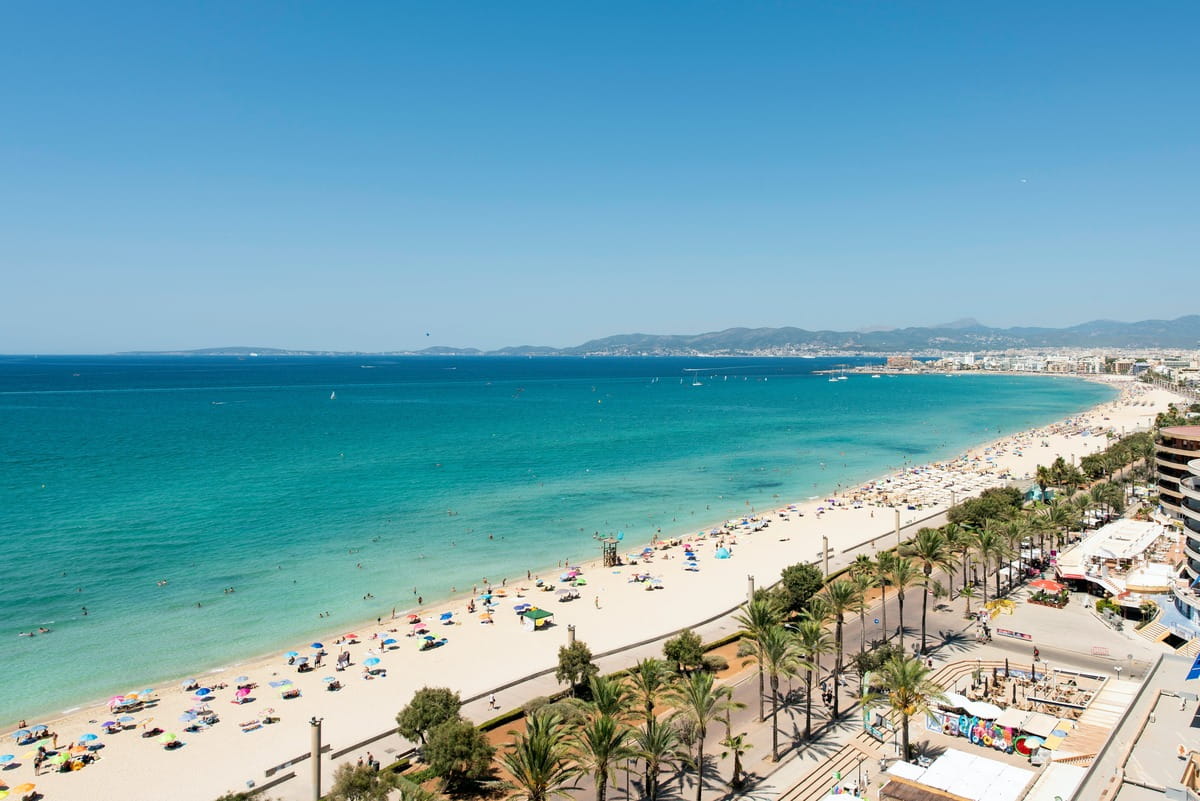
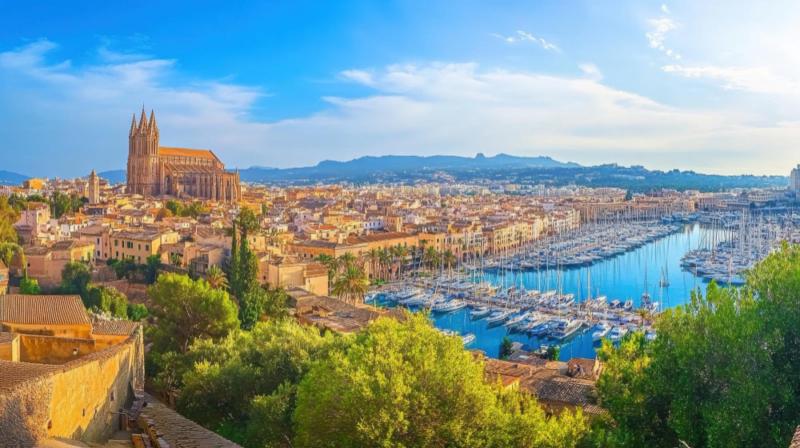
What makes Mallorca different is not just the climate, but the rhythm of life: mornings at a café in Palma’s Santa Catalina, year-round outdoor living, and a pace that feels distinctly Mediterranean even in the capital. With a resident population of around 900,000, the island functions well beyond the summer season — but what ‘year-round’ actually looks like in practice is something this guide explores in detail.
Is moving to Mallorca a good idea?
For the right person, absolutely. Mallorca suits those who prioritise Mediterranean climate and outdoor living, a stable property market, access to international schools and private healthcare, and strong flight connections across Europe. It works particularly well for retirees — there are nine compelling reasons why Mallorca consistently ranks among the best places in Spain to retire. It also suits remote workers, business owners, and those with income generated outside the island.
It may not suit those who:
- Are working to a budget below €2,000/month excluding rent
- Need access to a large corporate or public-sector job market — local salaries in tourism and hospitality are modest relative to the cost of living
- Rely on public transport; a car is essential almost everywhere outside Palma
- Expect fast administrative processes — registrations, residency cards, and bank accounts take longer than most newcomers anticipate
- Are buying property to let short-term: tourist rental licences are now tightly restricted across the island
Language and daily life
Mallorca has two official languages: Spanish and Catalan, specifically the Mallorquí dialect. In practice this means signage, official correspondence, and local bureaucracy often appears in Catalan first. Public schools teach primarily in Catalan. In Palma and heavily international areas, English and German are widely spoken, but outside these zones, Spanish is the working language and Catalan the community one.
This genuinely affects integration. Learning conversational Spanish makes daily life significantly smoother; making an effort with Catalan — even basic greetings — is noticed and appreciated by local communities. For those planning to settle in smaller towns or inland villages, some language capability is less an advantage than a practical necessity.
Climate and the off-season reality
Mallorca enjoys a Mediterranean climate with over 300 days of sunshine per year. Summers are warm and dry — July and August regularly reach 28–30°C — while winters are mild, typically settling between 10–15°C. Spring and autumn are arguably the most pleasant seasons, particularly for hiking, cycling, and sailing.
What the climate figures do not capture is the off-season reality of many coastal and resort areas. Between November and February, a significant number of restaurants, shops, and leisure facilities close. Communities thin out. In heavily seasonal towns, this can feel isolating, particularly for people who moved expecting a permanent version of their holiday experience. Palma and the major inland towns maintain a full year-round rhythm, but buyers drawn to quieter coastal areas should spend time there in winter before committing.
Transport and connections
Palma de Mallorca Airport (PMI) connects the island to 87+ destinations via 36 airlines, with year-round direct routes to London, Frankfurt, Amsterdam, Zurich, and Madrid. Within the island, public transport covers Palma well, but is limited elsewhere.
Key realities:
- Driving from Pollença or Alcúdia to Palma typically takes 45–60 minutes
- Summer traffic on coastal roads in July and August can add significantly to journey times
- Rural areas have minimal bus frequency — often a few services per day at most
A car is effectively essential outside the capital. Budget €200–€400/month for ownership costs including insurance, fuel, and maintenance.
Taxes: what you need to know before you move
Spain’s tax system is complex for new residents, and the Balearics have specific considerations — including a reintroduced wealth tax and strict worldwide income declaration rules. Depending on your circumstances, qualifying newcomers may also be eligible for a favourable flat tax rate under the Beckham Law. If you own a property before establishing residency, you will also be liable for non-resident income tax under Modelo 210, even if the property is unoccupied. Tax planning should happen before you arrive, not after — our tax guide for expats in Spain covers the main obligations in full.
Cost of living in Mallorca
Mallorca is the most expensive region in Spain by property value, but everyday costs remain moderate by northern European standards. The figures below are indicative estimates based on typical costs reported by Numbeo and Freedom Abroad (2025–2026):
- Single person in Palma (renting a one-bedroom apartment): approx. €2,400–€2,800/month all-in
- Couple in Palma (renting a two-bedroom apartment): approx. €3,200–€4,000/month all-in
- Family with school fees and a car: €5,000–€7,000+/month depending on school choice
- Couple in a smaller inland town: approx. €2,000–€2,800/month all-in
For everyday expenses, a weekly supermarket shop for two averages €80–€120. A three-course set lunch (menú del día) costs €12–€18 — widely available even in central Palma. Utilities run €100–€150/month for a mid-sized property, though older or poorly insulated homes can push this higher in winter.
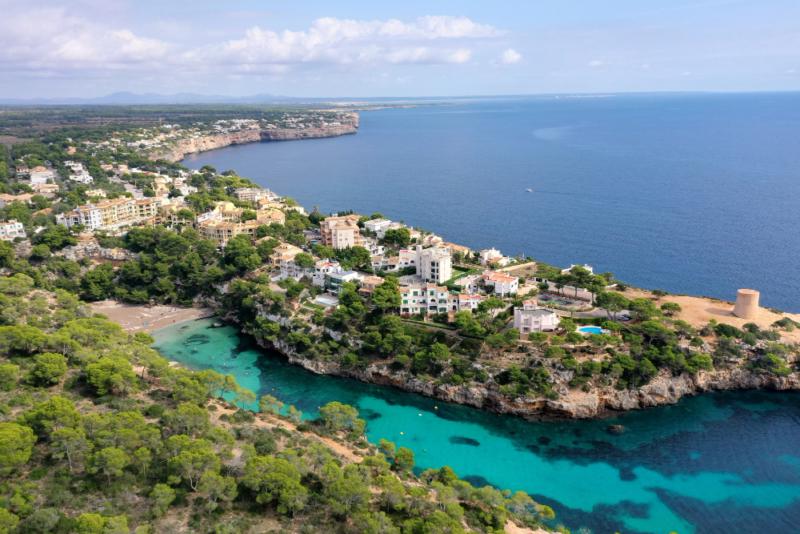
Property market in Mallorca
Mallorca's property market is one of the most closely watched in Spain — driven by limited supply, strong international demand, and a lifestyle that continues to attract buyers from across Europe.
Buying property in Mallorca
The Balearic Islands recorded the highest average property valuation in Spain at approximately €3,320/m² (MIVAU, Q2 2025). In Palma, average prices range from €4,931 to €6,500/m², with prime areas — Son Vida, Portixol, and Portals Nous — significantly above this. The southwest offers better value for families; inland and northern areas are more accessible still. Depending on your budget, you might explore villas with sea views, apartments with a balcony or terrace, or if you are working with a tighter budget, there is more on offer than many people realise — including properties for sale in Mallorca for under €200,000.
Budget for 10–12% in additional purchase costs, covering transfer tax, notary fees, and legal fees. Using an independent lawyer is strongly recommended.
Renting in Mallorca
In Palma, a one-bedroom apartment in a central location costs €1,000–€1,500/month; popular areas like Santa Catalina push rents above €1,700. In inland towns such as Inca or Manacor, the same budget finds more space for €600–€900/month.
Demand for long-term rentals is high, and supply is tighter than it once was. Part of the reason is structural: short-term tourist rental licences have been heavily restricted by the Balearic government in recent years, which has forced many properties back to the long-term market — but overall housing supply on the island remains under pressure. Well-priced properties often receive multiple enquiries within days, and landlords commonly request proof of income, references, or several months’ rent upfront. Before signing anything, it is worth understanding how Spanish rental contracts work and what your rights are as a tenant.
Administration and bureaucracy: what to expect
Spain’s administrative processes are slower than most newcomers expect. Before you can buy property, sign a rental contract, or access healthcare, you will need a NIE (Número de Identidad de Extranjero), padrón registration, and — depending on your nationality and visa route — a residency card. Opening a Spanish bank account as a non-resident adds another layer of complexity. Allow more time than you think you need for all of it, and consider appointing a gestor — a licensed Spanish administrative specialist — to handle the process on your behalf.
Where expats live in Mallorca
The Balearic Islands have the highest proportion of foreign-born residents of any region in Spain — nearly 28% of the population was born abroad.
Where expats tend to settle
Each area attracts a distinct profile:
- Palma de Mallorca - professionals, city lifestyle, culture, and urban convenience. Santa Catalina, Portixol, and the Old Town are the most popular expat neighbourhoods.
- Southwest - Portals Nous, Santa Ponsa, Calvià - The most established expat heartland, particularly for families, with proximity to international schools and marinas.
- North - Pollença, Puerto Pollença, Alcúdia - One of the most established British expat communities on the island, slower pace, stunning scenery, and good value relative to the south. Factor in 45–60 minutes to Palma.
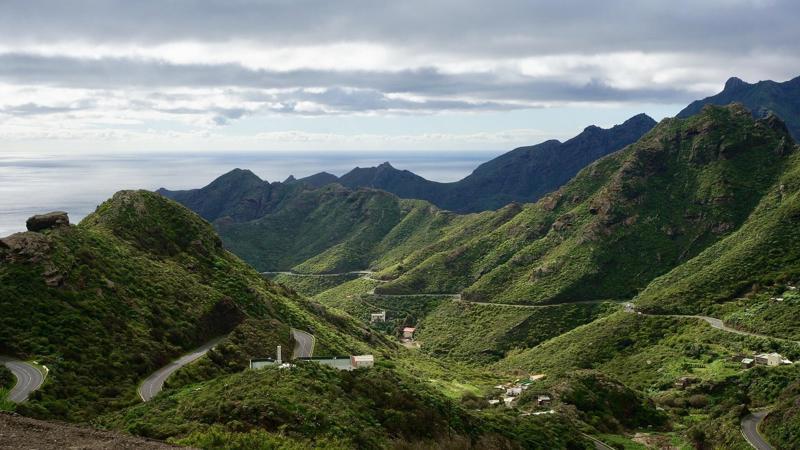
- Tramuntana and rural inland - Villages such as Valldemossa, Deià, and Sóller suit those seeking privacy, character, and landscape. Planning restrictions on older properties are significant.
- East coast - Cala d’Or, Porto Cristo -More affordable, popular with German and Scandinavian residents, with access to the island’s most spectacular coves. Strongly seasonal in character.
How to choose where to live
Three questions help most buyers focus their search. Do you need daily access to Palma for work, schools, or services? If so, the southwest or Palma itself is the practical choice. Do you have children in international schools? Most are clustered around Palma and the southwest, with limited options further north. How important is an English-speaking community? Pollença and Puerto Pollença have an established network; smaller inland towns require deeper local integration.
Working options and visa routes
EU and EEA nationals have the right to live and work in Spain without a visa. Non-EU residents have two main routes: Spain’s digital nomad visa (launched 2023) for remote workers and freelancers, and the non-lucrative visa for those with sufficient passive income. Our comprehensive visa guide covers both in detail, including the documentation required and how to apply. Both routes require private health insurance as a condition of approval.
The island’s main employment sectors are tourism, hospitality, real estate, and construction. Local salaries in these fields are modest relative to the cost of living — a gap that reinforces why Mallorca suits remote workers, retirees, and those with income generated outside the island more than those seeking a local career.
Healthcare in Mallorca
Public healthcare is accessible to legal residents contributing to the Spanish social security system. Key public hospitals include Son Espases University Hospital and Son Llàtzer Hospital in Palma, and regional hospitals in Inca and Manacor. Standards are high, though waiting times for non-urgent specialist care can be long outside Palma. For a full explanation of how to register and what you are entitled to, see Spain’s national healthcare system explained.
Most expats use private insurance alongside or instead of the public system. Key private providers include the Juaneda Group (multilingual, island-wide), Quirónsalud Palmaplanas, and Rotger Clinic in central Palma. Private consultation fees are reasonable by northern European standards, and same-day appointments are generally available.
International schools in Mallorca
Mallorca has 19 international schools — the highest concentration in the Balearics. Most are around Palma and the southwest.
Key options include:
- Bellver International College (British curriculum, ages 3–18, fees approx. €7,650–€12,750/year)
- Agora Portals (IB Diploma, bilingual Spanish and English)
- Baleares International College with two campuses in the southwest
- The Academy International School near Marratxí
Annual fees range from approximately €5,000 to €15,000. Families in Pollença or Alcúdia often commute to Palma for secondary education.
Relocating with pets
Mallorca is a manageable destination for pet owners, but the process requires planning ahead — particularly for UK residents, whose requirements changed post-Brexit. The legal requirements for moving to Spain with pets cover what documentation you need and how far in advance to prepare.
Is Mallorca right for you?
For many, the decision ultimately comes down to whether Mallorca’s lifestyle — space, climate, and pace — justifies the premium. For the right buyer, it very often does. But arriving well-prepared — with a realistic picture of costs, a tax adviser briefed before you land, and time spent on the island outside August — makes the difference between a smooth transition and an expensive lesson.
Browse current properties for sale and rent in Mallorca, filtered by area, type, and budget. If you are still comparing regions, our guide to moving to Spain covers how provinces differ in climate, infrastructure, and lifestyle expectations.

Last updated: 20/04/2026
Was this article useful?
Related Topics
Related Articles