- How hard is it for you to move to Tenerife?
- Which side of Tenerife is better for you: north or south?
- Where do expats live in Tenerife?
- Identifying the safest, classiest, and prettiest areas
- Selecting an international school in Tenerife
- Understanding healthcare facilities on the island
- How much do you need to live comfortably in Tenerife?
- Is it worth buying property in Tenerife?
- Finding work in Tenerife for English speakers
- Frequently asked questions about moving to Tenerife
- Finding your ideal place in Tenerife
11 min read
Known as the "Island of Eternal Spring", Tenerife has become one of Europe's premier destinations for permanent relocation. Situated roughly 1,000 kilometres southwest of the Spanish mainland, the island offers an enviable combination of year-round warmth, dramatic volcanic scenery, and European infrastructure.
At thinkSPAIN, we know that moving to an island involves practical considerations that holidaymakers rarely encounter. Whether you are planning retirement, relocating with family, or moving as a remote professional, this guide covers everything you need to know.
How hard is it for you to move to Tenerife?
The logistical requirements of moving to Tenerife depend primarily on your country of origin and how you ship your personal belongings.
Residency pathways for EU and non-EU citizens
If you are an EU or EEA citizen, the relocation process is straightforward. You hold the legal right to live and work in Tenerife without an entry visa. Once you arrive, you need to register on the municipal population register (padrón municipal) at the local town hall (ayuntamiento). At the same time, you should obtain your Foreigner Identity Number (Número de Identidad de Extranjero or NIE) and complete your registration on the Central Register of Foreign Nationals.
If you are a British citizen or non-EU national, you must obtain a valid visa before entering Spain. The application requires criminal background checks, private medical coverage, and certified financial documentation submitted through the Spanish consulate in your home country. For a comprehensive review of these requirements, read our guide to Spanish visas for expats moving to Spain.
Customs regulations and the Single Administrative Document
Because the Canary Islands sit outside the European Union VAT area, shipping your household effects involves special customs procedures:
- Air Freight, sea freight and shipping containers: Sea freight is the most common and economical option for household moves. Buyers typically choose between a Full Container Load (FCL) or a shared container (Less than Container Load / LCL), with transit times from mainland European ports averaging 7 to 14 days. Air freight offers a 2-to-4-day turnaround but commands a significant price premium, making it best suited for urgent essentials needed on arrival.
- The Single Administrative Document (DUA): You must clear all personal belongings through customs using the Documento Único Administrativo (DUA).
- Duty exemption for relocations: You can import your used personal effects free of import duty under the transfer of residence exemption (franquicia por traslado de residencia), provided you have owned them for at least 6 months and present your town hall registration within 12 months of moving.
Which side of Tenerife is better for you: north or south?
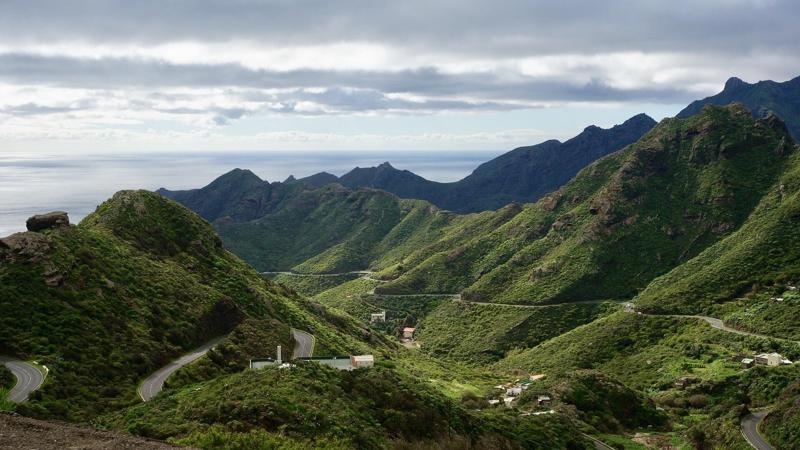
The island is divided by Mount Teide, which stands at 3,718 metres. This natural division creates two distinct climatic zones and lifestyles.
| Tenerife: South vs. North | ||
|---|---|---|
| Feature | The South (Sur) | The North (Norte) |
| Climate | Arid and sunny, with over 300 days of sunshine each year | Subtropical, green, and humid, with cloud cover (panza de burro) |
| Language | Multilingual, with English spoken widely in hospitality and services | Predominantly Spanish, requiring a working knowledge of the language |
| Landscape | Sandy beaches and volcanic coastlines | Lush green valleys, cliffs, and black volcanic sand beaches |
| Average property cost | €3,500 to €6,500+ per square metre | €1,900 to €3,100 per square metre |
Which side of Tenerife is the warmest?
The south and southwest coasts are the warmest areas on the island. Stretching from Los Cristianos through Costa Adeje and Guía de Isora, this region is protected from trade winds and enjoys winter daytime temperatures between 21°C and 24°C.
What the north offers international residents
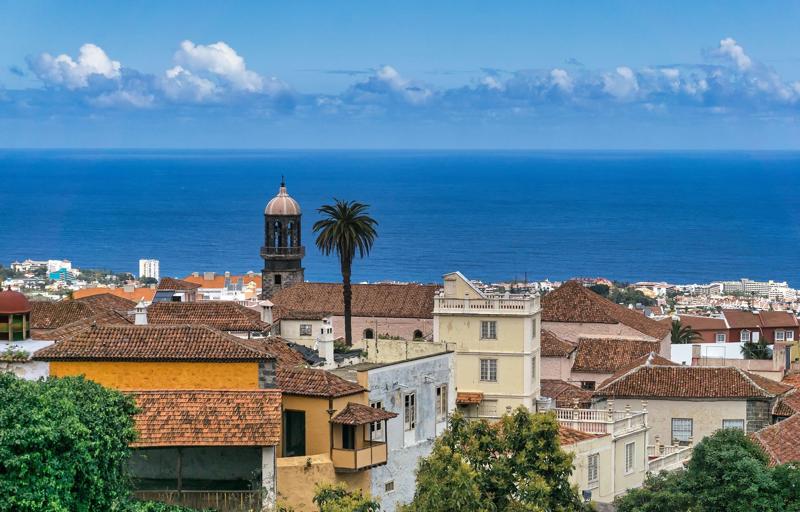
The north of Tenerife is greener, quieter, and culturally traditional. Municipalities such as Puerto de la Cruz, La Orotava, and San Cristóbal de La Laguna appeal to expats who prefer historic architecture and local cuisine. Temperatures in the north average 4°C to 6°C cooler than the south during winter months.
Where do expats live in Tenerife?
International residents account for more than 15% of the registered population on the island. Most foreign homeowners live within four main areas:
1. Costa Adeje
Costa Adeje is the primary residential hub for high-end coastal living. Enclaves like El Duque, La Caleta, and Torviscas Alto offer modern apartments, luxury villas, golf facilities, and international clinics. The area is well maintained and just 15 minutes from Tenerife South Airport (Reina Sofía).
2. Los Cristianos and Playa de las Américas
Originally small coastal settlements, Los Cristianos and Playa de las Américas are popular resort towns. They are favoured by retirees who want flat walking routes to sandy beaches, harbour ferries, and international social clubs without needing a car.
3. Puerto de la Cruz
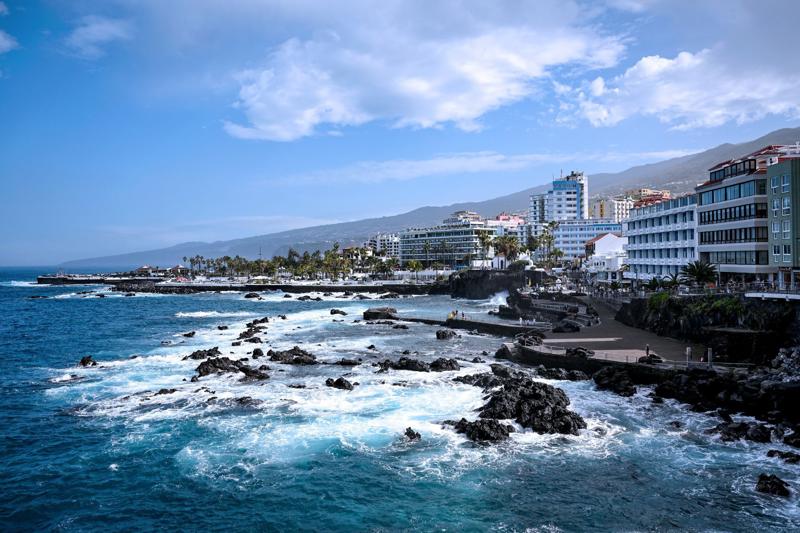
Puerto de la Cruz is the main expat hub in the north, home to an established community of German, British, and Nordic residents. It features pedestrianised colonial squares, botanical gardens, and the seawater swimming complex of Lago Martiánez.
4. Santa Cruz de Tenerife and San Cristóbal de La Laguna
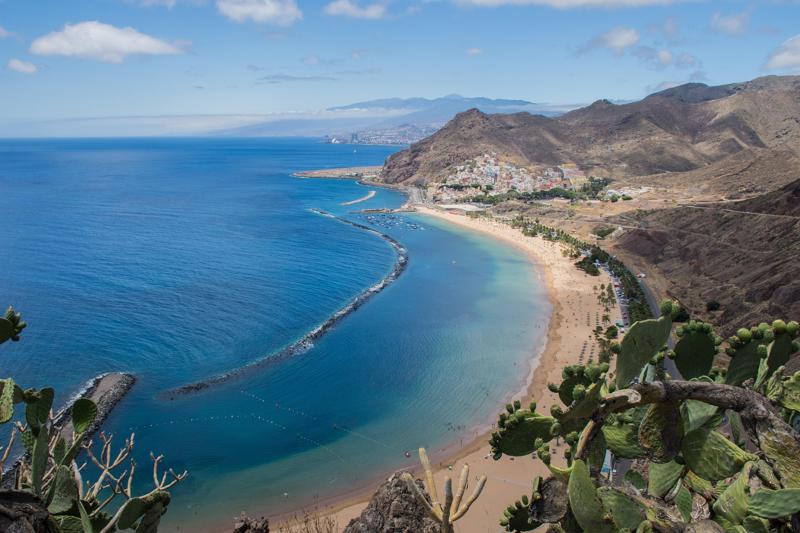
The capital, Santa Cruz, offers cultural centres, theatres, and direct access to Las Teresitas beach. Together with the neighbouring university city of La Laguna, it suits professionals seeking an urban environment with fewer tourists.
Identifying the safest, classiest, and prettiest areas
Understanding which neighbourhoods match your specific lifestyle preferences will make your relocation simpler.
Where are the safest neighbourhoods to live in Tenerife?
Tenerife has low crime rates, well below the wider European average. Residential areas like Golf Costa Adeje, El Madroñal, and Palm-Mar in the south, alongside El Sauzal in the north, are among the safest neighbourhoods on the island. For peace of mind on property security, review our practical breakdown of Spain's anti-squatter laws and homeowner protections.
If you are looking for the most exclusive location, La Caleta and Golf Costa Adeje represent the luxury standard on the island. These enclaves feature modern villas, championship golf courses, and Michelin-starred dining. In the north, the historic neighbourhood of Rambla de Santa Cruz provides classic architectural character.
Picturesque villages across the island
Garachico is widely considered the prettiest coastal village in Tenerife. Rebuilt after a volcanic eruption in 1706, it features cobbled streets, historic convents, and natural sea-rock swimming pools (El Caletón). Inland, the historic town of La Orotava is celebrated for its carved wooden balconies and preserved 17th-century architecture.
Selecting an international school in Tenerife
If you are moving with children, choosing an area close to reputable schools is a major priority. Tenerife offers a diverse selection of accredited British and international private schools:
- Wingate School (Cabo Blanco / Arona): A long-established British school teaching the National Curriculum of England from Early Years through to A-Levels
- The British School of Tenerife (Puerto de la Cruz / La Orotava): The leading British curriculum school in the north of the island, operating two dedicated campuses
- International School Costa Adeje (Adeje): A modern bilingual campus in the south offering education from preschool to the Spanish Bachillerato
- Luther King School (San Miguel de Abona and La Laguna): Well-known private bilingual schools delivering the Spanish national curriculum with strong English-language tuition
- Colegio Alemán de Tenerife (El Rosario): A recognised German international school serving pupils near Santa Cruz
Private international schools in Spain do not enforce geographic catchment boundaries. Most private schools run dedicated bus routes serving neighbouring coastal towns.
Understanding healthcare facilities on the island
Healthcare in Spain is of a high standard, and Tenerife provides comprehensive public and private medical facilities.
The public healthcare system
You can access the public health service (Servicio Canario de la Salud or SCS) if you work in Spain, pay self-employed social security contributions, or hold an S1 form as a UK state pensioner. The island hosts two major university referral hospitals in the north: the Hospital Universitario de Canarias and the Hospital Universitario Nuestra Señora de Candelaria. Routine medical visits are managed through your local neighbourhood health centre (centro de salud).
Private hospitals and clinics
If you move to Tenerife on an independent visa, you will use private healthcare. Private facilities like Hospiten Sur in Playa de las Américas, Hospiten Rambla in Santa Cruz, and Quirónsalud Costa Adeje provide English-speaking medical teams and 24-hour emergency care. Private health insurance policies generally cost between €60 and €110 per month, depending on age and medical history.
How much do you need to live comfortably in Tenerife?
Living expenses in Tenerife are competitive compared to northern Europe and mainland capitals like Madrid or Barcelona, assisted by the island's unique tax status.
The local indirect tax advantage
Rather than the 21% Value Added Tax (VAT) applied on the Spanish mainland, the Canary Islands apply the Canarian General Indirect Tax (Impuesto General Indirecto Canario or IGIC). The standard IGIC rate is 7%. This lower rate applies to consumer goods, vehicle purchases, restaurant bills, and professional services, helping keep day-to-day running costs manageable.
Realistic monthly living costs in 2026
- Single expat (renting): €1,600 to €2,100 per month, covering an apartment, utilities, groceries, and leisure.
- Couple (renting): €2,400 to €3,200 per month for a two-bedroom apartment, one car, private healthcare, and regular dining out.
- Homeowners (no rent or mortgage): €1,200 to €1,600 per month to cover municipal rates, community fees, utilities, groceries, and leisure activities.
To compare these costs with the mainland, read our cost of living in Spain comparison guide.
Is it worth buying property in Tenerife?
Buying property in Tenerife is widely considered a solid financial move, driven by strong capital appreciation and strict physical limits on new construction. Because protected natural parks and volcanic terrain prevent urban sprawl, supply remains structurally capped while international demand—accounting for over 10% of transactions—continues to push prime prices upward.
Average property prices across the island
- Costa Adeje: €4,500 to €6,500+ per square metre
- Los Cristianos and Playa de las Américas: €3,500 to €4,800 per square metre
- Puerto de la Cruz: €2,200 to €3,100 per square metre
- Santa Cruz de Tenerife: €2,000 to €2,800 per square metre
- Inland rural areas: €1,400 to €1,900 per square metre
Purchase taxes and holiday rental licences
When you buy a resale property in Tenerife, you pay Property Transfer Tax (Impuesto sobre Transmisiones Patrimoniales, or ITP) at a regional rate of 6.5%. This is lower than the 7% to 10% rates charged on the mainland. For newly built homes, you pay 7% IGIC and 1% stamp duty (Actos Jurídicos Documentados or AJD).
If you plan to rent your property out to tourists, you must obtain a holiday home licence (Vivienda Vacacional or VV). Under Canary Islands regulations, obtaining new tourist licences in residential complexes requires explicit approval from the community of owners (comunidad de propietarios) and must meet strict energy and environmental criteria. We advise having an independent lawyer verify licence conditions before placing a deposit on any property.
Finding work in Tenerife for English speakers
While Tenerife is an attractive destination for remote professionals and retirees, local employment opportunities are primarily linked to the hospitality and service sectors.
- Remote working: Working remotely for an overseas employer while living in Tenerife provides the most reliable balance of local living costs and international salary levels
- Tourism and estate agency: Roles with international estate agents, excursion operators, and five-star hotels frequently require English speakers, although speaking conversational Spanish or German is a distinct advantage
- Specialist trades: Experienced diving instructors, yacht crew, and private English tutors are consistently in demand across the south of the island
Frequently asked questions about moving to Tenerife
Can I drive in Tenerife on a foreign driving licence?
Holders of an EU or EEA driving licence can drive in Tenerife until their licence expires. If you hold a UK driving licence, you can drive legally in Spain for up to 6 months after securing residency, after which you must exchange it for a Spanish licence under the reciprocal UK-Spain driving agreement.
Do I need a car to live in Tenerife?
In major towns like Los Cristianos, Puerto de la Cruz, or central Santa Cruz, public buses (guaguas) and modern tram routes provide reliable transport without a car. However, if you live in hillside residential areas or wish to explore the island, owning a vehicle is recommended.
Can expats access free healthcare in Tenerife?
Expats who contribute to Spanish Social Security through employment, self-employment, or an S1 pension form receive free state healthcare under the SCS system. Non-working visa holders must hold private health insurance.
Finding your ideal place in Tenerife
Whether you are looking for an apartment in Costa Adeje, a family home close to top international schools, or a traditional country finca in the Orotava Valley, Tenerife offers a lifestyle that is hard to match.
At thinkSPAIN, we are here to support your property search with verified listings and practical local knowledge. You can explore thousands of properties for sale in Tenerife on thinkSPAIN. If you are relocating with children, our search tool lets you sort results by the number of international schools or even by nationality. To ensure your purchase is smooth and legally secure, connect with experienced, English-speaking lawyers and relocation specialists in our thinkSPAIN Business Directory.

Last updated: 20/10/2026
Was this article useful?
Related Topics
Related Articles