10 min read
The Costa Blanca and the Costa del Sol together account for more international property purchases than any other region in Spain. Both sit on the Mediterranean, both enjoy more than 300 days of sunshine a year, and both have well-established expat communities, international airports, and a wide range of properties at different price points. The question most buyers arrive at is not which one is better in the abstract, but which one is better for them.
This guide covers the key differences across property prices, cost of living, weather, lifestyle, transport connections, expat communities, and investment potential — and ends with an honest assessment of who each coast is likely to suit best.
Two coasts, two distinct characters
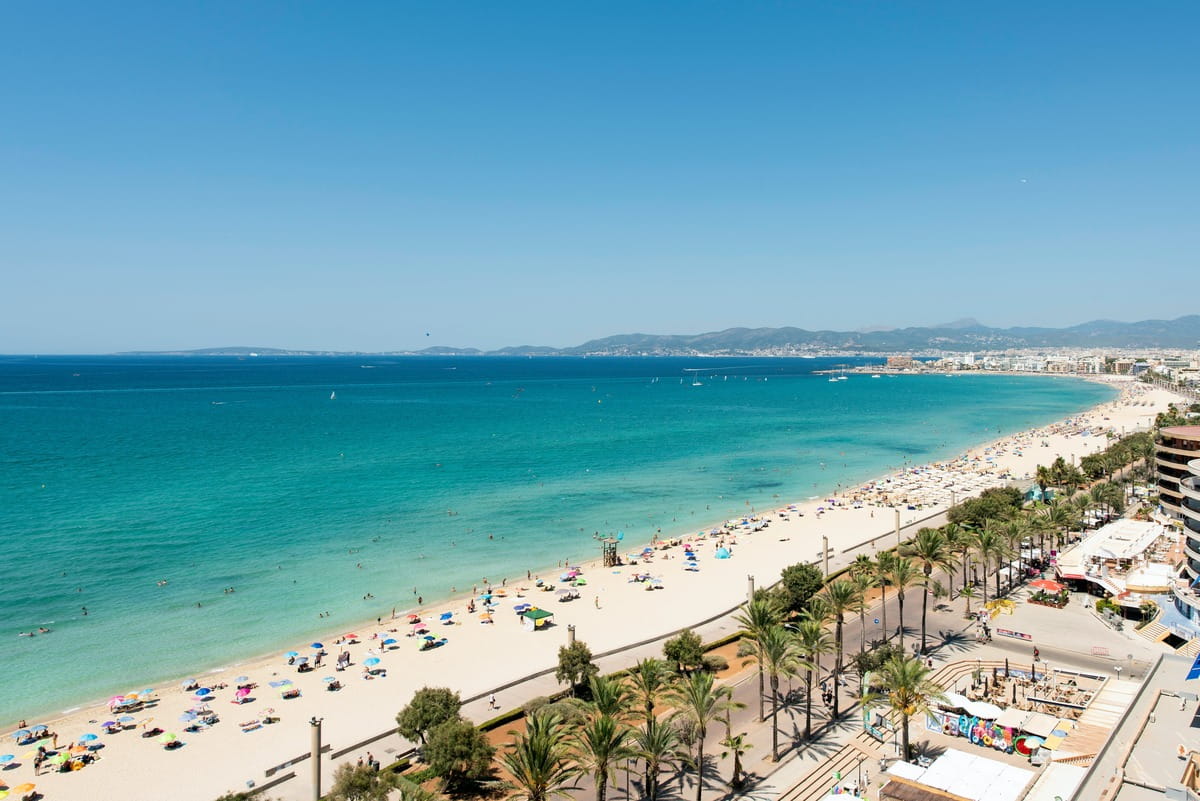
The Costa Blanca stretches for approximately 244 kilometres along the coast of Alicante province (Comunidad Valenciana), from Dénia in the north to Torrevieja in the south. It divides naturally into a quieter, greener northern stretch — around Jávea, Moraira, and Altea — and a more affordable, densely developed southern stretch centred on Torrevieja and Orihuela Costa. Alicante province has the highest foreign buyer share of any Spanish province, at around 51.8% of all purchases, according to data from the Colegio de Registradores (2025).
The Costa del Sol runs for approximately 160 kilometres along the coast of Málaga province (Andalucía), from Nerja in the east to Manilva in the west. Marbella and Puerto Banús define its reputation — glamorous, luxury-oriented, and internationally recognised. Málaga province records a foreign buyer share of around 42.9% of purchases. It is consistently one of the most sought-after coastal markets in Europe, with prices to match.
Both coasts have well-established expat communities, international airports, and a wide choice of properties at different price points — the differences lie in price, character, and the lifestyle each coast delivers. For a broader picture of Spain's full coastline, our guide to the Spanish costas covers all the main areas.
Property prices
The Costa Blanca is consistently 35% to 50% cheaper than the Costa del Sol — the single most significant practical difference between the two coasts. The figures below are drawn from thinkSPAIN listing data and Tinsa's Vivienda en Costa 2025 report, and reflect typical asking prices across each area:
| Property prices by coast — 2025–2026 | ||
|---|---|---|
| Property type | Costa Blanca | Costa del Sol |
| Average price per m² | €2,500 – €2,600 | €3,800 – €4,100 |
| 2-bed apartment (typical) | €150,000 – €300,000 | €250,000 – €500,000 |
| Villa with pool | €350,000 – €800,000 | €600,000 – €2,000,000 |
| New-build apartment | €200,000 – €400,000 | €350,000 – €700,000 |
| Entry threshold (approx.) | ~€100,000 (Torrevieja) | ~€180,000 (Fuengirola) |
| Luxury / premium segment | €800,000 – €2,000,000 | €2,000,000 – €10,000,000+ |
Sources: thinkSPAIN listing data; Tinsa Vivienda en Costa 2025. Figures are indicative; prices vary significantly by location and property type within each coast.
Within the Costa Blanca, the northern stretch around Jávea and Moraira commands prices comparable to the western Costa del Sol. The best value is consistently found in the south — Torrevieja, Orihuela Costa, and Guardamar del Segura — where beachside property in Alicante remains among the most affordable on Spain's coast. On the Costa del Sol, Fuengirola and Benalmádena offer the lowest entry points; Marbella and Benahavís the highest.
Both coasts have seen strong price growth. Alicante province recorded 16.4% annual price growth in mid-2025 and Málaga 15.5%, according to INE data. A full breakdown of how these figures compare across all of Spain's regions is available in average property prices by region.
Weather and climate
Both coasts have broadly similar climates by European standards. The differences are real but subtle:
| Climate comparison — Costa Blanca vs Costa del Sol | ||
|---|---|---|
| Climate factor | Costa Blanca | Costa del Sol |
| Sunny days per year | 320+ | 320+ |
| Average winter temp | 10 – 17°C | 10 – 18°C |
| Average summer temp | 26 – 32°C | 25 – 34°C |
| Annual rainfall | 250 – 350mm | 500 – 600mm |
| Humidity | Lower — notably drier | Higher — Atlantic influence |
Sources: AEMET (Agencia Estatal de Meteorología) historical climate data; Torrevieja Municipal Observatory; Málaga Airport meteorological records.
The Costa Blanca has a measurable edge on rainfall — Torrevieja averages around 250–300mm per year, compared with 500–600mm in Málaga. This makes the southern Costa Blanca one of the driest inhabited places in Europe, a distinction recognised by the World Health Organisation. The Costa del Sol is slightly warmer in winter and can feel more humid in summer due to the surrounding mountains trapping warm air. For most buyers the difference is minor — both coasts deliver genuinely exceptional weather by northern European standards.
Cost of living
Day-to-day living on the Costa Blanca is broadly 20% to 30% cheaper than on the Costa del Sol. Groceries, restaurants, and services are priced lower across the board, particularly in the southern towns. The difference is most pronounced in dining out, rental prices, and premium lifestyle activities such as golf club memberships and marina costs. A full cost of living breakdown for Spain sets out what residents typically spend month to month.
On the Costa del Sol, Marbella commands a significant premium for almost everything. Fuengirola and Benalmádena are considerably more affordable within the same coast, but remain higher than comparable Costa Blanca towns. For retirees on a pension or fixed income, this gap is meaningful and compounds over time.
Lifestyle and expat communities
Costa Blanca
The Costa Blanca has one of the largest expat communities in Europe, predominantly Northern European — British, Scandinavian, Dutch, and German. The southern Costa Blanca towns of Torrevieja, Orihuela Costa, and Los Montesinos have evolved to serve this community thoroughly: English-language shops, international supermarkets, and English-speaking professionals are widely available. Healthcare is a particular strength — the public system in the Comunidad Valenciana is well-regarded, and navigating Spain's national healthcare system is straightforward once registered on the padrón.
The northern Costa Blanca is quieter and more oriented towards outdoor activities — hiking, sailing from the marinas at Dénia and Jávea, and golf. Both coasts are among Spain's most popular destinations for golf; buying golf property in Spain covers what to look for. Alicante city combines genuine urban amenities with beach life — a thriving food scene, cultural events, and a local Spanish population that keeps it feeling authentic.
Costa del Sol
The Costa del Sol's expat population is more varied in nationality and — particularly around Marbella — skews towards higher-net-worth individuals: entrepreneurs, remote workers, and buyers from across Europe, the Middle East, and the Americas. The best areas on the Costa del Sol for expats vary considerably: Fuengirola and Benalmádena are family-oriented and more affordable, while Marbella and Estepona attract a more affluent international profile.
Beyond the beach and golf club scene, Málaga city has become one of Spain's most genuinely exciting cultural destinations — the Picasso Museum, the Thyssen, and a restaurant scene that has grown dramatically over the past decade. Luxury property on the Costa del Sol ranges from boutique townhouses in Estepona's old town to ultra-prime villas on Marbella's Golden Mile. International school provision across the coast is strong — relevant for families relocating permanently.
Transport and international connections
Both coasts are served by major international airports with strong European connections. Alicante–Elche Airport (ALC) has direct links to over 100 European destinations, with particularly strong routes to the UK, Scandinavia, and the Netherlands — reflecting the area's expat demographics. Málaga–Costa del Sol Airport (AGP) is one of Spain's busiest airports with a wider overall route network and intercontinental connections. Neither coast presents a meaningful disadvantage on accessibility for European buyers.
Which is better for investment?
The Costa Blanca generates stronger gross rental yields — typically 6% to 8% in the southern resorts — driven by a large expat rental population and year-round demand. The lower purchase price makes the yield calculation more favourable: a €200,000 apartment in Torrevieja generating €15,000 per year in rental income produces a 7.5% gross yield. Villas with private pools in Alicante tend to perform particularly well for family short-term lets. The Costa del Sol produces lower gross yields — typically 5% to 6% — but on significantly higher absolute values, with a luxury segment that has demonstrated resilience through economic cycles. For investors focused on capital preservation and long-term appreciation in a prestigious market, the Costa del Sol remains the stronger choice.
Which coast is right for you?
There is no single answer — the right coast depends on your priorities, budget, and the kind of life you are looking to build.
The Costa Blanca is likely the better fit if:
- Your budget is under €300,000 and you want a home you can use and let comfortably
- You are retiring on a pension or fixed income — the lower cost of living makes a meaningful difference, and the best places to retire in Spain consistently feature the southern Costa Blanca at the top
- You want to feel at home quickly in a large, well-established English-speaking expat community
- Rental yield and return on investment are more important than prestige or capital growth
- You or someone in your household has respiratory issues — the drier climate is medically advantageous
- You are travelling primarily from Northern Europe and want the most direct, affordable connections
The Costa del Sol is likely the better fit if:
- Your budget stretches to €400,000 or above and a luxury lifestyle is part of what you are looking for — from beach clubs to Michelin-starred restaurants
- You value Málaga's cultural offer alongside the coast — the city has become one of Spain's most genuinely exciting destinations
- You are buying primarily for capital growth on a longer investment horizon
- You are relocating with school-age children — the Costa del Sol has some of Spain's strongest international school provision, and education in Spain works differently from most European systems
- You want access to Spain's most cosmopolitan expat network — entrepreneurs, remote workers, and an international community that goes well beyond the traditional retiree demographic
Neither coast is monolithic — the northern Costa Blanca around Jávea and Moraira has more in common with the quieter end of the Costa del Sol than with the southern resorts, and the eastern Costa del Sol around Nerja is far more affordable and authentic than Marbella. To get a sense of which coast suits you, Find Your Place lets you filter Spain's municipalities by beach proximity, expat community percentage, international schools, golf, and budget — narrowing your search to the specific towns that match your priorities. The moving to Spain checklist covers the key steps from initial research through to taking up residence.
A note on currency risk
For buyers purchasing in euros but earning in pounds, US dollars, Swedish kronor, or another currency, exchange rate movements between offer and completion can significantly change the real cost of a purchase. On a €300,000 property, a 5% swing in the exchange rate represents €15,000. This applies equally on both coasts and is worth factoring into your budget from the outset — particularly given the time that can pass between signing the contrato de arras and completing at the notary. Managing currency exchange when buying property in Spain covers the options available, including forward contracts that allow you to lock in a rate in advance.
| Costa Blanca vs Costa del Sol at a glance | ||
|---|---|---|
| Factor | Costa Blanca | Costa del Sol |
| Average price per m² | €2,500 – €2,600 | €3,800 – €4,100 |
| Cost of living | Lower (20–30% cheaper) | Higher |
| Rainfall | ~300mm/year | ~550mm/year |
| Expat community | Very large, Northern European | Large, more cosmopolitan |
| Lifestyle character | Relaxed, residential | Glamorous, urban |
| Rental yield (gross) | 6% – 8% | 5% – 6% |
| Price growth (2025) | +16.4% (Alicante, INE) | +15.5% (Málaga, INE) |
| Main airport | Alicante ALC | Málaga AGP |
| Best for | Value, retirement, yield | Luxury, growth, lifestyle |
Sources: thinkSPAIN listing data; Tinsa Vivienda en Costa 2025; INE property price index (mid-2025); AEMET climate records. Figures are indicative.
Find your property on either coast
Both coasts have a wide range of properties across every budget and property type. Search Costa Blanca properties or Costa del Sol properties and use our filters to narrow by location, price, and property type. Once you have identified the right area, the buying process in Spain follows the same steps on either coast — our step-by-step buying guide covers everything from your first viewing to completion.

Last updated: 20/07/2026
Was this article useful?
Related Topics
Related Articles