4 min read
The Spanish residential property market has officially closed its 13-month growth cycle. The National Institute of Statistics (INE) has confirmed a 3.4% year-on-year fall in home sales for August. With 47,697 total transactions recorded, leading analysts view this moderation not as a downturn, but as a crucial "market rebalancing"—a healthy recalibration of activity following an unsustainable post-pandemic boom.
For the international buyer, this normalisation signals an end to the most frantic competition, ushering in a more orderly market focused on long-term, sustainable value. The August slowdown simply confirms that the Spanish market is maturing and shedding excessive volatility, largely due to summer seasonality.
Where did the fall occur? Used vs. New housing
A granular look at the 47,697 sales figure reveals that the drop was highly concentrated in one area, reinforcing the stability of the expat sector:
- Used homes (Second-hand market): Sales in this segment, which accounts for over 80% of all transactions and is most reliant on the domestic buyer, saw a corresponding fall of 4.9%. This moderation is what drove the overall national headline.
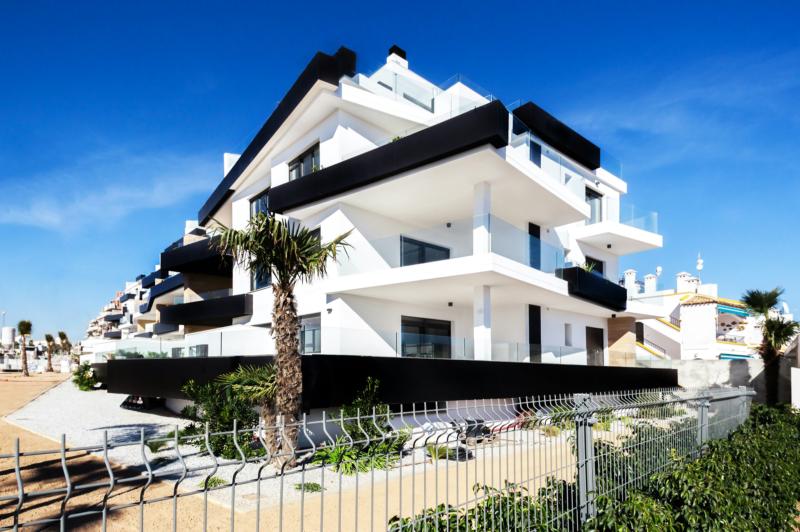
- New homes (New-build market): In sharp contrast, sales of new homes continued their robust climb, increasing by 3.0%. This segment is often favoured by international buyers seeking modern standards and energy efficiency, and its continued growth is a major indicator of developer confidence and future supply delivery.
Financing and stability signals in Spain
Despite fewer overall transactions, two crucial metrics confirm the high level of underlying confidence:
- The number of mortgages granted actually grew by 7.5% in August. This robust growth in mortgage originations (the creation of new loans) confirms buyers are actively securing financing, supported by contained interest rates.
- The cumulative new home sales figure (January to August 2025) is up approximately 7.7%, demonstrating that supply is finally beginning to catch up with demand.
The Foreign buyer dynamic: Resilience in prime regions in Spain
The domestic market is the segment most sensitive to economic shifts, but the international market is driven by global wealth, lifestyle appeal, and investment security—factors that remain powerful.
The key to understanding the Spanish market today is shifting the focus from national volume to regional price and demand pressure.
| Key Foreign Buyer Region | Price Growth (Q3 2025 Y-o-Y) | Key Price Driver |
| Málaga (Costa del Sol) | +15.3% | Fueled by the luxury sector, high-end lifestyle migration, and strong demand from Scandinavian and American buyers. |
| Valencian Community (Alicante/Costa Blanca) | +15.3% | The highest volume region for foreign transactions is showing accelerating growth in its coastal hotspots. |
| Balearic Islands | +14.8% | Dominated by high-net-worth international investors and extremely limited land supply. |
| National Average | +11.7% | Confirms strong market momentum nationwide through September. |
The consistent double-digit price growth in these key provinces (based on the latest Q3 valuation data from Tinsa) confirms that the drop in transactions is not due to a lack of desirability, but rather a temporary imbalance. Foreign buyers continue to invest heavily, paying a significant premium for property in prime locations (over €3,000 per square metre in Q3 2025).
Deeper dive: Market tension and value
The phenomenal annual price increases in these coastal provinces underscore a critical issue: Structural Demand vs. Supply. The high pressure is best illustrated by examining the price points and the "Theoretical Effort" required to buy a home, according to Tinsa’s Q3 data:
- Premium price points: In the Balearic Islands, the average price per square metre now stands at 3,522/m2, and in Málaga, it is at 2,615/m2. These valuations reflect the sustained inflow of international capital seeking prime locations for second homes or permanent residences.
- Affordability (The Local Hurdle): Tinsa calculates the "Theoretical Effort" as the percentage of household income needed for the first mortgage payment. Nationally, this figure is a manageable 34.8%. However, in foreign buyer hotspots, it reaches critical levels: Málaga at 59.1% and the Balearics at 51.0%. These figures are among the highest in Spain and signal severe competition.
- The Expat advantage: For the international buyer, particularly those purchasing with capital from countries with stronger currencies, this domestic affordability crisis is largely irrelevant. This buyer segment effectively bypasses the high effort ratio, leading to a stable, two-tiered market where high-value, desirable property remains highly liquid, ensuring long-term security for the investor.
Furthermore, the data shows that the market is increasingly reliant on resident foreigners (expats living and working in Spain) for volume growth, while non-resident (holiday home) purchases moderate slightly. This underlines Spain's status as a stable, desirable location for permanent relocation, not just temporary tourism.
Outlook: Growth forecasts confirm investment security
As the market approaches the year-end, the consensus among Spain’s leading financial institutions remains unequivocally positive. This August slowdown is a temporary blip on a much stronger, longer-term trajectory:
- Cumulative price growth: Leading institutions project that Spanish house prices will surge by nearly 9% cumulatively between 2025 and 2026.
- 2026 Stabilisation: Price growth forecast to settle healthily between 5.3% and 6.3%.
For the sophisticated investor or family planning a long-term move, the message is clear: the current market offers stability and confirmed growth potential. This temporary moderation in transaction volume provides a prime opportunity to purchase property before the next phase of predicted price increases takes hold. Despite the structural supply shortage—which actually underpins long-term price security—the Spanish market remains dynamic, offering a considerable choice of residential homes for sale across its regions.
The consistent, verified, steady price growth highlighted in this analysis indicates that Spanish property is a sound, long-term investment. Moreover, if you are buying for income, rental demand among both domestic and expat tenants remains exceptionally high. Don't wait for the next price surge; explore the market now. Take a look at our property for sale page to find the ideal property for your investment or lifestyle needs.

Last updated: 10/11/2025
Was this article useful?
The information contained in this article is for general information and guidance only. Our articles aim to enrich your understanding of the Spanish property market, not to provide professional legal, tax or financial advice. For specialised guidance, it is wise to consult with professional advisers. While we strive for accuracy, thinkSPAIN cannot guarantee that the information we supply is either complete or fully up to date. Decisions based on our articles are made at your discretion. thinkSPAIN assumes no liability for any actions taken, errors or omissions.
Related Topics
Related Articles