Spain reflects on 30 years in the EU: From poverty to prosperity, Brussels put up the cash and Spaniards brought the ideas
Spain reflects on 30 years in the EU: From poverty to prosperity, Brussels put up the cash and Spaniards brought the ideas
SPAIN would normally have been celebrating its 30th anniversary as a member of the European Union in 2016, but a sombre note hangs over this landmark year as the country reflects on issues threatening the 'club', including the Brexit vote and increasing anti-EU sentiments in France, The Netherlands and elsewhere. One-time vice-president of the European Commission, Spaniard Manuel Marín - who helped convince the other then member States to allow his native country to join - said he was one of the student diplomats at the College of Europe in Bruges, Belgium, in 1973. They were taken on day one to a ceremony housing the bodies of those who perished in the second World War, and reminded that this was the very reason the European Union existed. Now, though, Spain is reflecting on a mixed history as a member State - austerity measures imposed by Brussels in light of national debts have caused hardship in Spain, and the country has narrowly escaped being fined for its continued, consistent failure to meet deficit targets. And the lucrative trade agreement and political community has been shaken to the core by the Brexit vote, and the rising of the far right in some member States. Bureaucracy, and very high expenses for MEPs and Commissioners, have come into question throughout, although most member States believe this can only be influenced by those who have a seat at the table - that is, each of the national leaders who make up the Council of Europe.
De Gaulle in 1944: “Spain can join when they get rid of Franco” Three decades ago, joining the then European Economic Community (EEC), which would become the EU, was the launch-pad Spain needed to repair itself - it was still a very poor country with levels of illiteracy far higher than in any other civilised, western country, and had only known democracy for a decade after having been under a dictatorship spanning more than 40 years. But the country's morale was given a sharp upwards push as its social and economic conditions went from strength to strength, achieving a drastic transformation in a relatively short time. Of course, nowadays, the EU is a far cry from that which was designed by Altiero Spinelli, an Italian reporter exiled to Venice island after challenging the iron-fisted reign of Franco's ally, Benito Mussolini. Spinelli wrote an open letter calling for a federal, united, but free Europe, in response to the mass killings he witnessed during the height of World War II - and this letter would form the basis to the European Coal and Steel Community, later to become the EEC and then the EU. He wanted to see Europe becoming a 'united international force', ending nationalism and totalitarianism in individual States and protecting human rights, as a way of preventing a possible future World War III - given that the 1939-1945 conflict had left the equivalent of today's entire UK population dead in just six years. Spinelli's idea was supported by the French Resistance, since president Charles de Gaulle and prominent diplomat Pierre Mendès France had decided to try to set up a 'European union' of France, Belgium, The Netherlands and Italy. They said Spain would be asked to join them 'once they had got rid of Franco'. It would take another 30 years, however, before Spain 'got rid of' its dictator, which only really happened when he died.
‘Repairing Spain’ Back in Franco's time, the European Union as it was then was symbolic of freedom from censorship and social and professional liberty - in fact, ex-European Parliamentary speaker José María Gil Robles says Spain used to be 'quite jealous of' students in universities elsewhere on the continent who were able to live as they wished and voice their opinions without reprisal. And although polls seem to hint that a third of left-wing voters believe the EU has harmed Spain in recent years more than it has benefited the country, the idea of a 'Spexit' remains unthinkable. Spain has enjoyed EU funding allowing it to improve its infrastructure, and the country firmly believes the responsibility for the smooth running of the EU lies with each and every member State - meaning if any one of the current 28 is unhappy with the way it is working, they must take part of the blame for it. And the country recalls that the usefulness or otherwise of the EU to a country is dependent upon what each country - Spain included - contributes; not just financially, but in terms of ideas.
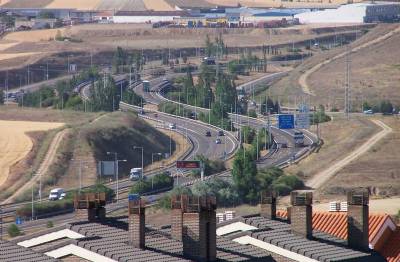
From a poor farming nation to a thriving western State Back in 1986, when Spain became a fully-paid-up member, two-thirds of workers were in the agricultural sector, and had no Social Security provisions, meaning no State pension or sick pay. Rural dwellers often had no electricity or running water, relying on wells; just 10 years previously, its black-and-white TVs only had one, State-controlled channel which lauded Franco in every programme, and by the time of its EU entry, still only had two channels. Roads were potholed, cracked, dangerous and often missing - motorways did not start to appear until the 1980s or 1990s - and its GDP was less than half the EU average. The difference in 30 years is palpable: mobile phone and internet signals are available everywhere in the country, with 4G and fibreoptic beginning to roll out in more developed areas; exports have increased by 800% since 1986, State pensions provide a liveable wage, laws covering human rights and equality including same-sex marriage and adoption and protection for domestic violence victims are set in stone, and Spain's largest companies have a top international presence - in fact, the chairman of Inditex, the country's biggest clothing chain, is the richest man in Europe. And 14,000 kilometres of major highways today are a far cry from the 483 kilometres of 1986 - and whilst its 2,500 kilometres of fast rail links remain insufficient to connect the country's most populous areas, the quality of trains and efficient level of service are among the best in Europe. Much of this growth has been through EU grants totalling billions, invested in airports, roads, trains, banking, industry, arts and culture, healthcare and social programmes - and Spain is set to receive another €45 billion between now and the year 2020. The amount Spain receives from the EU has been curtailed somewhat due to less well-off countries from the east joining the Union, but the financial benefits Spain gets in return for its membership fee of 1.24% of its GDP remain very high. José María Gil Robles describes the EU as the 'vitamin pill' that put Spain on the fast track to becoming a modern western country, and the returns have been worth it for Europe, since most regions are becoming net contributors rather than net beneficiaries, with the exception of Andalucía, Extremadura and the Spanish-owned city-province of Melilla on the northern Moroccan coast, where the GDP is less than three-quarters of the average for Europe. Even life expectancy has soared in Spain as a result of the EU's stimulation - from just 76.4 three decades ago, it is now one of the highest in the world at 83.2 years, or over 85 for women.
Life-changing ideas, hard bargaining and top negotiating skills Although Spain signed the treaty to join the EU on June 12, 1985 - 31 years and 11 days before the Brexit vote - its membership was not complete until January 1, 1986. Spain was, predictably, vociferous and rebellious as a member, but could never have been accused of not fighting its people&#