13 min read
Which are the best Spanish beaches to visit this summer? That's a tough question for an undisputed world blue flag leader with an 8,000-kilometre coastline. It also depends upon your preferences: Scenic, quiet, lively, easily accessible. But Spain's endless incredible beaches (some even several hours' drive from the sea) are always a hit, and not just in summer: Many are equally beautiful in winter.
Need inspiration? Here are some ideas.
Top Spanish beaches for sunshine holidays
Despite Spain's international fame as a beach holiday hotspot, it's not difficult to find remote, tranquil coves, even in the busiest tourism destinations, to escape the crowds. Quiet bays in beautiful, unspoilt surroundings abound in every coastal province.
But established seaside tourism belts guarantee a lively atmosphere, convenience, accessibility, and practical facilities: All ideal for an easy, hassle-free trip.
The best indicator of a well-equipped, good-quality beach geared up to holidaymakers is the blue flag. Here's a selection to suit every preference:
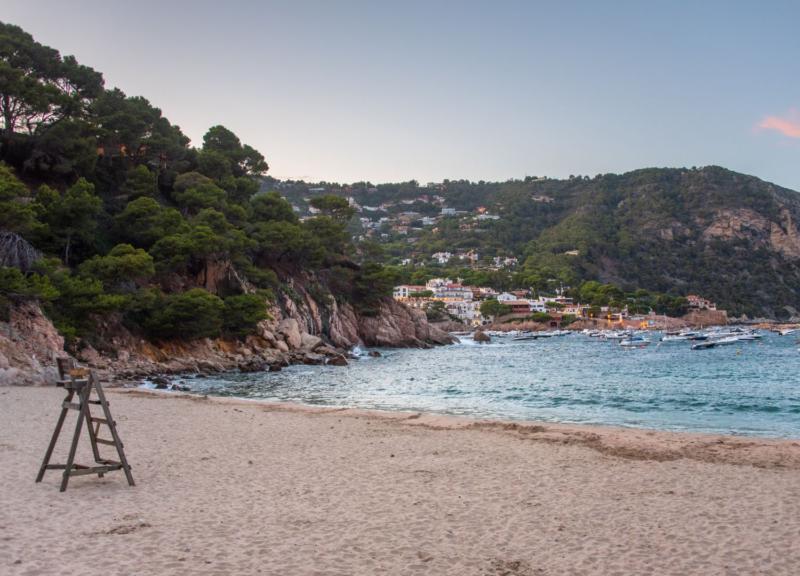
Begur, Girona province
On the Costa Brava, the remote, natural coves in Begur are a complete contrast to the bustling holiday feel of this well-loved coast. Zealously guarded by majestic cliffs and dense pine forests, with wooden walkways allowing you to explore the landscape en route to the crystalline waters of its many bays, the best parts to find peace and quiet are in the Aiguafreda ('Cold Water', but it's not especially, so don't take it literally), Sa Tuna, Sa Riera and Aiguablava ('Blue Water', and do take this literally) bays.
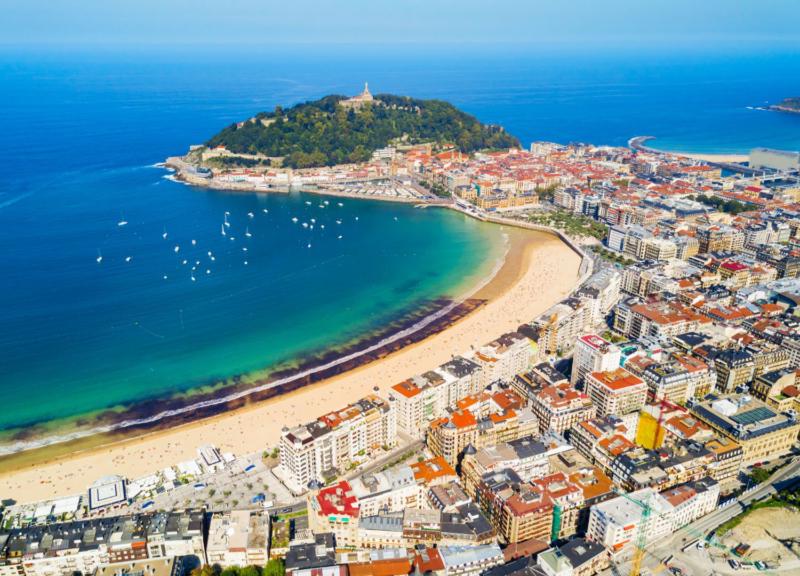
La Concha, San Sebastián, Basque Country
The name of this beach in Guipúzcoa province comes from its shape – that of a sea-shell, or concha in Spanish. Flat, wide and sandy, enclosed enough to keep out the strongest of the winds in autumn and winter, La Concha is sufficiently close to the city centre for maximum convenience, making it popular with holidaymakers from northern Spain and southern France.
Locals are so proud of their beach that the awards at the world-famous San Sebastián International Film Festival are named after it: The Concha de Oro ('Golden Shell') is presented for the best film, and the Conchas de Plata ('Silver Shells') to the best lead performer, supporting performer, and director.
Granadella and Portitxol, Jávea (Alicante province)
Famous as the Costa Blanca is for international seaside tourism, the Alicante province coastline actually has plenty of quiet beaches off the mainstream holiday trail. And although Jávea's urban shores are full of life in summer, two of its most sought-after beaches are completely secluded. Stunning cliffs, mountains, heathland, forest, and a tiny handful of private villas are the backdrop for these well-hidden bays. But numbers are restricted, as they're part of a marine reserve.
Granadella, officially one of Spain's most-featured on Instagram, becomes full from early morning. Beachgoers are known to start queuing before sunrise to ensure they get a parking space.
Portitxol, even more secluded, is often overlooked in favour of the Granadella, so it fills up less quickly. Portitxol bay has its own 'village' fiesta every summer, and retains its traditional essence of a remote clifftop fishing hamlet.

Rincón de la Victoria (Málaga province)
One of Spain's top international beach destinations, the Costa del Sol (Málaga province coast) is vibrant, bright and refreshing, with tourists' every practical need covered. Mature sun, sea and sand enclaves such as Fuengirola, Torremolinos, Estepona, Benalmádena and Marbella are ideal for a sunshine break with minimal effort. But they can get busy and, in high season, feel less authentically-Spanish than at other times of the year.
Lesser-known yet equally convenient is Rincón de la Victoria, a long-standing favourite for families living farther inland. The beaches are low-rise and low-density, especially the semi-rural Torre de Benagalbón. Although there are plenty of hotels, most visitors are Spanish holiday-home owners who typically move in for summer. Everyday amenities are necessary even when you only live somewhere for two months, so short-term visitors will find all they need on their doorstep.
Sa Calobra and Es Trenc, Mallorca
Sunseekers looking for well-equipped urban beaches can find them almost anywhere on the largest of the Balearic Islands. But Mallorca is equally internationally-renowned for its remote, undeveloped bays and semi-rural coves, especially in the Alcúdia and Port Sóller areas.
One clear favourite is the Cala d'Es Moro, near Santanyí, the closest to a natural swimming pool you'll find in Mallorca. Its near-transparent turquoise waters and forest-covered cliffs mean the Cala d'Es Moro is said to be the most beautiful in the Balearics, but almost impossible to visit in summer. Long queues for limited space mean it's packed before 08.30 every morning, often through to mid-autumn.
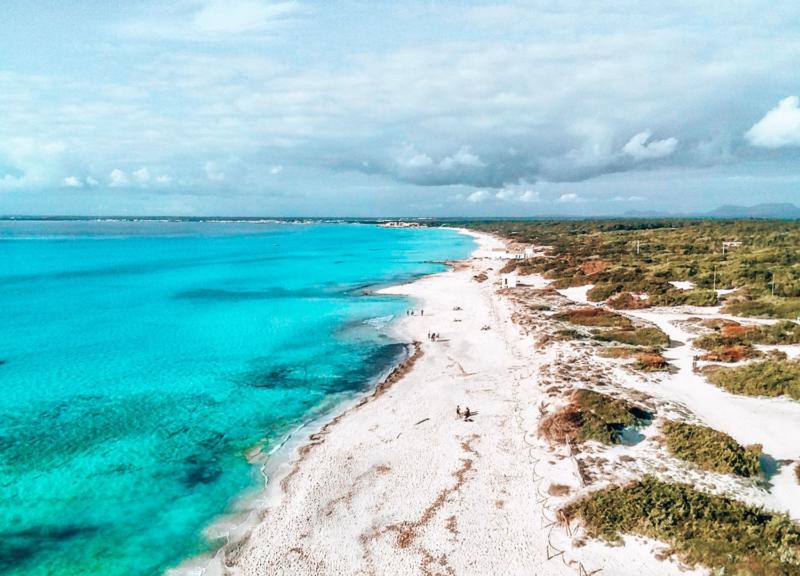
Es Trenc, the island's last remaining uninhabited beach, dubbed 'the Caribbean of Mallorca' due to its crystalline pale-blue sea, is a wide, four-kilometre sandy stretch with only natural dunes in the background. It can become crowded in summer, although quieter parts are found about a 10-minute walk from the car park.
Sa Calobra is particularly impressive and unusual: Embedded in the Tramuntana mountains, the beach sits at the delta of a gushing river ploughing through the deep, rocky Torrent de Pareis canyon. It's split in two by a natural tunnel through the cliff, leaving each half almost entirely enclosed.
Getting to these much-loved beaches involves hiring a car and, for Sa Calobra, a winding 12-kilometre mountain road, although you can book a boat trip to the latter from Port Sóller.
Calpe (Alicante province)
One of Europe's earliest foreign beach destinations was Benidorm - a package-holiday pioneer and the first-ever impression of Spain acquired by a whole generation in the 1960s. Cheerful, gaudy and unpretentious, the Costa Blanca tourism capital still boasts legions of fans; but for those who'd love Benidorm even more if it were a little calmer and less full-on, there's a brilliant alternative 20 minutes north. Calpe, with three spacious blue-flagged beaches (Cantal Roig, La Fossa, and Arenal-Bol) just metres from hotels, shops and restaurants, is a fun and highly-convenient sunshine-break location.
A small town that feels and looks like a pocket-sized major city, Calpe's backdrop of Manhattan-like beachfront skyscrapers framing its Sugar Loaf Mountain-style rock is often compared to a miniature Rio de Janeiro. Equally as geared up to tourists, Calpe is at least as unique: Roman baths on the Cantal Roig beach, the ultra-modern seafront 'Red Wall' building, and salt flats with flamingos next to a busy central highway offer unusual sightseeing opportunities.
La Manga del Mar Menor, Murcia
Golf and spa resorts, and seemingly-endless sandy shores, attract Spanish and foreign visitors to this single-province south-eastern region in all seasons. But one stretch of 'coast' gets nearly as many beach tourists in winter as in summer: The Mar Menor is nearly fully enclosed, meaning its waters are several degrees warmer than the open Mediterranean which 'feeds' it.
A curious accident of geography means the Mar Menor is, technically, one of Europe's largest salt lakes: A strip of land, 21 kilometres long, cordons it off from the Mediterranean proper, keeping its waters calm in most weathers.
This land-strip,La Manga del Mar Menor, is just 100 metres across at its narrowest point, and 1.2 kilometres at its widest. It's flanked by hotels, restaurants and apartments, and a main highway runs the entire length of it, giving road-users the unusual experience of having a beach to both left and right.
The Mar Menor is a protected legal entity, meaning concerted efforts made to keep it clean and safeguard its flora and fauna. Although sophisticated tourism facilities are close by, the Murcia coast is a comparatively young destination: It's never become overcrowded or overdeveloped, and property prices are typically lower than on most of the Costas.
Top Spanish beaches for sightseeing
Some Spanish beaches are so unusual that tourists travel great distances to photograph them, meaning they get plenty of year-round visits. For some, it's because of their quirky, unique appearance; for others, because of their significance.
Spain has been a silver-screen location scout favourite for generations; numerous global productions have featured its landscape and beaches in major scenes, welcoming teams of Hollywood artists and creatives over the decades.
Here are some of the most-photographed and visited:
Gulpiyuri, Asturias
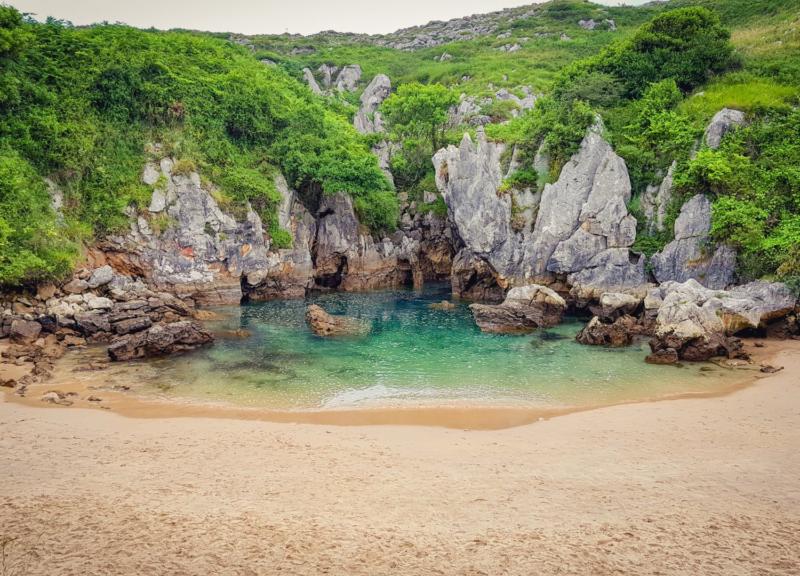
Reputed to be the world's smallest beach (it's only 40 metres long), Gulpiyuri is only reachable via a long, cross-country walk. But if you're physically able, it's worth it: Peaceful, secluded and a unique photo opportunity. On this 'back-to-front beach' in Navas, part of Llanes, the sea stops at the hill on the horizon behind. This unusual image makes Gulpiyuri one of Asturias' most-visited at any time of year, and it's been protected national heritage since 2001, keeping it safe from overcrowding and development.
Sakoneta, Basque Country
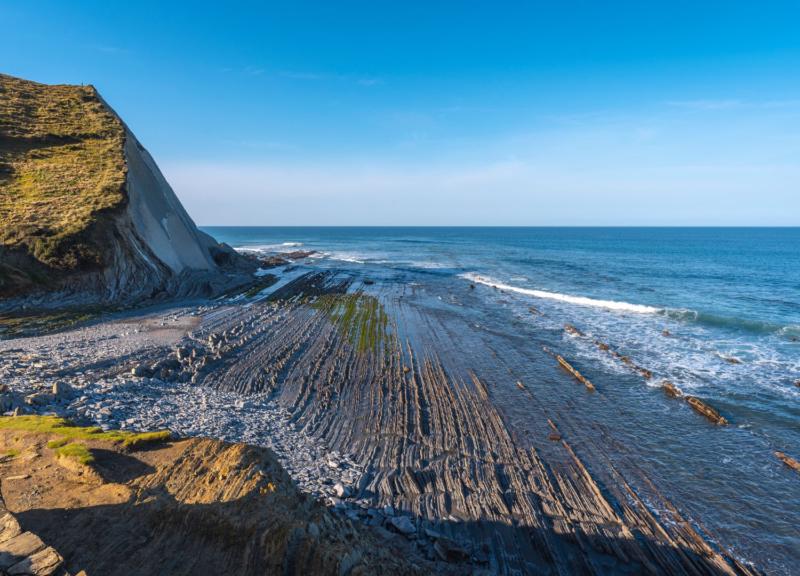
This remote, rocky cove has been fascinating geologists – and social media users - for decades. Set in an eight-kilometre coastal bio-reserve in Guipúzkoa province and at the bottom of a grassy cliff, Sakoneta beach is formed from geometrically-perfect stone grooves, with completely-natural rock formations resembling chunks of Classical-era columns.
Believed to have been createdthrough tectonic-plate shifting between 65 and 100 million years ago, this 'groovy' beach near the historical village of Deba is equally fascinating to behold from the viewing point above it, due to the unusual shape of the waves breaking on the barcode-style ruts.
Getting there involves a 15-minute walk, but guided bio-reserve tours are easy to find and accessibility provisions can be made if needed.
As Catedrais, Galicia
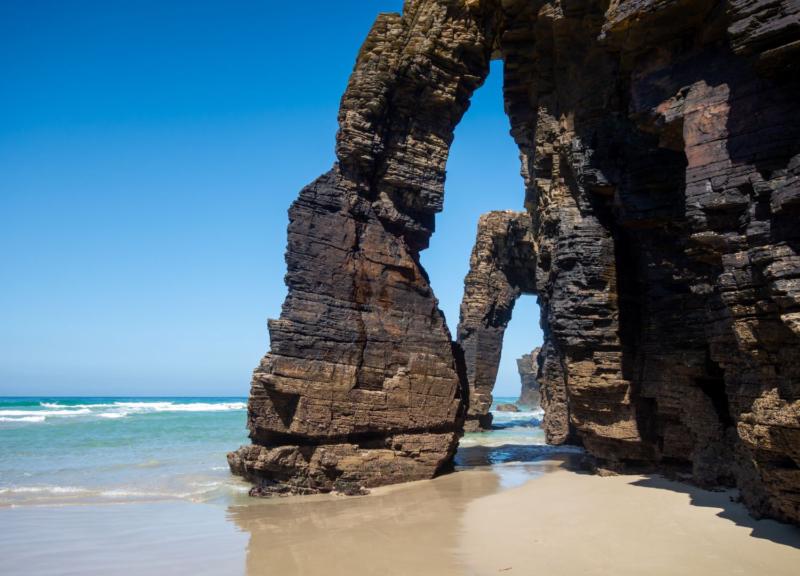
The name of this beach in the north-western province of Lugo translates as 'The Cathedrals', and comes from the huge, natural rock structures in the sand, which resemble pillars and high arches in a giant, ornate temple. Off the traditional foreign tourism trail, but popular for 'staycations', Galicia is in fact the Spanish region with the most beaches and second-highest number of blue flags. Here, you can enjoy a proper summer holiday atmosphere and an authentic Spanish feel at the same time.
If you're on the Costa Blanca, a smaller replica of As Catedrais can be found closer to home: The secluded and highly-photographed Cala Moraig bay in Benitatxell has similar rock formations and is often compared to the more famous version in Galicia. Non-residents have to book and pay for parking in the Cala Moraig in summer, but can visit for free out of season.
Mónsul, Almería
Two Spanish beaches have been particularly heavily used in big-budget films from the 1960s to the present, and attract plenty of curious visitors wanting to see where the on-screen action took place. One of these is Playa Mónsul, a completely undeveloped beach in the heart of Almería province's coastal Cabo de Gata-Níjar nature reserve.
Mónsul's desert-like landscape has adapted perfectly to cinema productions set on other planets. The volcanic rock formations, and the giant dune (which visitors can climb for a panoramic view) as a backdrop featured in the 1984 children's fantasy tale, The Neverending Story. Nearly a decade earlier, it had served as location for The Wind and the Lion, starring screen legends such as Sean Connery.
Director Steven Spielberg fell in love with Mónsul beach, using it for scenes in Indiana Jones and the Last Crusade in 1989 – again, with Sean Connery, and his co-star Harrison Ford.
Cofete, Fuerteventura
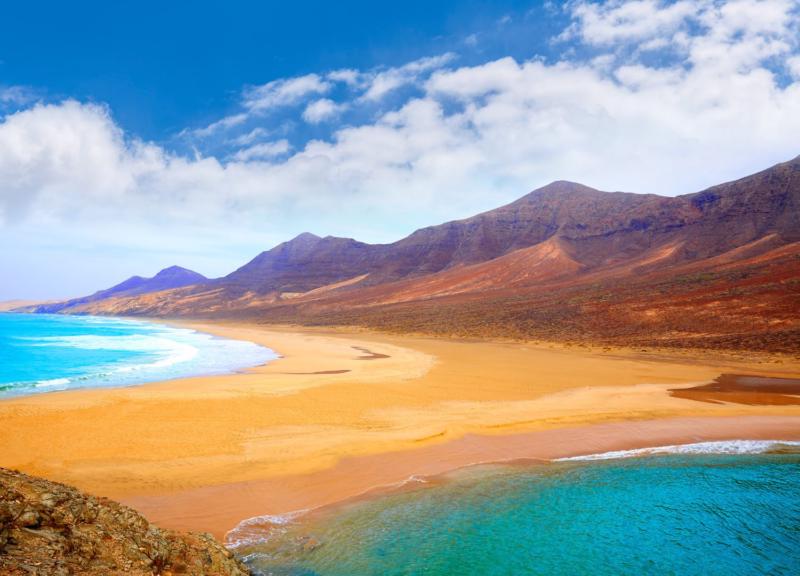
Entrenched in Fuerteventura's Jandía nature reserve, this golden beach with its mountainous horizon has been very much in the spotlight in recent years. One of Hollywood's biggest-budget films, the 2018 Solo: A Star Wars Story documented the early life of one of the sci-fi series' most prominent characters, with Playa Cofete depicting Hans Solo's home planet. That same year, it was used in the Warner Bros and HBO Max box-office hit Wonder Woman 1984, starring Gal Gadot.
Half a century earlier, this Canary Island beach hosted one of classic Hollywood's most memorable on-screen moments: The Planet of the Apes closing scene, where Charlton Heston kneels before a Statue of Liberty sinking into the sand.
And there's plenty of space for filming. Playa Cofete, at nearly 14 kilometres in length, is Spain's third-longest after Castilla beach (17 kilometres) and the Doñana National Park beach (28 kilometres), both in Almonte, Huelva province.
Top Spanish inland beaches
Not all Spain's best or blue-flagged beaches are on the coast. Some are actually hundreds of kilometres away from it, but still have all the usual beach-tourism facilities, including bars, sun-loungers, parasols, and watersports centres, with holiday parks close by.
Badajoz: Orellana, Campanario, Cheles, and others
Spain's highest concentration of inland beaches, of which over two-thirds are blue-flagged, is in the far-western region of Extremadura. Although the nearest coastal beach is actually in another country (just outside of Lisbon, Portugal), Badajoz province's freshwater beaches are so authentic-looking it's hard to believe you're not by the seaside.
Among the best 'coastal replicas' are the lively, touristy Orellana la Vieja and pine-fringed Campanario, which resemble secluded Mediterranean coves. Beaches with a more grassy, parkland appearance include Alange, La Dehesa (Cheles), Isla de Zújar (Castuera), Espolón-Peloche (Herrera del Duque), and Calicanto (Casas de Don Pedro).
La Breña, Almodóvar del Río (Córdoba province)
The Andalucía province of Córdoba experiences some of the hottest summer temperatures in Spain, yet its nearest coast is over 165 kilometres away – so the fact it has dozens of high-quality inland beaches comes as no surprise. La Breña was the trailblazer, and the first to earn a blue flag. Along its sandy shores are caravan parks, surfing and waterskiing centres, beach bars, a yacht club, a twilight cruise operator, and all the other standard facilities you'd expect from its seaside equivalent.
Córdoba's many attractive artificial beaches boast fully-established sunshine holiday infrastructure, including hotels, restaurants and self-catering chalets. Popular examples are the idyllic and tropical-looking Playa de la Colada, in El Viso, and Playa de Valdearenas, in the nature reserve of the same name, both within half an hour of Córdoba city.
Other parts of Spain with freshwater beaches include the Madrid region, which has 14 along the shores of the enormous San Juan swamp, and the landlocked Basque Country province of Álava, in the Garaio nature reserve and alongside the Ullibarri-Gamboa reservoir. They're even found in provinces with a sea coast: Around 40 kilometres inland from the Costa del Sol is the tree-lined Ardales beach, and in A Coruña province (Galicia), the beach in As Pontes sits on the endless banks of Europe's largest artificial lake.
It's easy to fall in love with Spain's beaches, and many have decided to make them a more regular or even permanent fixture in their lives. Buying a holiday home or main residence near a beach is a good investment, too. Tempted? Check out our range ofsea view properties for sale in Spain.

Last updated: 30/07/2026
Was this article useful?
Related Topics
Related Articles