Off-grid power production for freehold communities: What the new law means
Off-grid power production for freehold communities: What the new law means
FOR the first time ever, off-grid living can be shared between communities of owners or between traders with neighbouring premises, thanks to a new law covering self-generated power supply due to come into force tomorrow (Sunday).
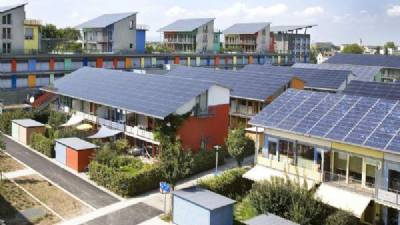
Until this weekend, only individuals were able to power their homes via solar panels, which can be a costly exercise - even though the original outlaw will be clawed back within a few years from money saved on mains electricity bills - but from tomorrow, a new legal figure, dubbed 'collective self-generated consumption', has been launched so that entire apartment blocks, urbanisations, or even unrelated neighbours can share their supply.
And any energy they produce which they do not need to use can be 'sold back' to the mains electricity company by way of a discount on owners' bills during times when they need to resort to the grid.
Previously, homeowners were only permitted to install solar panels on their own premises for personal use, but now, by clubbing together, groups, communities of owners and traders who share industrial estates can opt to set theirs up elsewhere.
For example, they can place their panels on neighbouring buildings instead - always with permission and through mutual agreement - if these are more exposed to the sun and generate more electricity.
In the past, any excess energy generated and 'sold back' to electricity companies would require the individual solar panel owner to register as a 'power producer', with all the necessary taxation and red tape this would entail.
Now, though, the panel owners will be compensated directly in their monthly bills.
This only applies to panels with a maximum power output of 100 kilowatts (kW) and only where energy generated is from a renewable origin - solar, wind, hydraulic, and so on - but if enough is produced and sold back to the grid, the owners can effectively get 100% of their utility bills covered, or receive their electricity for free.
It even allows neighbours who opt to share solar panels to 'cash in' more than their own portion of energy generated where, for example, one neighbour does not use all his or her portion, but the other needs more and has to resort to the mains.
All electricity boards are now permitted to offer 100% self-generated consumption options.
The entire process has been made much simpler - to opt for home-generated electricity, individual consumers or groups using solar panels with up to 100kW power output no longer need to go through complex registration channels, but only needs to notify their regional authorities.
Group solar energy producers will only need one meter, which cuts their costs.
Full details have been published in the State Official Bulletin (BOE), but any individual, freehold community or company who requires clarification and decides to go off-grid will be able to obtain full explanations and ask questions from any renewable energy provider.