From pre-War to Gen Z, how we feel about life and the universe
From pre-War to Gen Z, how we feel about life and the universe
ARE today's teens in a panic about climate change and happy to hang out with their parents, whilst pensioners think plastic recycling and global warming are just silly modern hysteria?
Worldwide research on our perspectives depending upon when we were born has been carried out in 40 countries, with a stratified sample – that is, specifically designed to reflect a microcosm of current society - of nearly 30,000 people, and the results for Spain have sufficed to blow some commonly-held notions out of the water.
Here's how.
Who and how
WIN International, a leading global association in the field of market research and opinion studies, commissioned the report Perspectives on Life Between Generations over last year, and it has just been published – with some surprising conclusions.
For Spain, the survey was conducted by the DYM Institute, based in Barcelona and with a branch in Madrid – if you're keen to have your views included in their findings in the future, you can fill in a questionnaire with your details on their website so they can contact you next time they're sounding out society – via 1,017 online interviews back in November 2019.
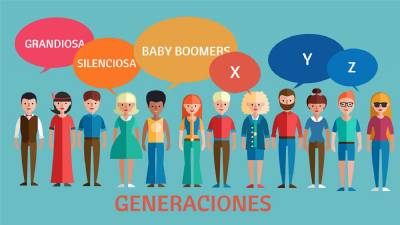
Respondents were divided into the internationally-recognised generational categories, rather than those specific to a given country – as an example, 'Baby Boomers' are widely held to be those born in the 18 years after World War II, or from 1946 to 1964, even though in many countries no such explosion of childbirth occurred at that time; in fact, Spain's 'Baby Boom' generation is mainly those born in the 1960s and early 1970s.
The DYM Institute then worked out the main character traits for each generation as an overall introduction, some of which appear fitting, and others of which may shock those of a similar age group, but which do seem to include traits that would have been in keeping with the socio-cultural and economic climate during their childhood.
Tell me when you were born and we'll tell you what you're like
Although, in theory, encompassing a couple of generations, the oldest segment studied was those born in or before 1945 – which, in Spain, would include people born in the 1910s, given that the country has a high population of residents aged well past 100.
Research methodology here may have led to a reduced participant group, however, which may make the findings a little generalised: Being an online survey, those aged 74 and over at the time (at the very youngest, 73 and 10 months) may be less likely to use the internet than much younger participants, meaning fewer responses.
Known as the Pre-1946 Generation for the purposes of the study, although often referred to as the Great Generation, these people were found to be slow to adapt to the modern world.
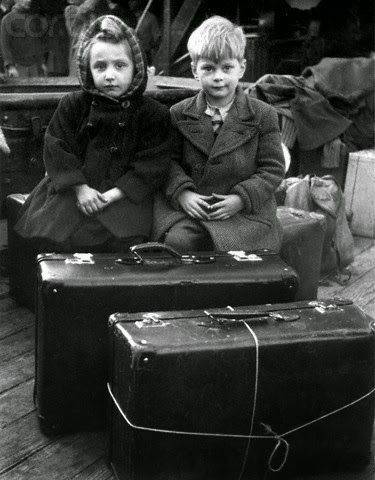
Whether they were born during a major war or just as the last one was finishing, they are likely to have grown up with shortages, rationing and stockpiling; particularly in Spain where the Civil War from 1936-9 was followed by 35 years of dictatorship, with widespread poverty and hunger at least in the first couple of decades.
As a result, their 'survival' instinct is strong, and they tend to be thrifty, hating waste, clearing their plates and reusing and repairing rather than replacing, with a strong work ethic, sense of personal sacrifice, ability to lead a spartan existence without feeling they are missing out, and not afraid of hard graft.
The Baby Boomers, who would have been aged between 55 and 73 at the time, were the generation who 'discovered' radio, television, and later, the fax machine, computers and finally, mobile phones, the latter being roughly when they were in their mid-30s to early 50s. They would have been among the first young adults for whom holidays abroad started to become mainstream, car ownership a standard feature rather than merely a luxury for the rich, and in their time, they would have witnessed comparatively rapid technological and social advances.
Growing up, the older 'Baby Boomers' saw a determined global drive for maintaining peace and international cooperation, and would have typically been educated in very large class groups and had siblings, often several.
According to the study, 'Baby Boomers' are among the most ambitious generation – indeed, by the time their careers were established, women going to work was much more widespread (with the exception of the War years when this became essential), and jobs tended to be 'for life', easy to find, with salaries practically guaranteed to cover basic needs, cheaper housing, and working hard and 'keeping your head down' would have traditionally been an almost certain path to promotion.
Next comes Generation X, born between 1965 and 1979. In Spain, the oldest of these would have been small children when the dictatorship ended and the Transition to democracy began, the Constitution came into effect, and the country was grappling to recover from the financial crisis of 1973. These would have witnessed an accelerated move towards freedom of expression, freedom of language, freedom of dress, political division and a waning of the Church's influence, as well as a sudden colourful and risqué explosion of uncensored film (particularly early Pedro Almodóvar productions), music and arts movements, the result of the country letting its hair down.
Also, the oldest Gen Xs will have grown up with parents tightening their belts, the petroleum crisis which led to daylight-saving time becoming widespread – in the case of the UK, leading to negative equity and the three-day week – whilst the younger Gen Xs would have been very small children at a time when gender equality was enshrined in law; in Spain, divorce becoming legal; television being standard in most homes, everyone having a car and an annual holiday.
These late-Gen X children would have witnessed the power-suited, materialistic '80s, when professional upward mobility was a major status symbol but money was still tight, and would have been the first children to have had parents go through redundancies, and the first to experience family divorce, either personally or vicariously through their school friends.
Moving on to their young adulthood, Gen X witnessed the birth of the internet and the mobile phone, and would have been between their late 20s and early 40s when social media first appeared.
They were also the last generation for whom instant contact with friends and family was only possible by making a phone call – once they were aged between approximately 20 and early 30s, email as a means of keeping in touch had started to become dominant.
Perhaps as a result of growing up during the powerhouse '80s, and at a time when qualifications and training started to become important and good jobs were not guaranteed without them, Generation X is characterised by its obsession for success.
Generation Y, more popularly referred to as Millennials, is rarely out of the news and often, unfairly, suffers bad press, especially from older generations who tend to consider them 'too sensitive and fragile'. But their current age spans almost the entire schedule of growing-up rites of passage: Those born in 1999 would have been 20 when they completed the survey, and those born in 1980 would have been planning their 40th birthday celebrations for the coming year.
This generation, at present, encompasses both those still in college and who have not yet started their first job, those desperate for a foothold on the housing ladder – or even to leave the parental nest and find a cheap bedsit to rent – and those who have yet to have a serious relationship, as well as those who have been homeowners for a decade or two, with 20 years' plus work experience and a career behind them, possibly a marriage, maybe at least one divorce, perhaps children who may even be in their teens, and their student years and anxious wait for all-important exam results belonging to another lifetime.
It may seem early and late Millennials have little or nothing in common; the older ones thought they had a difficult time trying to buy their first home, then realised they actually had it very easy compared with the younger Millennials. But both ends of the scale grew up in peacetime and as European Union citizens whose parents mostly went out to work, and their education and upbringing would have gradually been leaning towards an approach of encouragement, nurture and motivation rather than discipline and criticism.
By the time they were all adults, internet and mobile phones existed: Most of the modern world was online by the time the oldest Millennials were 21, and internet shopping and banking was starting to become popular; the younger ones never experienced an era where they were not. Video games had become prolific, and social media was in use by the time they were aged between eight and 27.
The DYM Institute does not cite 'over-sensitivity' as their main characteristic. In fact, theirs is said to be 'habitual frustration' – which could be a result of being young adults in a time when quality employment with salaries that cover the bills, and home-buying and renting, have become increasingly harder.
Expect Generation Z to occupy the headlines more and more over the next few years – they're the ones whose votes are just starting to be counted in elections. They were born in or after the year 2000, meaning all those who completed the survey last November were, at most, still teenagers; but another decade will see many of them in key public service rôles, and we will start to meet their children.
They have never known 20th-century life, even the oldest ones can barely remember a time when same-sex couples were unable to marry or had to pretend to be 'friends' or 'flatmates', or when men and women were not considered equal at law. In fact, they will have been hearing about feminism practically since birth, and will never have lived through a time when it was socially acceptable to make jokes about transgender people or persons of colour.
All good news so far. And although they will have to fight hard for good jobs and it will be their grandparents – not even their parents, who'll still be paying off 40-year mortgages and working until nearly 70 – who need to help them financially to get a home of their own, they do have advantages that older generations don't: They were born into an era where internet, mobile phones and, by earliest childhood at least, social media were part of the furniture and present in every home, as well as a fundamental tool of their school education, meaning they run less risk of being 'left behind'. This technology has been morphing and mutating with such speed throughout their young lives that they have become a generation which is very quick to learn new skills and adapt to change – even if they may be among the last who ever learn to hold a pen, use a landline, or even make a phone call.
The DYM Institute's conclusions about their typical characteristics are somewhat unflattering: The results, say researchers, show they are typically insolent and disrespectful. Quite a harsh judgment, but one that may merely be a feature of age rather than generation-specific; they are still kids, still trying to figure out how to relate to each other and to adults, and still trying to work out who they are and what the world expects of them.
What's important to them...and what isn't
Although 'family' and 'health' were the top two priorities for all generations in practically every country, the amount of importance they placed on these differed somewhat. Again, though, it is hard to tell whether this is age-related or a product of a specific generation: Whilst 83% of the Pre-1946s said family was the biggest thing for them, only 40% of Gen Z did so; however, when the Pre-1946s were teenagers, it is likely 'family' was also low on their list of priorities, too.
The idea that this is an 'age thing' rather than a feature of the era in which one came into the world is borne out by the fact that family being cited as 'most important' is on a sliding scale – for Baby Boomers, 69% of those who mentioned their family at all say it is number one, compared with 66% of Gen X and 59% of Millennials who included this among their priorities.
Family being a main priority, if not actually at the top of the ranking, also seems to increase with age: Where 62% of GenY and Gen Z mentioned their clan, 78% of those now aged 74 and over did so, falling to 71% among the Baby Boomers and 67% among Gen X.
Of those who have not yet retired, and despite the Baby Boomers' 'ambition' and Gen X's 'obsession with success', neither figured highly among respondents who considered it crucial to be highly-qualified. This, though, may be due to the fact that people now approaching retirement age did not need exam results to get and keep good jobs, workers in the middle between these and the youngest adults would have needed some qualifications and specific training, but lack of higher education would not have been a barrier to a decent career, whilst nowadays, this is almost a basic launch-pad for any employment at all.
To that end, Generation Z is the most concerned with getting high-level qualifications and developing a professional career – 50% - followed by Millennials, at 30%.
Figures have not been revealed publicly, but concern for saving up, keeping a nest-egg or buffer zone, and pension planning increased in importance up the age scale, with Gen Zs largely unconcerned and the still-working Baby Boomers prioritising it the most – although this is probably obvious, since financial planning for retirement becomes a bigger issue the closer on the horizon it looms.
Who cares?
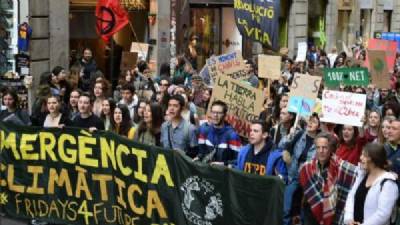
And now for the twist in the tale: Pre-pandemic, remember how international news was dominated by the Fridays For Future school strikes over global warming, and psychologists warning of sharply-rising numbers of children suffering 'climate anxiety'?
Well, 34% of Baby Boomers are concerned about the environment. That means 66%, or two-thirds, are not, which would, we'd expect, have Greta Thunberg and her peers striking their grandparents off their Christmas card lists and thanking the heavens beyond our broken ozone layer for bringing us those lovely Millennials who do, of course, care passionately about their planet.
Except that only 26% of Millennials are bothered about the environment, which means 74% are not.
Still, maybe most of the survey respondents were the older Millennials, the 1980s-born, who are closer to Gen X in their thinking and stopped giving two microplastic particles about the health of the planet as soon as they finished their middle-school science class on recycling paper to save the trees.
No – Gen X cares more than Millennials do. Only a fraction more, at 27%, meaning 73% just shrug off concerns about air pollution and overflowing landfill sites.
Thank goodness for the kids, then, who inform their teachers every Friday that they're not going to class because they're too busy telling off the oldies for having wrecked the Earth and left it to rot, knowing they'll have stepped off the coil long before the little ones suffer the effects of climate change.
Really? Well, according to the DYM Institute, only a poor 18% of those born in or after 2000 are remotely bothered. The other 82% have far more pressing issues to think about.
Which begs two questions: Firstly, could it be that the worst, most irreversible effects of climate change are too far into the future to seem a reality for teenagers? After all, environment warnings quote D-Day years like 2030 or 2050; if you're 20, then the year 2050 is another 150% of your lifetime away. Secondly – surely there must be a generation out there who overwhelmingly expresses concern for our environment?
Perhaps Greta still has work to do in convincing us – or perhaps the generation that will save the Earth has not been born yet.