A WOMAN who went missing from her home province of León 25 years ago has been found alive and well, but disoriented and confused, in a villa she had been living in on an urbanisation in Asturias.
Blanca (in the above picture, released by her family when she vanished) was 43 when she disappeared, in 1995, and every trail has gone cold in the quarter-century since – including a woman's body found off the coast of Cantabria in 2001, initially thought to be the missing Argentine, but who turned out to be someone else when a DNA test was conducted.
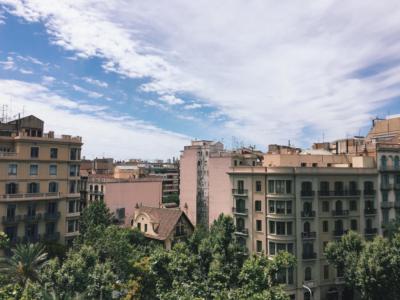
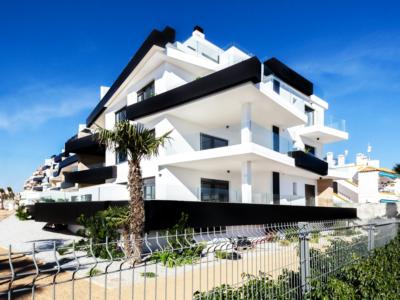
Fast-forward to late August 2020, and Local Police received various calls from residents on the La Fresneda urbanisation (second picture), a very northern-European-looking residential complex in the sleepy town of Pola de Siero, Asturias.
“We haven't seen our neighbour, Eva, for days; she lives alone, and we're worried something might have happened to her,” they said.
They found 68-year-old Eva sitting on the floor in her lounge, dehydrated, and apparently 'absent' mentally, not speaking, confused and seemingly unaware of what was going on around her.
Otherwise, physically, she was well, and conscious, but seemed unable to move, and police had to force the windows to get in.
They put the matter in the hands of the social services as Eva was admitted to Asturias Central University Hospital (HUCA), and attempted to trace her next of kin, if she had any.
Eva did not seem to be registered on the local census.
Finally, officers identified her as Blanca Mabel Otero Álvarez, born on 1952 in the town of Quitilipi, El Chaco province, Argentina, who was not on the census either, and who had been missing since 1995 from her home in the next region and, given the length of time that had passed, had long been presumed dead.
Her family was contacted, and they were said to be stunned to hear Blanca had been found and was alive.
León-based reporters from the daily newspaper El Español spoke to Blanca's brother, José Luis, who was said to be very open and willing to talk.
“We were a very close family and then, suddenly, overnight, she left,” he said, confused.
“But why did she leave? Well, I can only now think it must have been on impulse, perhaps because of arguments with my father, with my mother, with me, I don't know. She was always happy enough with us until the day she left and we lost track of her for good.”
José Luis and Blanca's other brother, René, say they are both celebrating the fact she has been found 'after so many false alarms'.
“We'd resigned ourselves to the fact she was dead, so we're really pleased and hoping she recovers quickly, since she wasn't very well when she was found.
“What happened back then happened, it's time to move on and start afresh. Now, the main thing is to help our sister as much as we can.”
Although the family is Argentinian, the parents are originally from León – María Luisa Álvarez, the mother, is still alive.
She and her husband, during Spain's major depression following the Civil War, moved to Argentina from their native Saelices de Sabero (Castilla y León) to start a new life, and had their children in the South American country.
Eventually, when Blanca was 21 and José Luis 19, the family moved back to Spain and settled in the parents' old town of Saelices.
José Luis says he has always felt more Spanish than Argentine and, although they all settled in quickly back in Spain, they 'went their separate ways', but the five of them were 'always close' even when they were far apart in distance and lifestyles.
Blanca set up home with the parents upon their arrival in the village and started looking for work – in Argentina, she was a school teacher, but it was harder to get into the profession in Spain, so she ended up in a job with the national rail board, RENFE, where she is said to have still been working when she vanished.
Having got her RENFE job, Blanca left home and went to live in León city, but visited her parents every week in Saelices de Sabero.
“She was very affectionate with our parents, very caring,” said René, who spoke to regional newspaper El Norte de Castilla.
“Then, one day, she was working, and she just disappeared. She left her clothes, everything. She didn't take anything with her.”
At first, they did not report her missing as 'their father would not have wanted to', but they finally did so in 1997, when Blanca was, or would have been, 45.
The first 'clue' came within days when police in Asturias told the family they had found Blanca in the city of Gijón, and she had told them she did not want to get in contact with her parents or brothers.
“Of course, she was an adult of sound mind, so they couldn't force her; it was her decision,” said José Luis.
“But it was a trail to follow. We wanted to find her and knew where to go.”
María Luisa and one of Blanca's uncles travelled to Gijón, but found that, when Blanca had realised they were on their way, she gave up her flat and moved on.
In 2005, a decade after she had vanished and the year before her father died, Blanca wrote to the family, enclosing a photograph, and asked forgiveness from her dad and said she would make contact with her brothers, whom she had always apparently got along well with, but never got in touch again.
René said: “She told us not to search for her any longer, to leave her in peace, and that she would write to us soon and she'd be back, but we never heard from her again – it seemed as though the earth had swallowed her up.”
“The police waited for her to renew her ID card, her driving licence, but she never did,” said José Luis.
It was then that everyone started to believe she was dead, since there was no trace of her anywhere.
But by then, she had changed her name to Eva.
Eight years later, Marga Sanín, an expert in compiling computer-generated pictures of missing persons, created a picture of the woman whose body was found off El Camello beach in Santander, Cantabria, in 2001, and who has never been identified.
And the picture looked so much like Blanca that her brothers immediately contacted the police.
DNA tests showed it was not her – but by then, completely ignorant of the latest twist in her tale, Blanca was living as Eva on the La Fresneda estate, working caring for children and pets and cleaning houses.
Her neighbours had known her for years without ever realising she was a missing person.
“I remember her well,” said Ángela, who runs the pharmacy on the urbanisation.
“She looked after children and didn't talk much. She also seemed to have trouble walking.”
René, who lives in Asturias, has been at the hospital day and night with his sister as she recovers from severe dehydration in intensive care at the HUCA.
The brothers say their mother, who is 90 and lives in a nursing home in Gijón, has not yet been told Blanca has been found.
“We need to put her in the hands of psychologists and other specialists so they can explain to her carefully that her daughter has been found alive, and where she is – our mother will need to be prepared; we can't just say, 'look, your daughter's turned up',” concludes José Luis.